Borrello Proposing New Winter Thruway Limits
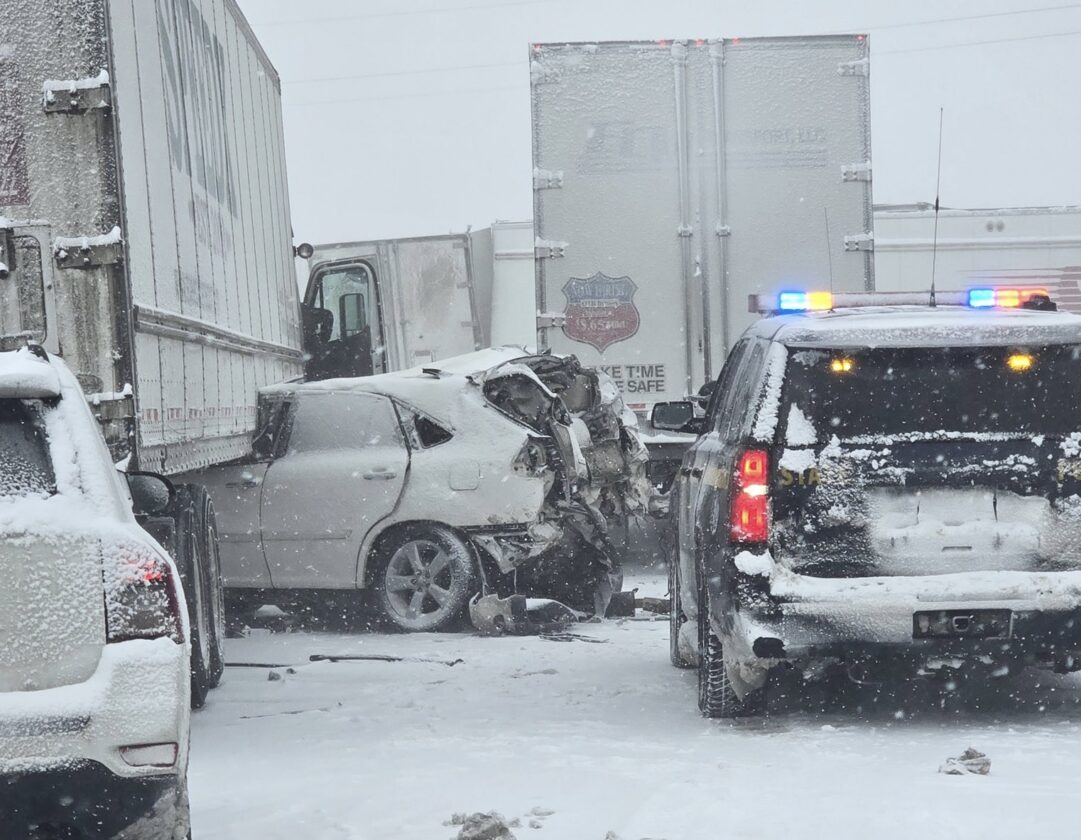
The pile-up that occurred on Jan. 20 on the New York state Thruway in Fredonia is pictured. File photo
Spring is around the corner, but state Sen. George Borrello is still thinking about a Jan. 20 accident on the state Thruway.
Borrello has recently proposed legislation that would attempt to better protect those on the roads during harsh winter conditions. Especially after the brutal conditions that have occurred over the past few months, additional safety measures could ensure that the roads stay clear and safer for those that must travel in poor conditions.
The legislation was proposed on Feb. 27, and would firmly focus on protecting drivers on the state Thruway. The bill would establish temporary reduced speed limits of 45 miles an hour on the Thruway in the event that the ice or snow coverage becomes too great. The bill would establish ice or snow amounts to consistently gauge the safety of the road conditions. With multiple instances this past winter of large multi-car pileups on the Thruway, Borrello said his legislation will aim to reduce these instances and keep the roads open for those that need them.
The bill text states the reduced speed limit would be triggered if snow and ice accumulation reach or exceeds three inches and such accumulation has not been fully cleared by snow and ice removal operations; or the New York state Thruway Authority and the Department of Transportation, determines that weather or Thruway conditions are unsafe at 65 miles an hour but the weather doesn’t dictate the Thruway close.
The reduced speeds would be required to remain in effect until the conditions have been improved, meaning ice and snow has been removed, and until the New York state thruway authority and the department of transportation jointly certify that safe conditions have been restored. Violators of these reduced speeds would face increased penalties, which the bill stated could include a fine of up to $250 along with four points against the drivers record. These punishments would be in addition to whatever other violation fines the operator may have also qualified to receive. Drivers would be notified of these changed speeds in various ways including variable message signs, the authority’s website and mobile application, department traveler advisory systems, and local government alert systems.
The bill would also implement a requirement for new drivers to take a prerequisite course on winter road safety before being able to obtain a license. Some of the components that would be taught in the class would include safe braking distances in snow and ice, proper usage of lights and hazards, how to reobtain control of a skidding vehicle, the dangers of black ice and reduced visibility, equipment awareness, and rules of compliance with the previously mentioned reduced speeds.
“On January 29, 2026, a massive weather-related pileup occurred on the New York State Thruway (1-90) near Exit 48 in Batavia, involving approximately 45 to 50 vehicles, including passenger cars and tractor-trailers. The crash unfolded during a sudden snow squall that created whiteout conditions and left the roadway icy and treacherous, causing multiple collisions in both the westbound and eastbound lanes. Witnesses described a chaotic scene, with cars jammed under semis and several vehicles overturned,” Borrello said in his legislative justification. “Just nine days earlier, on January 20, 2026, a severe 60-vehicle pileup occurred on the Thruway’s westbound lanes near Exit 59 in Fredonia. Spanning approximately six miles and involving both commercial and passenger vehicles, the incident took place during an intense lake-effect snowstorm that produced sudden whiteout conditions within minutes.”
Neither of these incidents resulted in any life-threatening injuries, though multiple individuals were transported to the hospital with minor injuries in each case. The pileups created chaos, used hours and resources to clear the scenes and limited the use of the Thruway for others. In the first instance, both sides of the Thruway had to be shut down, with traffic being diverted to exits 48 and 48a. During this time, emergency crew, state police, and tow operators had to work for hours to be able to clear the road. The Thruway would finally be reopened the following morning on Jan. 30.
The second incident brought challenges to those who arrived to help, as the blocked roads forced the Fredonia First Response team to proceed on foot. During this time, the first responders had to go from vehicle to vehicle to provide those in need with treatment while the harsh weather continued to limit mobility and visibility. Additionally, an extensive amount of mutual aid was required from nearby emergency service departments.
“These back-to-back mass-collision events reveal a significant gap in how New York manages winter-weather speed controls,” Borrello wrote. “While the Thruway Authority does have authority to impose temporary reduced speed limits, state law provides almost no statutory detail or standards on when speed reductions should be applied, how low they should be set, or under what conditions they must be enforced. The bill’s requirement for a Winter Weather Safety component in the pre-licensing course ensures that all new drivers receive consistent instruction on essential skills such as braking on ice, skid recovery, black-ice awareness, proper use of headlights and hazard signals, and adherence to temporary speed reductions. In a state where severe winter hazards are routine, this training is not optional, it is essential.”
Top stories
Search Efforts ‘Day By Day’ For Missing Man
Local Musician Debuts ‘The Jamestown Boogie’
Chimney Fire At Problem Property Near CLCS Extinguished
High County Gas Prices Are Among Lowest In N.Y.
When it comes to gas prices, it could actually be worse here in Chautauqua County. There are 12 counties with ...
City Files Response To Firefighters’ Lawsuit
The city of Jamestown has filed an official response to the lawsuit by the Jamestown Professional Firefighters ...