
Chautauqua Lake’s Fisheries Looking Strong
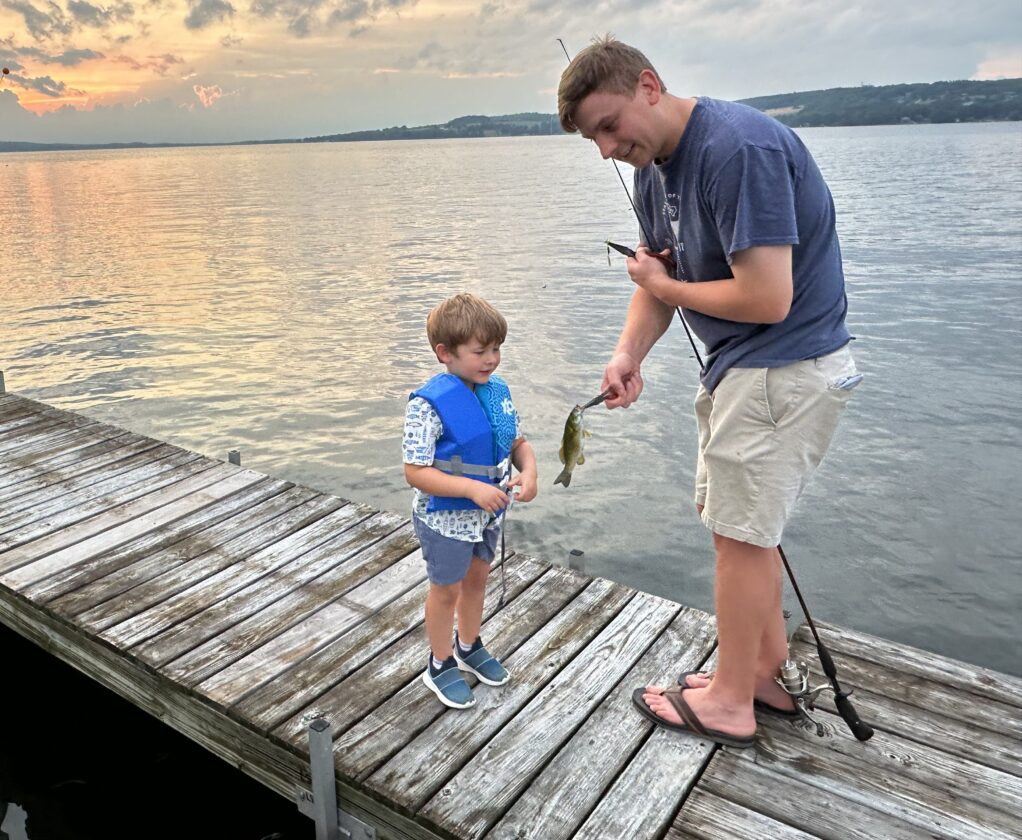
William Swanson, left, and his father Peter Swanson inspect their catch in Lakewood during the 2025 season. Submitted photo
It is a good time to be a fish in Chautauqua Lake. Whether or not it is a good time to be an angler – that might depend on where you are fishing, the day, the time, the month, or sheer luck. It’s anyone’s guess.
But don’t take it from me. Take it from the people who live and breathe this work every day. Recently the Alliance Board (along with members and local foundation leaders) had the opportunity to chat with Jim Markham and Justin Brewer of DEC Region 9 Fisheries. Markham, Brewer and their coworkers are the ones on the water keeping a close eye on the lake’s many fish populations. As you can imagine, they do this in many different ways. If you have a fish question, these are the folks to ask. And while the lake has its share of challenges, our fisheries remain strong and a main reason why so many folks take to the water.
Just for some context, in 2025 the Chautauqua Lake Association watercraft steward program saw over 12,500 vessels from 35 states (plus Canada), and engaged over 27,000 people. Of those boats 71% were fishing. You go to any public launch during the recreation season, and you are going to see boats and trailers lined up for fishing. Chautauqua remains one of the best fisheries in the country, and hearing some of the numbers from experts like Markham and Brewer, it is easy to see why.
The lake supports around 35 total species of fish, but the big four are what drive so much of our local sportfishing interest. Muskie, walleye, largemouth, and smallmouth bass are what often bring people to our shores from across the country. However, our waters are also rich with panfish, what you may know as species like perch, crappie, and sunfish. A 2019 DEC survey showed yellow perch as the most abundant fish in the lake, followed by bluegills/pumpkinseeds. These fish all coexist in a complex environment alongside aquatic plants, algae, and much more.
DEC monitors these many species in different ways and on different schedules. Techniques like electrofishing and trap netting are used to gather comparable data over many years. Muskie and walleye populations are evaluated each year, while other species are monitored less frequently. For example, a spring electrofishing survey targeting bass and sunfish is typically run every five years, and is on the docket for spring of 2026. The main goal of this work, put simply, is that the DEC wants to know how abundant each species is, age ranges, size ranges, and catch rates.
All of these data get charted and archived so that we have a record of where the lake’s fisheries are at currently and where they may be headed. Without getting into too many of the details, suffice it to say that we are in a good place. Let’s give one example of muskie, a keystone species that has a unique place in our lake’s ecosystem. Muskie numbers over the last several years appear quite strong when compared to the long-term average dating back to 1978. That’s good news. Not only are muskie special here on Chautauqua Lake because they are so desirable, but as DEC notes, we have the only “hatchery raising pure strain muskellunge, which are obtained from netting and egg collections.”
It’s not that all 35 species swimming across 13,000 acres of the lake are exactly where we want them to be. Some may even be invasive and cause problems we would like to try and fix. But overall, the dedicated DEC staff doing this work think we are in good shape. That is especially encouraging when we remember that all of the anglers who come our way to Western New York are a pillar of our economy. They rent hotels, they buy food, they buy gas, they buy supplies, and they make us a desirable destination when they get home to tell stories about all the great fishing that Chautauqua has to offer.
Thank you to Jim Markham and Justin Brewer for taking the time to meet with the Alliance, and thank you to all of the DEC staff for the work that they do monitor and maintain our fisheries. More information can be found at dec.ny.gov/ and dec.ny.gov/places/chautauqua-lake. The Alliance wishes everyone a safe season on the ice, and more successful fishing come springtime.
Top stories
City Man Faces Second Child Porn Charge
John Peterson, 42, of Jamestown was arrested and charged by criminal complaint with distribution and possession of ...

Local Lawmakers Back Rural Suicide Prevention Council

Fighting Weeds: CLP Reviews Herbicide Treatment Program
Luv Kia Of Jamestown To Close Its Doors On April 10
A Kia car dealership in Jamestown will be closing its doors by the end of next week. Luv Kia of Jamestown ...
Jamestown Taking Over Parcels With Homeless Squatters
A dozen parcels in the city of Jamestown that are currently owned by Chautauqua County are being transferred to the ...
Former Dunkirk Treasurer Makes Court Appearance
MAYVILLE – A former Dunkirk treasurer who is accused of stealing more than $100,000 from city coffers made an ...