
Simpler Times: Korean War Vet Recalls Past Christmases
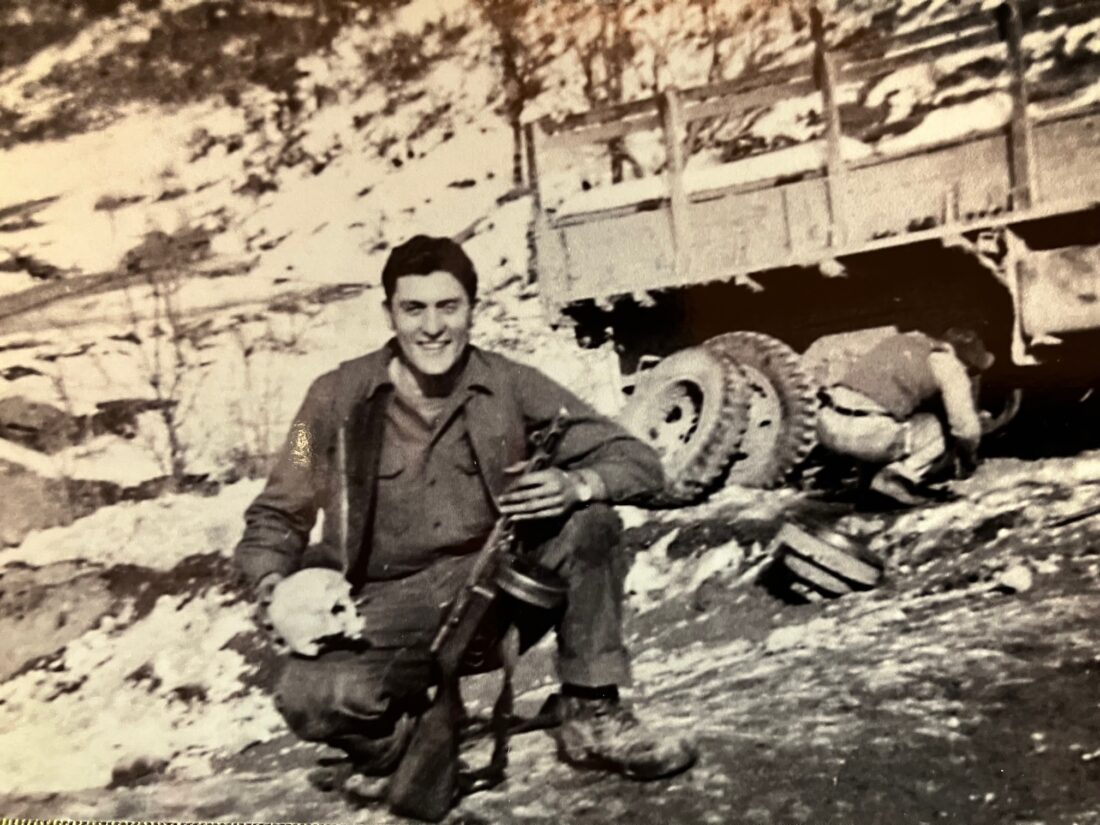
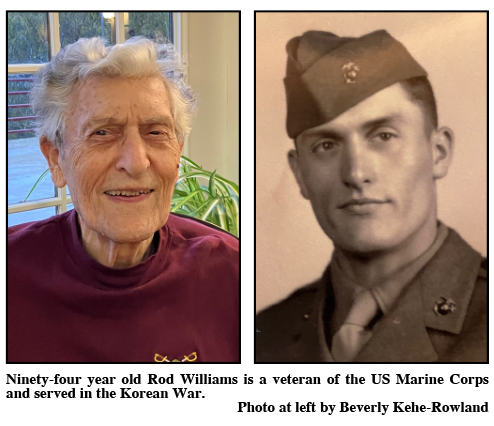
A young Rod Williams came upon a human skull while he was working on military vehicles. Submitted photo
-
- A young Rod Williams came upon a human skull while he was working on military vehicles. Submitted photo
-
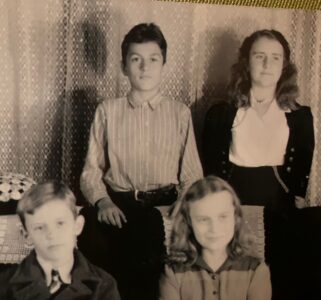
- The Williams siblings in approximately 1945. Front left to right in front are Raemon and Roxanne. Back row are Rod and Jackie. Submitted photo
He was born on October 10, 1931, in a Jamestown hospital, although he doesn’t know which of the two it was. His mother was a homemaker. His father was an auto and truck mechanic and with his brother, owned an International Truck agency on Hanford Avenue in West Ellicott. The couple had four children with Rod being the second oldest.
“It was a great life on Jackson Avenue. It was a gravel road when I was younger. The sewer was put in later. We were fortunate. We were close to the lake, the amusement park and the skating rink and we had each other,” says the nonagenarian. “We toasted marshmallows on a stick in the summer. I had so much fun I would like to do it over.”
His family lived near the railroad tracks, therefore when World War II began, as an eight-year-old he was fascinated by what the trains carried. He remembers seeing war-related items as they passed.
“During the war we saw tanks, Jeeps and rather large Howitzers, boxes upon boxes of equipment,” he recalls. “The train was so long. It couldn’t go fast.”
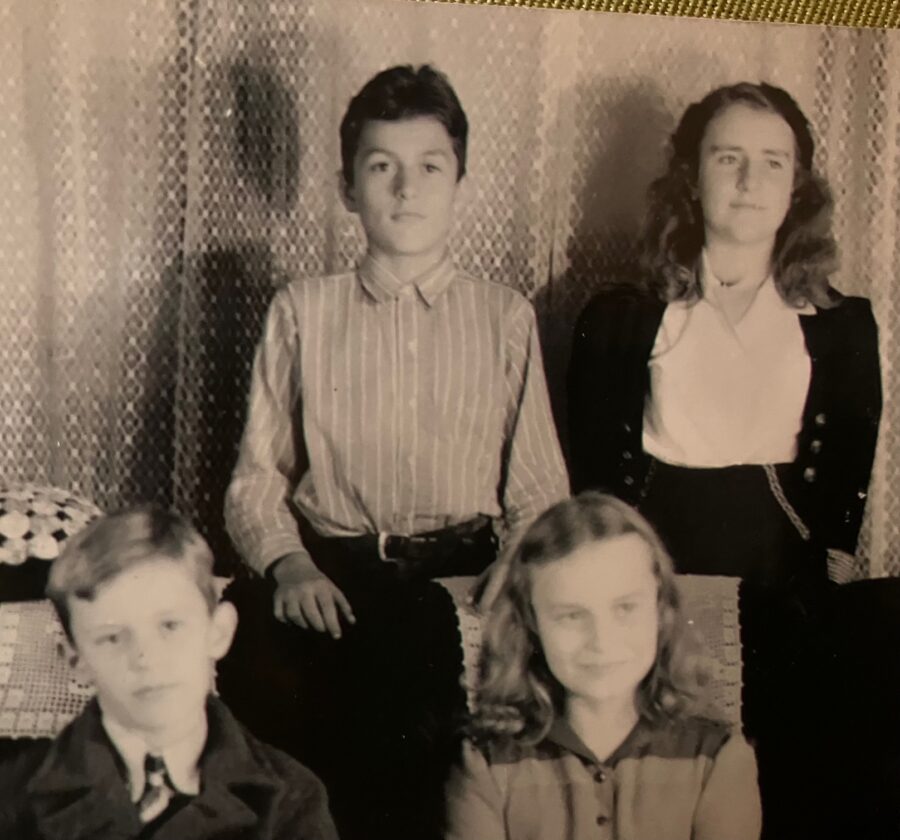
The Williams siblings in approximately 1945. Front left to right in front are Raemon and Roxanne. Back row are Rod and Jackie. Submitted photo
He attended Celoron School from kindergarten through twelfth grade.
“We had tremendous teachers. They would stay and help and they would stick behind you. We started with 66 members, but only 33 graduated in 1949,” he says. “The people I went to school with knew each other. During the war you couldn’t buy a lot of things. Leather, shoes, jackets were hard to get. I don’t remember my parents having new clothes. My mother repaired everything. She had a treadle sewing machine.”
His mother was an excellent cook and could make something out of nothing. He still remembers the day he was standing in the kitchen hearing his mother speak in Swedish to her mother, after she had taken a pan of cinnamon rolls from the oven. The highlight was when he was handed a hot buttered cinnamon roll.
“We got aid. I remember going to the center to get it. If we didn’t have sugar, we used Karo Syrup. We got along, we thrived on it,” he shares. “My mother canned venison, beef and chicken. The whole family hunted. She made pigs in the blanket. We liked rutabagas from the garden. My mother was before her time. We ate healthy.”
Some of his fondest Christmas memories are from the Friday and Saturday nights when his parents took their children downtown.
“If our parents were downtown and shopping, we would find the street where Bigelow’s (Department Store) was with the elves in the windows. The crowd would line three to four deep'” he recalls. “We were little kids. We stood there for minutes and minutes and minutes to watch the elves perform.”
He goes on to say, “We couldn’t afford Christmas, so my grandfather would buy a sled, skis or anything large to share. My Uncle Walt did the same. Santa Claus brought one piece of clothing. We had a stocking with a tangerine in the toe, but I don’t remember the other items.”
He seems to remember his mom making a large ham for Christmas, but eventually ending up at his grandparent’s house at 10 Catlin Avenue with aunts, uncles and cousins.
To help make ends meet, aside from running his mechanic business, his father worked a second job cleaning parts at Eckberg Trucking Company on Winsor Street.
“My brother and I would help him. It was our recreation, but it was fun for us to do it for him,” he says. “On the way home, we would go to Johnny’s Lunch in Brooklyn Square. Sometimes we would go to a Saturday matinee at the Roosevelt Theater. My dad would come up with the money. I think it was twenty cents. He also found the money to buy weekly current events (My Weekly Reader) for us.”
The boys, also, helped in other ways. They would mow the lawn with a manual reel mower, before they had the strength to push it, by standing side by side to combine their strength. Painting the family’s two-story house was another chore Williams remembers doing with his younger brother’s help before they were teenagers. He climbed the ladder while his brother painted from the ground.
“If we ran out of paint, we added linseed oil.”
He learned to drive on his parents’ ’34 Chevy sedan.
“My dad did his own work. He couldn’t afford to hire a mechanic. My brother and I learned skills from this,” Williams said.
His father told him he thought he was better off during the Depression, because people helped one another. They got along with what they had and traded skills or whatever they had.
“My age group never snacked between meals. Later on, we would drive to Jenkins Dairy and get a cone, which was a treat.”
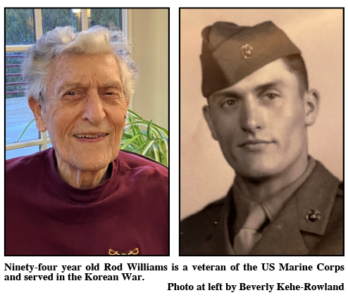
When he was 19 years old, he enlisted in the Marine Corps, a few months after the Korean War had begun, because he didn’t want to be drafted. He was a Buck Sargeant, not a combat Marine and was discharged at Christmastime 1953.
He started his working years at Jamestown Blower Company and in various sheet metal shops in the Jamestown area, later opening his own welding business.
“We kept growing and when someone had a problem, we tried to solve it. We did jobs a lot of other shops wouldn’t take and some years we increased fifty percent,” he says. “In ’58, when things got slow, we just didn’t buy that new car or spend five dollars to go out to eat.”
He bought a building at 270 Steele Street, where the familiar “270” cut from steel, hung on two sides. For many years the large address could be seen when driving from either direction.
“I think 1955 was the best year. The war was over, the economy was good and I got married,” Williams said.
He met his first wife on a blind date while he was in the service. When attending his 50th class reunion in 1999, he learned a girl on the planning committee had a birthday near his own. He also learned they had both celebrated their birthdays by raking leaves, so they decided to celebrate with a meal out. She eventually became his second wife.
He has two children, Julie Livengood and Dana Williams. The 94-year-old and his wife, Dona, live at Tanglewood Manor.
Top stories
State Discussing New Narcan Requirement

Life Sentence DA: ‘It Is Our Goal That Mr. Burham Die In Prison’
‘Enjoy Your Life’: Former Post-Journal Employee Celebrates 95th Birthday
St. Susan Center To Remain On Water Street
Chadakoin River Improvement Could Start This Summer
Work may begin this summer on the next phase of improvements along the Chadakoin River. The city has been ...
Leaders respond to action on Iran; peace vigil held locally
State and federal leaders offered their thoughts and reactions to Saturday’s attacks on Iran by the United ...