City Continues Infill Housing Work To Help Stabilize Neighborhoods
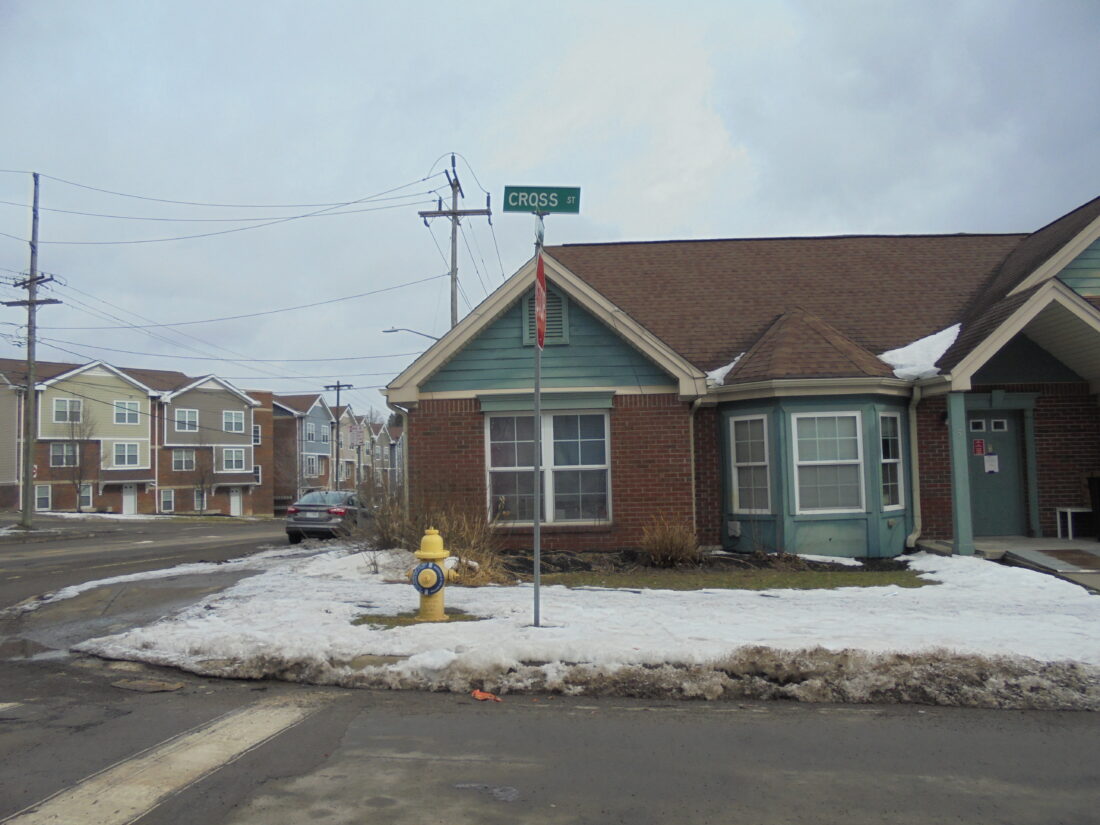
Pictured is one end of Cross Street, one location that the city is looking at for some infill housing projects. P-J photo by Sara Holthouse
A lot of demolition work has been being done in the city recently, and now the city is working to fill in those spots, along with other vacant parcels, to help fill in and stabilize neighborhoods in need.
These infill housing projects, or housing projects that are built into already established neighborhoods to help fill them in, such as vacant parcels or where demolitions are planned, are specifically focused right now on neighborhoods that city director of development, Crystal Surdyk, said need the help.
“We are focused on a handful of neighborhoods and looking at the city as a whole,” Surdyk said. “We’ve talked about the end of Cross Street with a handful of vacant or condemned properties there that are planned for demolition. Fulton Street has a number of planned demolitions as well. We are looking at these kinds of neighborhoods that have great bones but also have a number of problems.”
Spring Street is another area with planned demolitions that the city is looking at, Surdyk said, adding that there are a number of parcels in the city that the DOD is looking at with the help of the Chautauqua County Land Bank and working on a strategy for development. There are some other areas being looked at for potential projects, such as Fluvanna Avenue that has a number of vacant parcels right next to each other, but many projects remain up in the air at this time.
“We have been looking at the whole city, anywhere with a parcel that is scheduled for demolition,” Surdyk said. “Any of these places scheduled for demolition are because we have thought through and identified these specific neighborhoods for strategic intervention because they are at a tipping point, but a lot of them have not quite crossed that threshold. Our goal is neighborhood stabilization for these areas.”
A lot of infill housing plans are not 100% concrete at this time, as the city is still identifying opportunities for infill housing projects. Part of this work includes a planned developer’s forum that is set for the end of April to bring in developers with housing background to come tour some of the vacant sites, ask questions, and share housing or financial experience. Surdyk said it will be like “match making” with specific companies or developers that are focused on state or federal funding, site management, logistics, and other areas, and that the forum will help to build those connections.
In the meantime, other housing projects such as Gateway Lofts, which is a project that has been underway for a number of years now, are still being worked on, though the Gateway Lofts project recently required a change in funding source.
Most importantly, when it comes to these projects, Surdyk said there is a strategy to choosing what areas get projects and what goes where.
“The end goal is neighborhood stabilization,” Surdyk said. “When we identify a parcel for demolition it’s not just because it’s condemned or foreclosed, etc. Demolition is never our first choice, it is only if it is the best choice because of the condition of the building and because the choice of rehabilitation versus demolition or infill needs to make sense with the neighborhood it is in.”
Steps to this decision include working with DOD staff, the landbank, and the Chautauqua County Tax Auction to make the decision based on what properties are acquired through the tax auction. Surdyk added that they are always looking at how to be the best stewards of taxpayer money and what the best action is to take to stabilize these neighborhoods, along with the best way to increase property value and turn these neighborhoods around. Additionally, she said this is not something the department takes lightly and that they work to make a thoughtful decision to best stabilize the neighborhoods and offer an opportunity for quality, decent housing that fits best in the community it is put in.
Sometimes this includes the building of tiny houses, but Surdyk said it is important to not get wrapped up in the term “tiny house”.
“There is a concern that we are just going around building a bunch of tiny houses, but that’s not what we’re doing,” Surdyk said. “What we are looking at is quality, and infill housing is a smaller size and the resident is not necessarily going to need a 2,000 square foot house. We are absolutely looking at various sizes, and those sizes have to fit with the context of the neighborhood.”
The DOD is working with developers to make sure the size of any house put in through infill housing fits in the context of the neighborhood, which might mean it is the same size as other houses already there. Surdyk said there are a lot of factors at play that go into this, which is why it is important to not fixate on the tiny house term. Tiny house is a qualifier in the city building code, and Surdyk said right now they are looking to update the zoning code, which will include house sizes, working on the language, and making things easier for developers, including through the planned tiny house pilot project.
Top stories

Last-Minute Trip: Clymer students given opportunity to see Big Boy steam engine
County won’t help Dawson Metal with bridge issue
Chautauqua County is declining a request by a Jamestown company for a new access road to replace a failing bridge, ...
Mayor updates council on $10M DRI grant
Summer brings increase in Ellicott homeless issues
Winter brought a brief respite for the town of Ellicott and village of Falconer in dealing with homeless issues in ...
Pine Valley: lawsuit claims are ‘without merit’
Pine Valley Central School officials say a woman’s claims are without merit and will be handled through the legal ...