
Distinguished Voice
Phil Donahue Was Frequent Visitor To Region
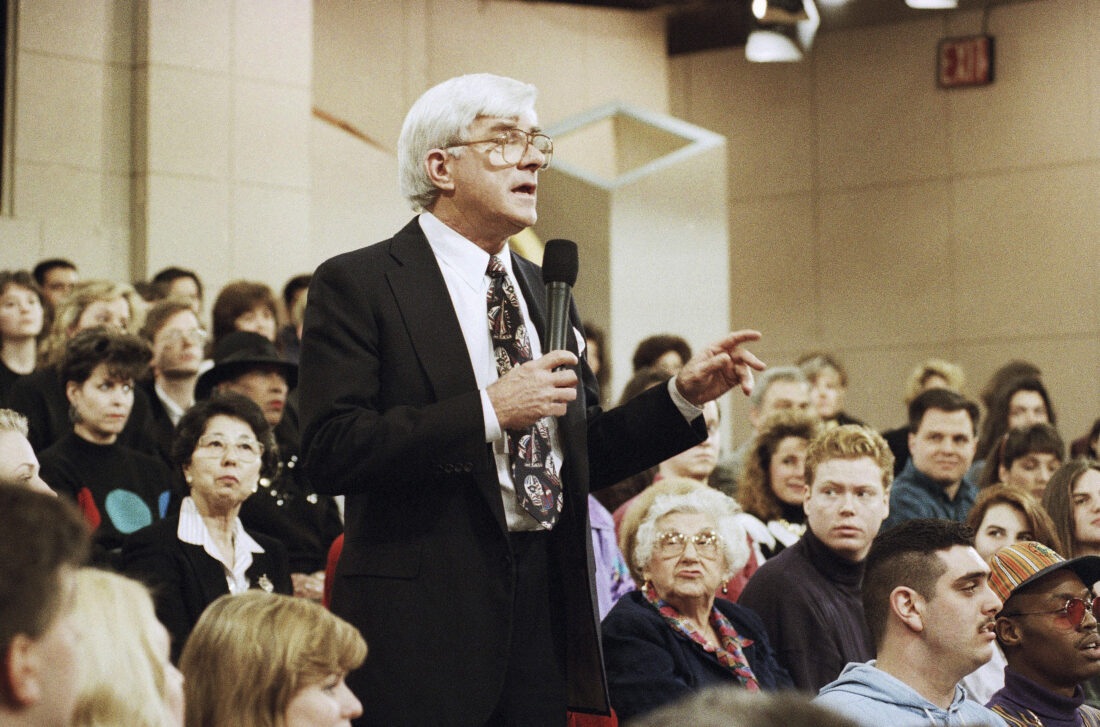
Phil Donahue hosts his television show in New York on Jan. 27, 1993. Donahue, whose pioneering daytime talk show launched an indelible television genre, has died. He was 88. AP file photo
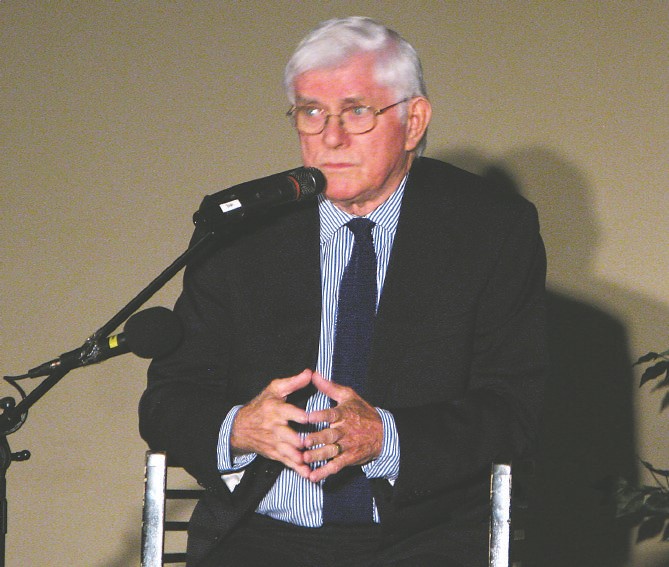
Phil Donahue is pictured during a 2014 visit to the Chautauqua Inn and Suites to raise money for youth programs at the Robert H. Jackson Center. Donahue had visited the area several times, including at least two visits for Jackson Center events. P-J file photo
Phil Donahue hosts his television show in New York on Jan. 27, 1993. Donahue, whose pioneering daytime talk show launched an indelible television genre, has died. He was 88. AP file photo
Phil Donahue is pictured during a 2014 visit to the Chautauqua Inn and Suites to raise money for youth programs at the Robert H. Jackson Center. Donahue had visited the area several times, including at least two visits for Jackson Center events. P-J file photo
Trending
Phil Donahue was a supporter of many things over the years – including the Robert H. Jackson Center in Jamestown.
The longtime talk show host passed away Sunday at the age of 88. Donahue visited Jamestown three times, including an appearance at the Jackson Center in 2006, where he was interviewed by Greg Peterson, longtime center board president, on topics that included the First Amendment, Robert H. Jackson, the War on Terror in the wake of the Sept. 11, 2001, terrorist attacks, and Donahue's wife, Marlo Thomas. But first and foremost, Donahue talked about his exclusive two-part interview with Albert Speer in 1975.
"It's one of the moments I will remember," Donahue said in front of a packed auditorium at the Robert H. Jackson Center. "Suddenly you're with a man who knew, intimately knew – was a colleague of – the most vilified man of this century – Adolph Hitler."
Speer was the last living Nazi prosecuted during the Nuremberg war crimes trials by Jackson. Speer was Germany's minister for munitions and armament during the waning days of World War II and was later sentenced to 20 years in the Spandau prison for his complicity and service to Hitler. Speer wrote the only insider account of Hitler's Nazi government, compiling his notes on thousands of paper scraps while in prison. Donahue interviewed Speer prior to the book's release.
"I asked him,' How can you exterminate millions of people and not know anything about it,'" Donahue recounted. "His response was something like, 'You only concern yourself with the issue that have to do with your own office.' How culpable is he? How honest are his confessions? I think he gave his best effort to tell the world what happened. He had nothing to lose."
Donahue's 2006 appearance came 10 years after he ended his nationally syndicated and groundbreaking television show. The entertainer's 2014 appearance had a different tone, with Donahue and his wife, actress Marlo Thomas, attending a fundraiser for the Jackson Center to benefit the center's youth education initiatives and focusing on the
broader scope of his life and career as opposed to any one specific facet.
"This is Phil Donahue on Phil Donahue; a retrospective of his life," Peterson said.
Also mentioned was Donahue's awareness of and connection to Chautauqua Institution, a venue at which he was most recently seen administering a lecture in 2010.
"This is a thinking community," Donahue said. "Chautauqua is my kind of place, and I'd be nowhere without people like those at Chautauqua."
His cultural influence -- especially with the women who tended to watch television during the day in his era -- finally led to a flock of cultural imitators in the 1980. By the time "Donahue" went off the air in 1996 after 29 years, nearly 7,000 episodes and 20 Emmy Awards, the daytime television landscape was littered with lookalikes.
Both before-and-after Oprah, the prematurely gray and always animated Donahue wielded enormous clout, making daytime at once more serious, more newsy and more salacious as he emerged in the late 1960s amid a sea of game shows, soap operas, and more frivolous talk shows. He demonstrated that daytime viewers, long before cable news, cared about world leaders, cultural figures and the debates of the day. He gave many Americans their first real exposure to issues like sexual harassment and abuse, gay marriage and AIDS.
When asked by Peterson whether wrapping up the "The Donahue Show" after nearly three decades was difficult to handle, Donahue replied that the show's conclusion was bittersweet.
"I have to say there was relief," he said. "I would put on a shirt and tie and go out there every day, and eventually it got to the point where I thought, 'Alright, they've heard you speak. Enough is enough.' But it was a tremendous ride, and I would wish it on everyone I love."
The Associated Press contributed to this report