
‘Perfect Match’
The Pearl Of Africa Meets The Pearl City
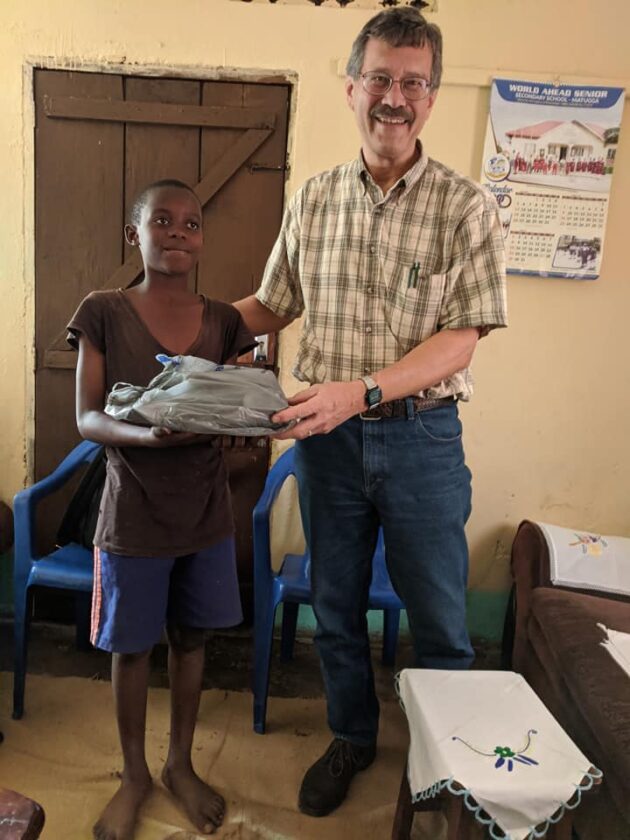
Roy Miller, executive director of A Better Place Ministries is pictured here providing clothing to an Ugandan child in 2020 during one of his 11 trips to Uganda he has taken.
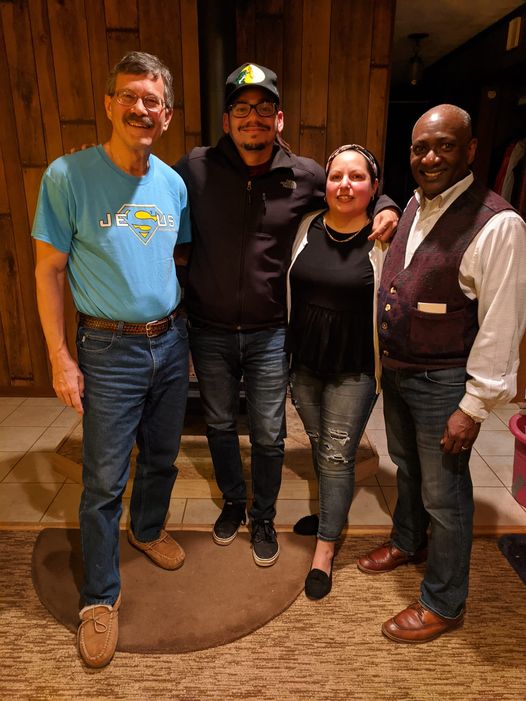
From left, Roy Miller, executive of A Better Place Ministries, and Missionaries, Sam Beato, Erika Lopez, and Leecroft Clarke pose for a picture prior to their missionary trip to Uganda in 2021.
Roy Miller, executive director of A Better Place Ministries is pictured here providing clothing to an Ugandan child in 2020 during one of his 11 trips to Uganda he has taken.
From left, Roy Miller, executive of A Better Place Ministries, and Missionaries, Sam Beato, Erika Lopez, and Leecroft Clarke pose for a picture prior to their missionary trip to Uganda in 2021.
Trending
It's been a couple of years since Rev. Roy Miller's last visit to Uganda.
But Uganda hasn't left Miller.
This week, the Jamestown pastor and founder of A Better Place Ministries, brought Bishop Joseph Nsubuga to Jamestown to talk about the need for help with educational initiatives in Uganda.
"I've been going to Uganda for close to 11 or 12 years now," Miller said. "This seems like a perfect match – Uganda is the Pearl of Africa and Jamestown is known as the Pearl City."
Nsubuga represented the Christian church in Uganda. Nsubuga is a diplomat-carrying passport holder who shared some of the much needed infrastructure needs and other -wide issues affecting his fellow countrymen.
"We have lots of issues," said Nsubuga. "First and foremost is the need for education. In Uganda, it costs about $300 a semester to send a child to school. Most people can't afford this. But education leads to paying jobs. Additionally, the government taxes all schools as a source of revenue. The public education system stops at seven years in primary school, then the rest must be paid for out-of-pocket."
However, despite the quasi-backing of governmental sponsored public education, the actual lack of a more structured learning system has this nation sorely falling behind other more established national school systems in other African nations.
According to worldbank.org, children born in Uganda today are likely to be 38% as productive when they grow up as they could be if they enjoyed complete education and full health. Children who start schooling at the age of four years are only expected to complete 6.8 years of school by the time they turn 18, compared to the Sub-Saharan average of 8.3. A child's actual years of learning are 4.3, with 2.5 years considered "wasted" due to the poor quality of education."
Miller then explained how "schools" serve a multi-faceted role for local villages throughout Uganda and how it becomes a real boon for the local villages around them.
"Because of governmental regulations, schools built in Uganda must have an infirmary attached to it and a water source. So, what happens is the village where the school is built becomes the village's hospital, medical center and meeting place," he said.
Nsubuga then elaborated about the poor quality of drinking water and the negative effects it has on the nation's population.
"The people drink out of the same water holes that the animals in the wild drink out of," Nsubuga said. "Unfortunately, the animals tend to go to the bathroom in the same water and carry things with them. This can lead to outbreaks of salmonella, cholera, and shigellosis and injuries or kill many Ugandans."
As the meeting progressed Miller explained how The Better Place Ministries set up organizations to support Uganda both in the United States and on the ground in Uganda.
"We set up a non-profit here called the East Africa Initiate and Sustain Foundation," he said. "On the African, Ugandan side, we have a sister organization called the Lemieu Foundation to work together with us.“
Miller went on to explain that the term schoolhouse or building isn't exactly perceived the same way in Uganda as it is in the United States.
"Schools tend not to consist of just one building, but more of a campus – with several smaller buildings; classroom buildings, examination halls, toilets, teacher's room and board, library, science lab, residential dorms for students and support offices." he shared. "This will typically serve between 200 and 300 students."
According to Miller, "one of the aims of the EAIS foundation is to provide sustaining funds for the schools that are built. Half of the students might be able to pay fees, but then the shortfalls in needed funds can be subsidized by the foundation on an ongoing basis," he said. "Twenty percent of children in Uganda do not attend primary school, and 70% do not attend secondary school. The cost is simply prohibitive, even though secondary school typically costs less than $900 per year to attend."
As the meeting ended, several members of the Jamestown contingent expressed a desire to take a trip to Uganda and get "eyes on" the situation. For more information about the ongoing project in Uganda visit The Better Place Ministries site at thebetterplace.org.