
Some Employers Still Struggle To Find, Keep Employees
Trending
During the late 1970s, David Allen Coe wrote a popular hit, made even more famous by country-western singer Johnny Paycheck. That song, "Take This Job and Shove It," became the common-man's overture.
Some 40 years later, "Take This Job and Shove It" is a message of sticking it to the man for a new generation of workers.
Across the nation and locally, restaurants, small family-run mom and pop shops, national and international corporations and various governmental agencies are struggling to fill worker positions that are left open post-COVID-19.
Some business owners who are feeling the workforce crunch have a bastion of seasoned and professional employees who are like family members, and stick with their chosen companies through thick-and-thin.
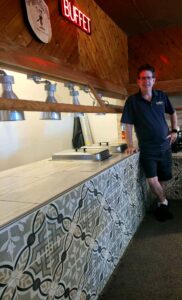
John Raymond, owner of Honest John's restaurant and pizzerias, is one such owner.
"I can't find any new good help," Raymond said. "I have my core group of employees, they're professional and have been with me for years. They care about our customers and want to provide the best service, meals and experience they can. I have one employee, Nancy Golonka, she's been with me for 30 years now on Aug. 4. I have many hardworking employees that I totally rely on, and I really do appreciate them."
However, the recruitment and hiring of new employees seems to be a real issue for Raymond.
"I have eight or so positions currently open and I can't fill them," he said. "I conducted interviews just a few days ago and I had 17 no-call, no-shows."
Moreover, larger and bigger corporations are feeling the pinch, too.
"We've tried everything," said a human resources specialist at a locally based, national company. "We're currently using a job placement agency to help fill our workforce, and most of the workers don't make it through our probationary period to even offer them a full-time position."
What is holding up the hiring of some of these temps to full-time workers?
"For starters, we have some that no-call, no-show their first day or habitually during their probation period, frequent tardiness to scheduled shifts, poor work performance, not being able to pass a drug test, showing up high to work or the interview -- you name it," the HR specialist said.
Not-for profits are also being hit hard during the crunch.
"A real struggle is trying to keep the pay difference for veteran workers and new hires," said John Barber, vice-president of operations for the Jamestown Area YMCA. "This is turn becomes a retention issue too."
The state's minimum wage also appears to be having an impact.
"As the cost of wages continues to go up, organizations like the YMCA struggle to meet the community's needs," Barber said. "You have more money chasing wages and less of it to provide for community services or programing. I'm not saying people shouldn't be paid a fair wage for a fair day's labor, but we can only raise our rates so much before we start to lose members."
The Y also depends on grants, donations and private support. However, with resources that are normally allocated to help those less fortunate, more of these same resources are being channeled to payroll.
"The state minimum wage keeps going up anywhere from 7 to 8% each year," Barber said. "It's hard to keep pace."
However, beyond the payroll hits companies are taking, some are still trying to find new and creative ways to entice would-be workers.
"I currently offer my workers a 401K retirement plan, and flexible hours," Raymond said. "I try and take care of my people -- I treat them with respect. But as the minimum wage keeps going up, it makes it harder and harder to do business anymore. It really bothers me that I must bring someone in making the same amount -- entry level -- as one of my long-term managers made three years ago. It's not fair to them, it's not fair to me and it's not fair to my customers."
What are current employers looking for in potential workers?
"I really care about character and honesty," Raymond said. "I can teach the work skills or find a good position for anyone willing to learn and work, but it all comes down to character. You can't teach that."
Despite the current work force issues, Raymond also tries to take things in stride.
"This is all cyclical," he said. "I've seen this happen many times in my 40 years in business. It's all one big circle."