Senator Proposes $247M For Low-Income Mothers
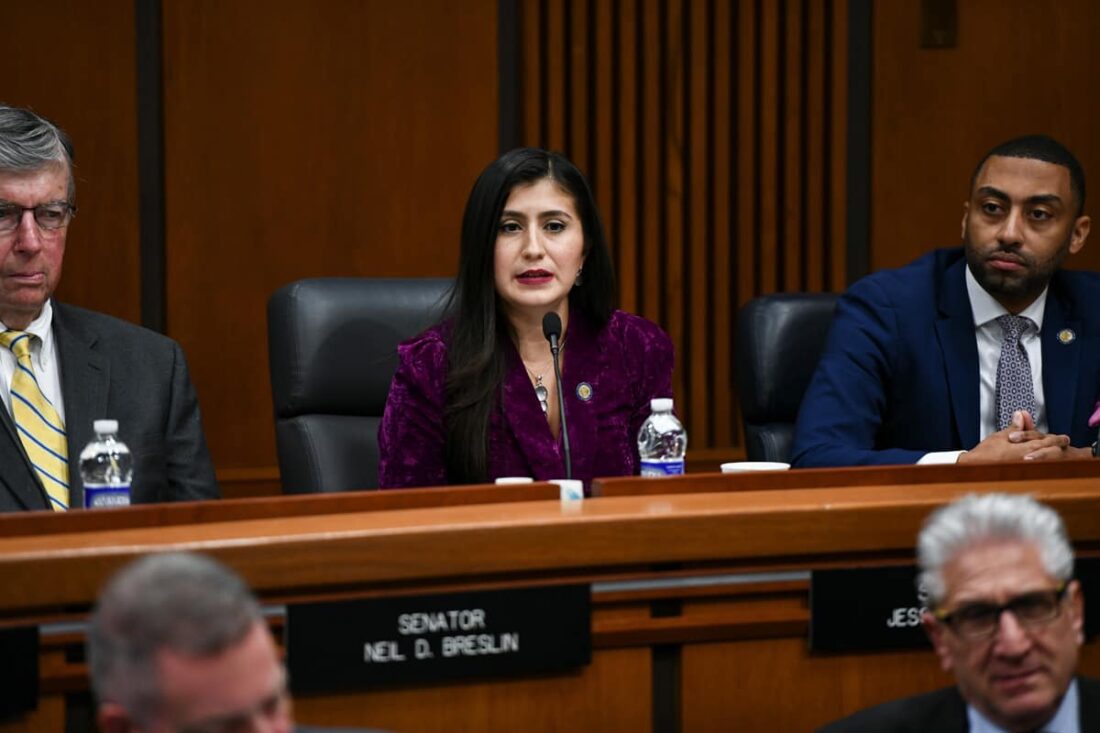
Sen. Jessica Ramos, D-New York City, is pictured during a Senate hearing in January.
A proposal in the state Senate would spend $247.5 million to create a demonstration project that provides income program for mothers and infants.
Sen. Jessica Ramos, D-New York City, is the sponsor of legislation (S.4758) to create a Mothers and Infants Lasting Chance allowance based on the expanded federal Child Tax Credit created during the COVID-19 pandemic. The program would support low-income families for three months of a woman’s pregnancy and the first 18 months of a child’s life.
An initial pilot program would last for 21 months, with local Social Services districts across the state finding 15,000 eligible families to participate in the program. Families would receive $1,000 a months for the last three months of pregnancy and the first nine months of a child’s life and $500 a month for the last nine months they are in the program.
“New Yorkers are unable to cover basic necessities and support their families, particularly in the face of rising interest rates and inflation,” Ramos wrote in her legislative justification. “Most notably, the cost of childcare – which already consumes a massive portion of family income – rose 41% during the pandemic, and the total cost of raising a child through high school has risen to more than $300,000 – a $26,000 increase from five years ago, and one that is likely to present a heavier burden for low-income parents and families, for whom expenses such as food, housing, and gas comprise an even larger portion of their income.
New York State has an opportunity and obligation to invest in its most vulnerable residents by leading the fight against childhood poverty — and toward an equitable economy for all through a guaranteed income allowance for mothers and infants.”
The bill was introduced Feb. 10 and has garnered four co-sponsors in the weeks since, including Republican Jacob Ashby, R-Castleton-On-The-Hudson. It has been referred to the Senate Children and Families Committee.
Eligible families would have to have income 200% less than the federal poverty guideline. Ramos said 67% of the families in the pilot program would come from cities with a population of 200,000 or more, with the other 5,000 families coming from rural areas.
“Child poverty in New York City and cities across New York state is shamefully high and will likely worsen if current economic trends continue,” Ramos wrote. “Half of the top six cities in the United States with the highest child poverty rates are in New York State, disproportionately affecting communities and children of color. In New York City, nearly 1 in 4 children live in poverty. In Rochester and Buffalo, that number is even higher: 1 in 2 children live in poverty.”
President Joe Biden called on Congress to restore the full child tax credit during his State of the Union address this year. The federal Child Tax Credit initially started as a $500 per child tax write-off under Bill Clinton in 1997, eventually changing over time and being increased under Donald Trump’s GOP tax cuts in 2017. Biden’s American Rescue Plan increased the credit to $3,000 a year, added 17-year-olds and boosted the amount to $3,600 for children under six years old. The program came to an end in December 2021 and hasn’t been reauthorized by Congress. Since that $300 a month checks ended, the Associated Press reported that Columbia University’s Center on Poverty and Social Policy estimates 3.7 million more children were living in poverty by January 2022– a 41% increase from December 2021, when families received their last check.
Reapproving the child tax credit was tied to Biden’s $1.9 trillion climate bill in 2022, with Republicans saying the bill was too big and costly at a time of rising inflation.
Top stories

Former Sherman Feed Store Sold

Frewsburg Terminates Student Affairs Coordinator

Success Story: Kidney Transplant Recipient’s Family Reflects On Life Years Later
Public Works Talks Speed Limit Adjustments, Safer Streets
Jefferson Project Finds No Easy Solutions For Weeds