Area Students Taught Importance Of Bat Population
-
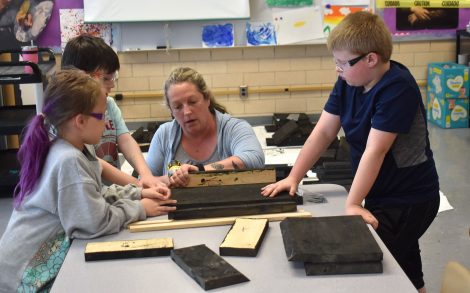
- At center, Molly Brown of Cornell Cooperative Extension teaches third-grade students in Mary Plumb’s class at Fenner Elementary School in Falconer how to build a bat box. Along with making the boxes, Brown also taught the students about bat conservation because half of the species of bats in the United States are endangered. P-J photo by Dennis Phillips
-
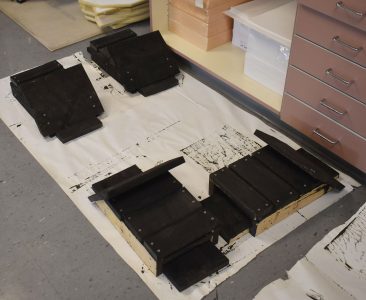
- Rough-cut hemlock wood was used to build bat boxes that will be installed around Fenner Elementary School to curtail the mosquito population in the area. P-J photo by Dennis Phillips
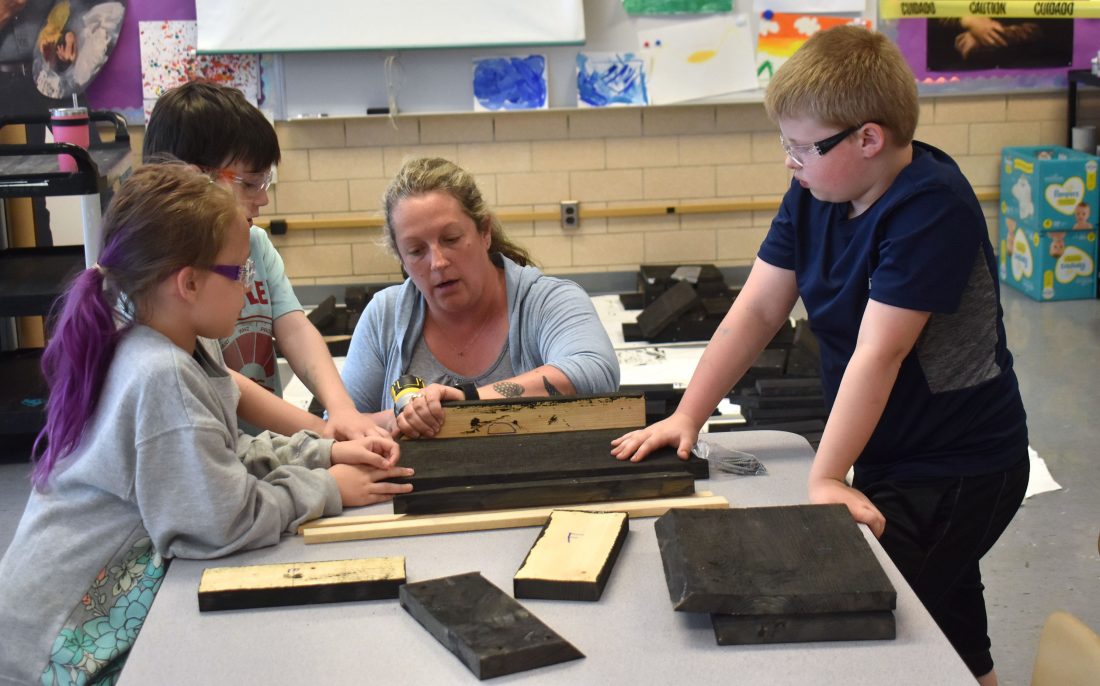
At center, Molly Brown of Cornell Cooperative Extension teaches third-grade students in Mary Plumb’s class at Fenner Elementary School in Falconer how to build a bat box. Along with making the boxes, Brown also taught the students about bat conservation because half of the species of bats in the United States are endangered. P-J photo by Dennis Phillips
FALCONER — Fenner Elementary School will soon be more bat-friendly.
On Thursday, Molly Brown of Cornell Cooperative Extension taught third-grade students in Mary Plumb’s class how to construct bat boxes. Brown also educated the students on the important role bats play in everyday life.
“I’m teaching the kids about bat conservation — how important they are,” she said.
Brown told students how endangered the bat population is in the country. She said of the 40 species of bats in the United States, 20 are endangered.
“Bats have an important role in pest-control, pollination and seed dispersal,” she said.
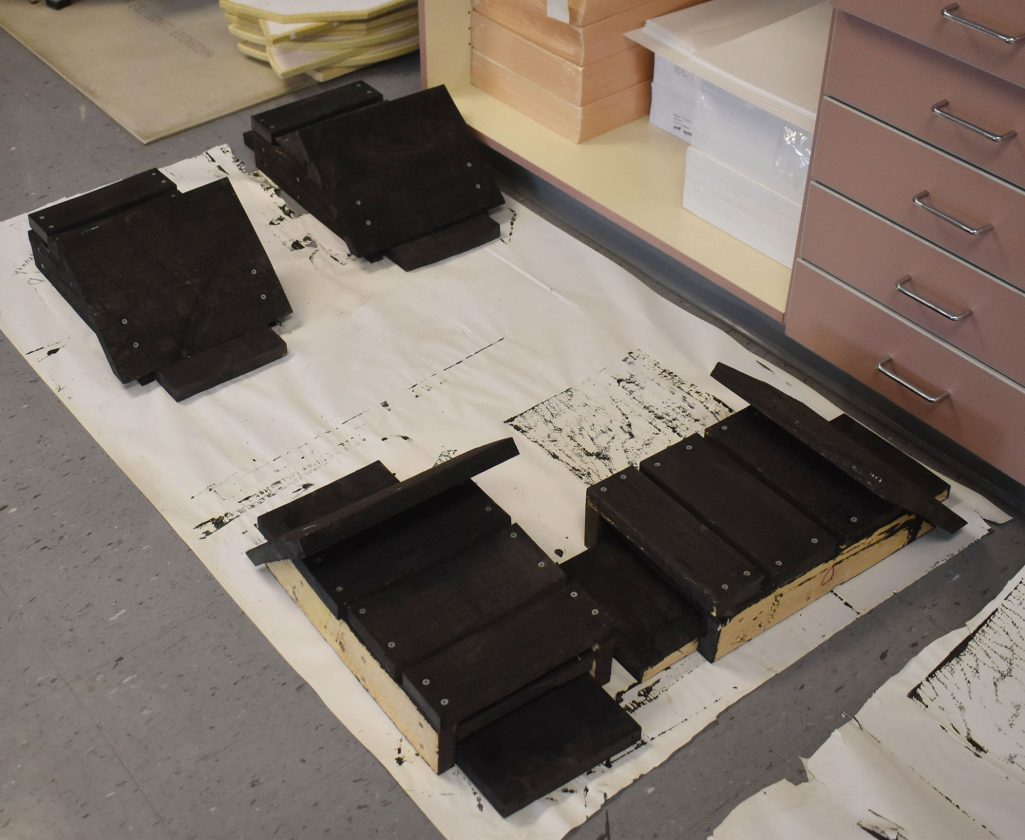
Rough-cut hemlock wood was used to build bat boxes that will be installed around Fenner Elementary School to curtail the mosquito population in the area. P-J photo by Dennis Phillips
Most of the bat boxes the students built will be installed in an area around the school where the mosquito population is high. Brown said she had taught the bat box lesson earlier this year at Temple Elementary School, with the boxes being installed around the playground to curtail the mosquito population.
Brown said the bat boxes were made from rough-cut hemlock, which were painted black to keep them warm. She said each bat box will contain two chambers, with one being a bat “nursery” for baby bats or pups.
“The kids get to feel empowered by building the boxes,” she said.
During the lesson, the students also learned facts about bats to hopefully lessen their fear of the creatures with a bad reputation.
“Kids are often afraid of bats and they say it’s because they have rabies, but less than 1% of bats have rabies,” Brown said. “By educating them, they become a bat spokesperson. They can be an ambassador for bats, which is fun.”
Top stories
County furnace program helps keep seniors in their homes
Capital Experience Harmony Express To Be Part Of 250th Celebration
The Jamestown Harmony Express choir has announced its tentative performance and visitation schedule for the ...
Borrello Questions DEC On Wetlands Act
Amanda Lefton, state DEC commissioner, was saved by the bell recently. Lefton was answering a question by state ...

Cooper Ready For His Role As Trustee
Unused Jamestown airport terminal getting $1.2M makeover