
County Hopes Funds Add To Child Care Options
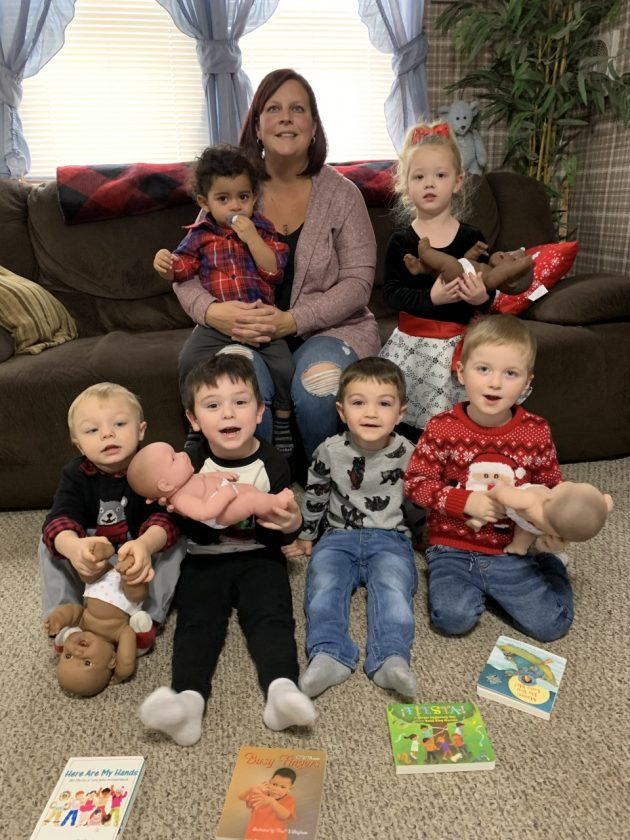
Kristin Glowniak has been a child-care provider for 21 years in Chautauqua County. Submitted photos
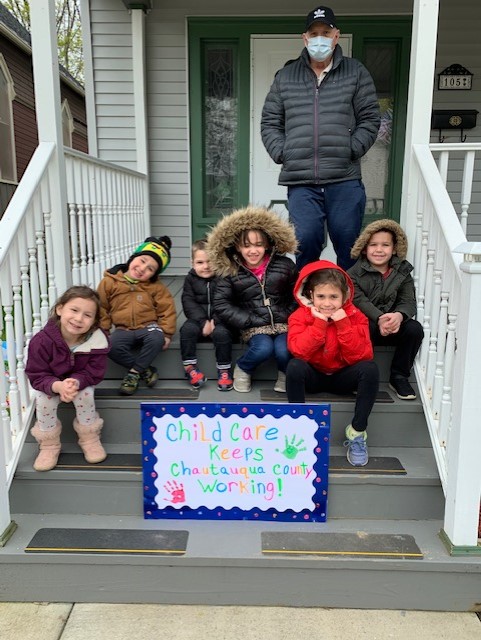
For 32 years, Judy Yarber has run a child-care program. Pictured are her children and her husband.
Kristin Glowniak has been a child-care provider for 21 years in Chautauqua County. Submitted photos
For 32 years, Judy Yarber has run a child-care program. Pictured are her children and her husband.
Trending
The New York state Office of Children and Family Services recently made $70 million in grant funding available to new licensed, registered or permitted child care programs in areas such as Chautauqua County, where there is a high demand and very few options. These locations -- like right here at home -- are considered child care deserts.
"Chautauqua County is similar to other rural counties," said Kaley Donaldson, marketing and fund development coordinator at the Child Care Resource Network in Buffalo. "Child care deserts are often a problem in rural areas for a variety of reasons."
Factors include a proximity to working parents, which is why cities tend to have more child-care options. In rural areas, most services come in the form of individual home providers, meaning parents taking care of their own children and a few others. While these are helpful forms, they do not provide enough to help alleviate the problem fully.
"They're limited significantly as to the number of children they can have," Donaldson said. "In home programs, a family can have a quarter as many kids as most of our child care centers."
While there are slots available in Chautauqua County centers, those that are open don't fill the needs of every family. According to Susan Marker, director of the Child Care Council at Chautauqua Opportunities Inc., the lack may be even more prevalent than it appears to be.
"Dunkirk, for example, is a huge desert," she said. "It doesn't look like it on the map because there are slots open, but at a lot of those daycare slots in Dunkirk, people have to meet financial qualifications for. They're not just open to everybody. At Headstart, you have to meet financial requirements, and Little Seeds takes special needs children. There are lots of those slots up there but not slots that can be filled by a family that wants child care."
One rarirty in the county is Fredonia. The village is one of the few places in the county that is not in dire need of these services.
While both Marker and Donaldson are welcoming this increased funding from the state, they also both recognize this is something that has been needed for years -- even before the pandemic began. "Prior to the pandemic, child care was a struggle for every family," Donaldson said, "especially infant and toddler care in our region. Parents were on one or two year wait lists. If I'm in that position, I'm not thinking in two years I am going to have a baby, so I'm going to get on a child care wait list now."
According to Marker, there were more than 50 family day cares in Chautauqua County in 2013. Today, that number is down to 30. In the meantime, family care centers have dwindled to 14.
These closings are not due only to the COVID-19 pandemic. Individual family home care centers that take care of children sometimes decide, for any number of reasons, they are not interested in the business anymore. Once these close, no one is filling the need.
Donaldson said this new initiative could encourage people to fill those gaps. "We're working on ... increasing child care supply by opening new programs," she said. "People running legally exempt care, meaning people who are caring for a family member's children and have some minor requirements to meet with health and safety, are in a good position to open up and accept more than just family children. We're working with that group to take the next step in opening a program like that."
Though child care is a vital resource, part of the reason for dwindling numbers of centers has to do with finances. Simply put, people working as child-care providers don't bring in a lot of income, and the enhanced need for services has led to the few places that are available backed up with interest.
"Child-care providers are working poor," said Marker. "They don't make a lot of money. People who have stayed in child care and love child care have received grants to help carry through COVID and parents love them. There were waiting lists even before COVID hit but they're getting frustrated because they can't serve the families they have and now they have more."
With this effort, there is hope the start-up costs will alleviate struggling to meet ends meet, and there is hope that impact could be felt by the end of the year.
However, opening child care programs is understandably a difficult process, on top of restrictions still in place from the pandemic and labor shortages. But even while people are waiting on the grant money, those interested can work on their applications so money is awarded with a minimal gap in getting these locations up and running. All in all, the process for opening can take around six months or longer.
Marker said her agency has already received calls from some families and businesses interested in opening facilities, which is certainly encouraging given how recently the funding was announced. The immediate interest is accomplishing what Marker and Donaldson were hoping for the most with this bill announcement: attention being brought to the issue.
"It puts the issues in the forefront," Marker said. "We've been talking about deserts forever and no one has been listening as much as they are now. Child care keeps Chautauqua working. We can't have a full economy without child care. We keep putting the thought out there that somebody who wants to stay home with children may want to watch a couple other children and we're prepared to help others who want to. We hope this grant gives them start-up funding. We also have additional funding available."
Marker said there will be a roundtable held in March for anyone interested in opening some form of child care. For more information on this or child care, residents can contact Chautauqua Opportunities at 716-366-3333.