
‘Shocked And Awed’: Emergency Department Director Shares Pandemic Experiences
Trending
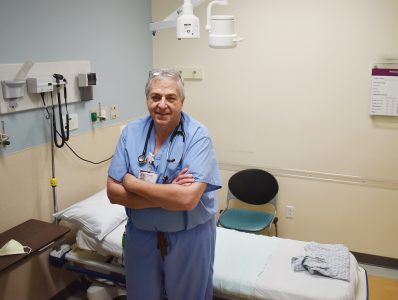
Dr. Thomas Simonian, director of the UPMC Chautauqua emergency department, has never seen anything quite like the COVID-19 pandemic in his career.
Simonian recently shared his experiences with The Post-Journal, and the first thing he said about the past 18 months was "Wow."
"Wow -- can you quote that? Wow," he said. "This is the first time in my career that a thing like this has ever happened. I thought I had seen most everything and was shocked and awed by this virus that's run rampant through our communities. I've seen a lot of people who would not otherwise seek out health care come in so sick that they're struggling to breathe -- all because of this virus."
Simonian says he "wholly supports" COVID-19 vaccinations -- especially with what he has seen throughout the pandemic.
"Please get it -- it saves lives, and can save your family's lives," he said. "It saves grandparents' lives. It may save your kids. I see a number of people who have had the vaccine and have a mild case of disease of this Delta variant. On the flip side of that, I see horribly sick people who haven't had the vaccine who could have been saved from months on a ventilator because of it."
"I'm just so frustrated with the thinking," he said. "I mean, there's good science behind the (vaccines). You have to turn your brain away from social media and listen to what the experts are saying. The risk of the disease is so far outweighed by the minor risks and side effects of the vaccine. I think if people actually saw the suffering that we see because of this virus -- actually saw it and the impact that it has -- their decisions would be different.
But, people, unfortunately, think that they're stronger than this illness, or for a lot of reasons, they just don't get it."
Simonian said there was a "peak" in COVID cases a few weeks ago; however, there has been a "little dip" recently. He said there is some concern that over the holidays, there might be another peak. Throughout the pandemic, Simonian said the emergency room has been challenged "to keep up."
"We have more people boarding in our emergency department, and some of the reason is the trickle-down effect from COVID patients in the hospital otherwise taking up beds, and another part of that is because we have some difficulties like the rest of the country keeping staff next to the bed."
Boarding refers to patients who are admitted who would otherwise be in a room elsewhere in the hospital remain in the emergency department. Simonian said the patients often stay in the emergency room for days.
"My nursing staff and the ancillary staff all have to take care of the regular volume of emergency medicine patients that walk through the door plus now they're doing inpatient work in the emergency department," he said.
Simonian said he destresses by spending time with his wife and two dogs.
"I have a wonderfully supportive wife, and I have two cute dogs," he said. "I do some gardening. I have worked more in this part of my career than I've worked early on in my career, and it's hard to get away from it or to destress from it because you see it all the time. I'm on my day off right now -- I just did a 24-hour shift at Kane yesterday, and I'm sitting in front of the computer looking at the board at Chautauqua trying to plow through the MCS email list. You never quite getaway."
Simonian said this non-stop pace has greatly impacted medical professionals across the board.
"I think we've got years ahead of that kind of fallout," he said. "The medical community is not immune from those mental health stressors that the disease process has caused. Medical personnel suffers the same feelings that the public has. I've seen more nurses in tears over the past year than I've seen in my entire career. There is a definite stressor out there that is causing some side effect."
However, Simonian said he sees "light at the end of the tunnel," and believes we will make it through the pandemic together.
"You just have to believe that in your heart," he said. "We're going to make it through this. You just keep trying to do what you started out to do when you went into health care, and care for patients one at a time, and try and take care of yourself when you can."
While the pandemic has been difficult to withstand and work through, Simonian had other incredible experiences throughout his career that brought him joy, for example delivering a healthy baby. In the emergency department, he said saving a life is also at the top of the list.
"Bringing somebody back from cardiac arrest and them then turning around three or four days later and showing up in the ER with a basket of goodies as a thank you was amazing," he said. "Seeing people that you didn't think that were going to make it, who are now walking and talking and enjoying life because of what you've done. Those are some of the things. I still smile every time I walk across the parking lot to go to work. It's not a vocation -- it's just part of my personality now."
Simonian said he knew he wanted to be a physician when he took a seventh-grade biology class in school.
"And ever since then, I wanted to be a physician," he said. "(I had) some personal reasons, just like in most people who are driven into it are driven by someone sick in their families who you wish you could have helped."
He was born and raised in Erie, Pa., and has been working in this area for many years. He began working for Hamot Medical Center in Erie in 1986 and continued to work with UPMC after they took over. Simonian also works out of UPMC Kane.