
Friendly Encounter
Busti Apple Festival Offers Plenty Of Fall For Visitors
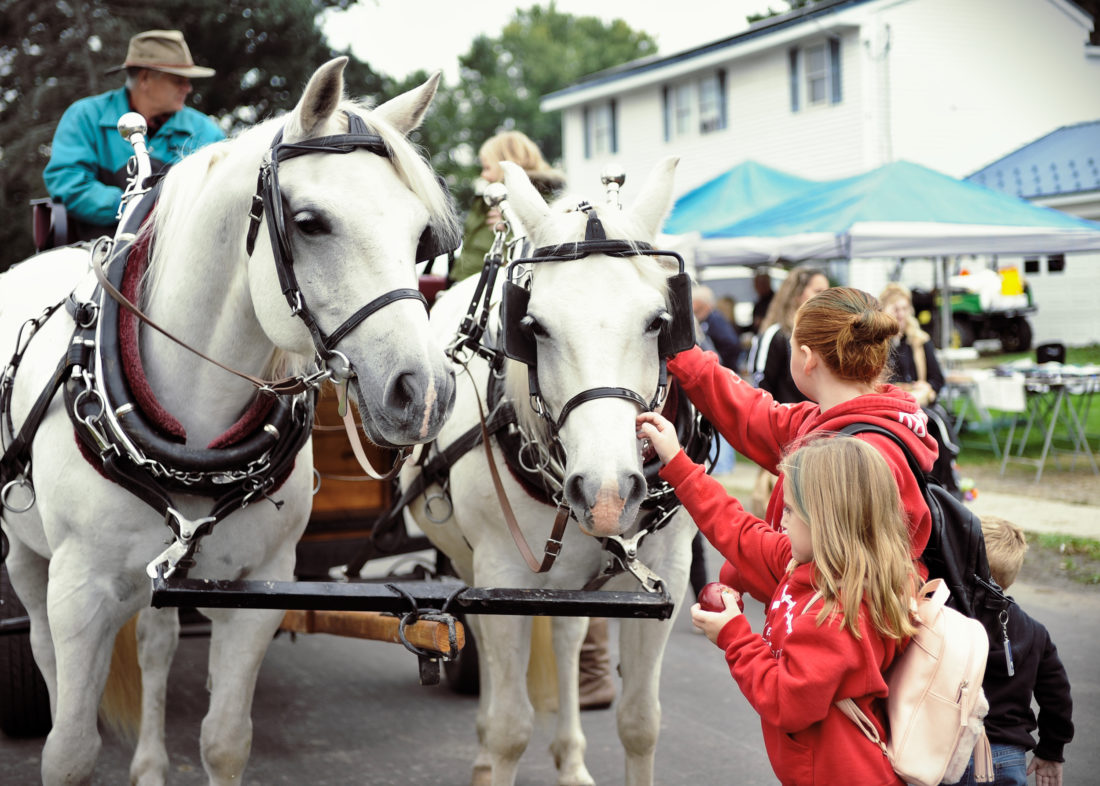
Two children are greeted by a couple of horses at Sunday’s annual Busti Apple Festival. It was the 44th year for the festival, which included vendors, demonstrations and plenty of food. Photos by Daryl Simons Jr.
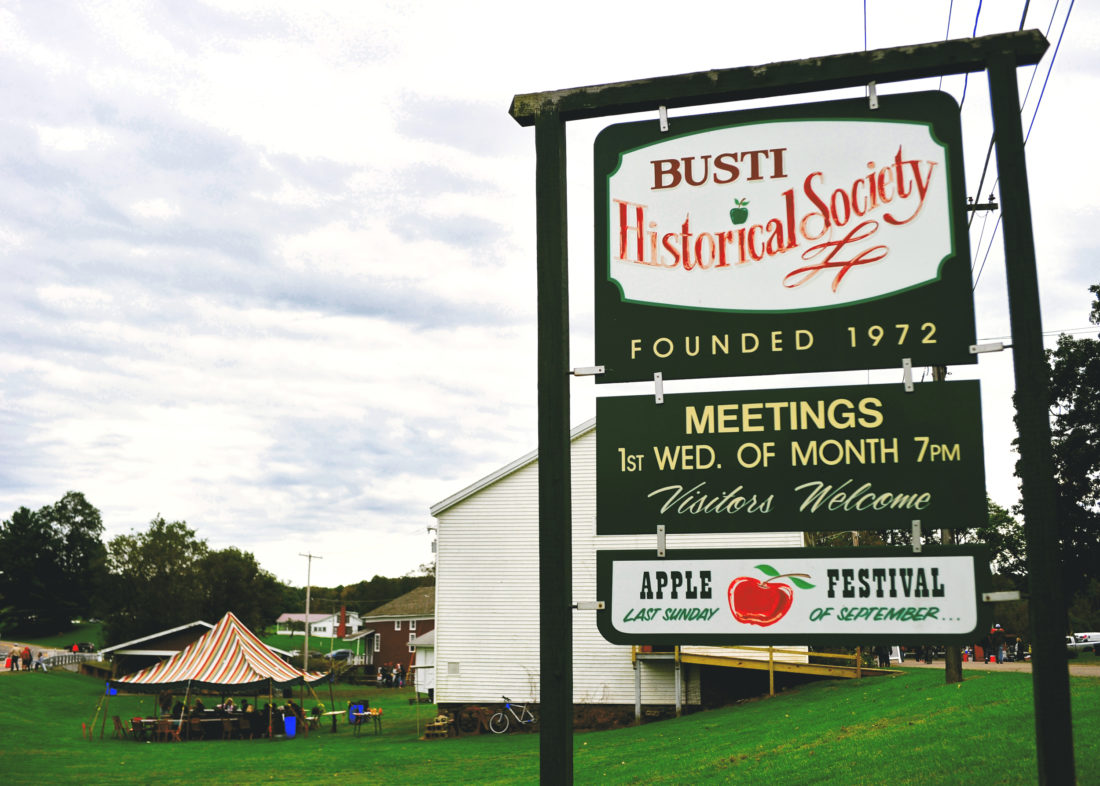
A sign greets visitors to the Busti Apple Festival. The event celebrated its 44th year Sunday. Photo by Daryl Simons Jr.
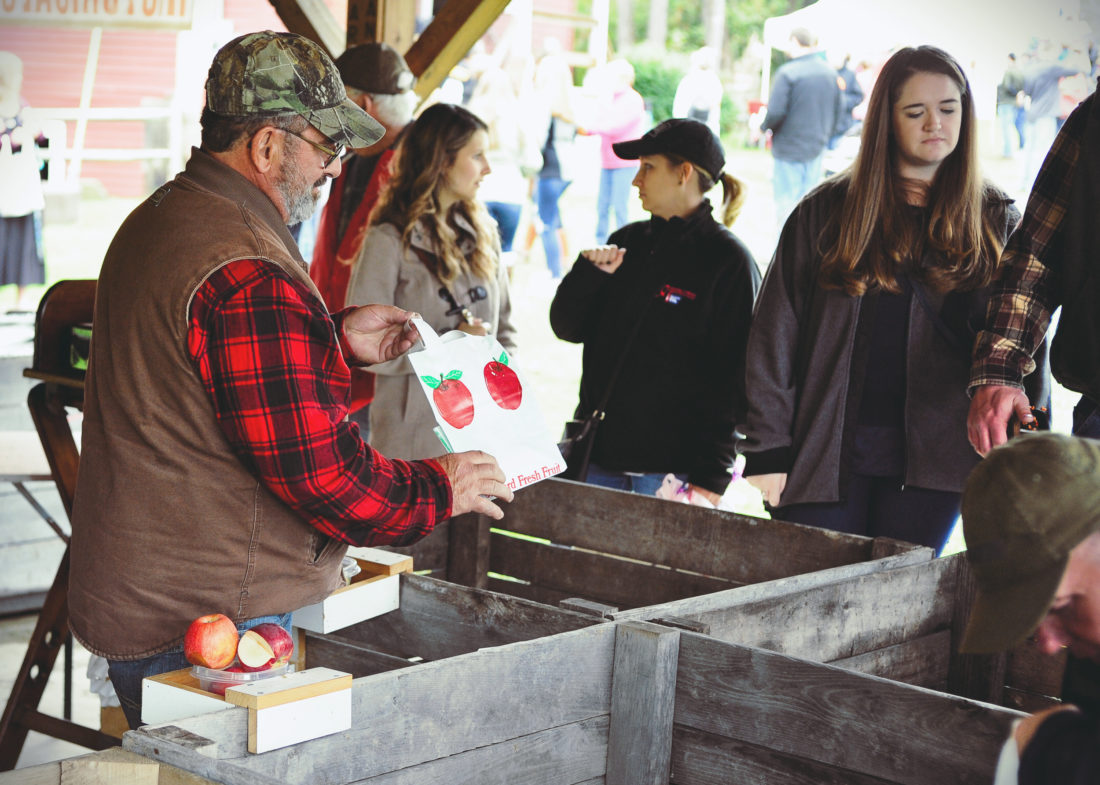
Fresh apples and apple cider were popular at this year’s Busti Apple Festival.
Two children are greeted by a couple of horses at Sunday’s annual Busti Apple Festival. It was the 44th year for the festival, which included vendors, demonstrations and plenty of food. Photos by Daryl Simons Jr.
A sign greets visitors to the Busti Apple Festival. The event celebrated its 44th year Sunday. Photo by Daryl Simons Jr.
Fresh apples and apple cider were popular at this year’s Busti Apple Festival.
Trending
BUSTI -- A rainy morning did not stop people from coming out to enjoy Busti's Apple Festival this year.
Apple cider, deep fried delights, craft vendors and various demonstrations enticed individuals to come out from all parts of the area.
"We're happy to see people come out," said Bob Schultz, president of the Busti Historical Society.
The venue consists of the Miller's House built in 1846, the Grist Mill built between 1838-39 and shut down in 1960, the Storage Barn, demonstration building, country store and pavilion. The Apple Festival was originally created to help raise funds to restore the Grist Mill.
"When we started, we were living from hand to mouth," Schultz said. "Whenever we got a donation, we would buy a box of nails or something to put the mill together. We had donations of flooring; one company made all of the windows. But we still had to raise money, so we had a festival. There was a Pioneer Festival and other festivals.
"One year, we got rained out, but we had a lot of food and supplies leftover. We started the Apple Festival after that, and that was the one that took off."
After the mill was originally shutdown, the town acquired the property that the mill was on. The mill was potentially going to be torn down and replaced with a park. Three girls from the 4-H club wanted to save and restore the mill, so they raised some money to get the roof fixed, and running by 1976. That didn't happen right away.
"First few years, we had the fathers and friends involved. It was an interesting project working on the mill. We did quite a bit of the timber framing. There's a lot of people, farmers, they were familiar with the mill and animal feed. So we had quite a few farmers helping out. They fixed everything. We replaced a lot of timbers and rotting wood," Schultz said.
Interestingly, the Busti Historical Society came about largely because of these restoration efforts. "It was created as the 4-H club could not own this property. The town gifted it to us for $1," Schultz said.
Despite the festival's name, it is not only about apples. Though it did host a wide array of fresh apples, cider and other produce, the festival also put on display a variety of trades, traditional and modern. Some of those included: gun-smithing, apple juicing, candle making, tapestries, leather punching, Swedish weaving, flax-to-linen process and chair caning.
Sarah Hatfield of Russell, Pa., was demonstrating the traditional way of making soap, with lye water and fat. Her great-grandmother used to make soap. Prior to being a demonstrator at this festival, Hatfield didn't follow in her great-grandmother's tradition of soap-making.
"I'd never made soap, but thought it would be a good opportunity to learn," she said.
This was a common phrase amongst many of the demonstrators at the festival.
"Apparently my great-grandmother was better at soap making than me because I have one bar of her soap my dad saved. It's about 75 years old," Hatfield said.
Norman Carlson was a demonstrator making wood shingles by hand. He talked about how these would often be made by people during their off-time. There was no such thing as "leisure-time" back then, Carlson added. Eventually a better machine was created that dwindled the need for so much man-power to create these shingles.
Not all of the demonstrators learned their skill due to this festival, however.
Tim Ferrie of Scandia displayed four of his flintlock guns, one was an original from the 1800s, the other three of his own creation. He was self-taught, and said that he builds a new gun every year.
"This original one is a treaty rifle given out to Indians when signing a treaty, possibly Fort Stanwix. It was bought from an Indian 60 years ago at a Cornplanter grant above Kinzua," he said.
Pete Mangini displayed his 1926 Reed Hit-and-Miss Engine, a 15 horsepower, 4,000 pound engine.
"This engine is really basic, but the fundamentals are the same," he said. "Newer engines just have more bells and whistles. This particular engine is currently fueled with propane. Originally "this engine was original used to pump oil wells, pumping about 15 oil wells around Youngsville, Pa. Because its an oil filled engine, they used the natural gas from the well to power the engine."
Skip Trumball of Russell, Pa., was at the Apple Festival as a "Civil War surgeon." He brought in a number of equipment pieces from the Civil War era.
"Suppositories were primarily used with morphine," Trumball said. "They found that morphine introduced into the body through suppositories was faster and more effective than if they were introduced orally. So it was a very effective way to get that strong pain killer into the body."