
Local Paramedic Shares Pandemic Experience
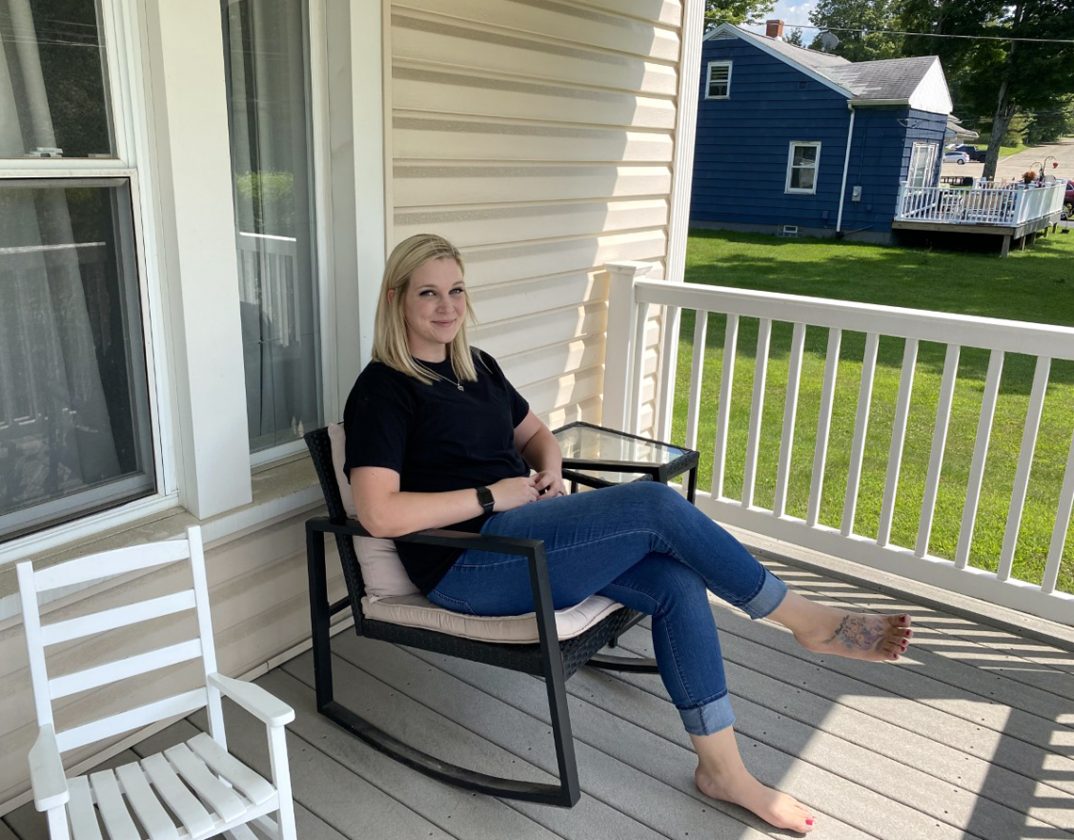
Pictured is Kelsey Mattison, a local paramedic and new mom. Mattison shared her story on becoming a new mom and continuing her work as a first responder during the COVID-19 pandemic. P-J photo by Katrina Fuller
Jamestown paramedic Kelsey Mattison has worked in emergency services for the past six years — but nothing could have prepared her for the COVID-19 pandemic.
Mattison, who responds to emergencies in both the Jamestown and Dunkirk areas, shared her story with The Post-Journal, giving a first-hand account of what emergency personnel have been dealing with throughout the era of the coronavirus. However, she not only grappled with the challenges of her profession — she began the pandemic as an expectant mother.
“I was pregnant when all of it started,” Mattison said. “I worked as a paramedic until I was seven months and then I went to dispatch for the last two months because I didn’t want to possible contract COVID. I delivered during COVID and went back to work six weeks later, and it was fully involved at that point.”
She said her new mother experience was not a typical one, as regulations dictated she might not be able to have anyone present in the birthing area. While those regulations changed around the time she was able to give birth, her family still had to remain at a distance after the baby was born.
“No one could come visit us in the hospital, no one could come over and see her or us,” Mattison said. “That’s not what you hear about when someone has a baby — you can have visitors and all your family is there all the time. I couldn’t bring her to work and show everyone.”
When she returned to work, Mattison said the whole COVID climate had changed; previously, masks had been worn, but when she returned, everyone was fully “gowned up.”
“It was full PPE — gowns, gloves, masks, N-95s — everything,” she said. “That was a big change.”
Mattison and her husband, Chris, both work in the medical field. Chris is employed as a nurse, which also put him in the midst of the COVID-19 battle.
“It was difficult at first, you go home scared every day,” she said. “Between my husband and myself, (we wondered) which one of us is going to bring it home to our newborn. It was scary not knowing what we could do to help. Masks and gloves only help so much.”
Mattison said she and her colleagues knew they were often coming in contact with patients who were positive for COVID-19.
“At the beginning, everyone was trying to steer clear of other people and not go around other people in fear of contracting this,” she said. “But we were the ones going into the houses where people actively had COVID, knew they had it, and we had to go in and take care of them. So we were fully exposing ourselves to this knowing that these people had it when everyone else was just trying to steer clear.”
Mattison said she and her colleagues couldn’t even relax protocols at home. Instead, they often undressed on their back porches only to throw their laundry into the washing machine so they didn’t bring any viruses or germs into their own homes.
“It was really hard for a while with all of us having to wear masks even when we were on a break from calls. Everyone is so physically and mentally exhausted,” she said. “We couldn’t even hold our kids until we all showered. But we’re slowly getting back to the happy medics that we were.”
Between August of 2020 and March of this year, Mattison said there were a large number of calls for COVID-19 patients, as well as numerous transfers of COVID patients to other hospitals. While seeing anyone impacted by the virus was difficult, she said the cases she saw of younger people struggling with the virus hit home for her.
“It affected the elderly really dramatically, but seeing people my age who couldn’t get their oxygen levels up past a certain number even with everything (medical professionals were) doing, they were just unbelievably sick at 35 years old — that hit me hard,” she said.
The dichotomy between her professional experiences with the virus and public opinion was glaring. When Mattison was on maternity leave, she shared the mindset that the virus wasn’t that bad. However, when she returned to work, it was a different story.
“We heard a lot of, ‘It’s not that bad,'” she said. “But, when you’re transporting these people and spending a couple hours with patients that can’t breathe and they’re not getting better — you think about their families — like I said, there were some people in their 30s and they had young kids. While there were some people on TV saying, ‘It’s not a real disease and it’s not that bad,’ I had this person in front of me that literally could not catch their breath and I didn’t know when they were going to get better. That was frustrating.”
A big takeaway from the early part of the pandemic was valuing the simple things. On the whole, she said she wishes the community and the world at large could return to that feeling of people being “appreciative of the little things.”
“I feel like we lost that all again,” Mattison said. “It was nice seeing people so happy just to hug their brother or sister they hadn’t seen in months, and everyone was just so appreciative of each other.”
Looking ahead, she said she isn’t sure how the Delta strain will impact the area or the country as a whole. However, Mattison said first responders now have experience with COVID-19 and are equipped with knowledge to help their patients.
“We’ve been through the big storm of it already with COVID in general, so we know what we’re supposed to be doing and how to protect ourselves,” she said. “I don’t know if this strain is going to be different than what we’ve dealt with or not, but time will tell. We treat it as we see it — and we treat patients how they need treated if they have symptoms. That’s all we can do.”
Mattison has two important message for the public as the pandemic continues: Wash your hands and get emergency medical care when it’s needed.
“When this first started, everyone was scared of going to the hospital,” she said. “There were people who were having chest pains and heart attacks and they were brushing it off because they didn’t want to go to the hospital and get COVID. Those are the people that need to call.”
Mattison emphasized the fact that if someone is having a serious medical issue such as a stroke or heart attack, they should call 911 immediately.
In order to continue supporting the emergency medical personnel in the area, Mattison suggested members of the public take advantage of safety and health classes offered in the area, such as CPR, First Aid and Stop the Bleed classes. “It’s nice if the general public knows how to do CPR,” she said. “If they call us, we’re still going to be three minutes away, but they at least have the knowledge of how to do that.”
Top stories
City Man Faces Second Child Porn Charge
John Peterson, 42, of Jamestown was arrested and charged by criminal complaint with distribution and possession of ...
Local Lawmakers Back Rural Suicide Prevention Council
Fighting Weeds: CLP Reviews Herbicide Treatment Program
Luv Kia Of Jamestown To Close Its Doors On April 10
A Kia car dealership in Jamestown will be closing its doors by the end of next week. Luv Kia of Jamestown ...
Jamestown Taking Over Parcels With Homeless Squatters
A dozen parcels in the city of Jamestown that are currently owned by Chautauqua County are being transferred to the ...
Former Dunkirk Treasurer Makes Court Appearance
MAYVILLE – A former Dunkirk treasurer who is accused of stealing more than $100,000 from city coffers made an ...