
Lots Of Lake Information, Not Much Consensus
-
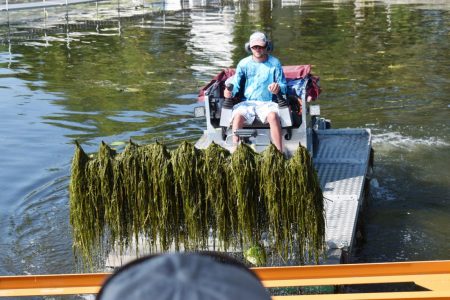
- Chautauqua Lake Association crews and Mobitracs from the town of Chautauqua have coordinated on the cleanup of aquatic plants and debris this summer, including last week’s efforts in Bemus and North Harmony. P-J photo by Jay Young
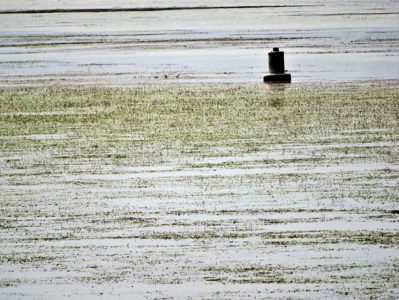
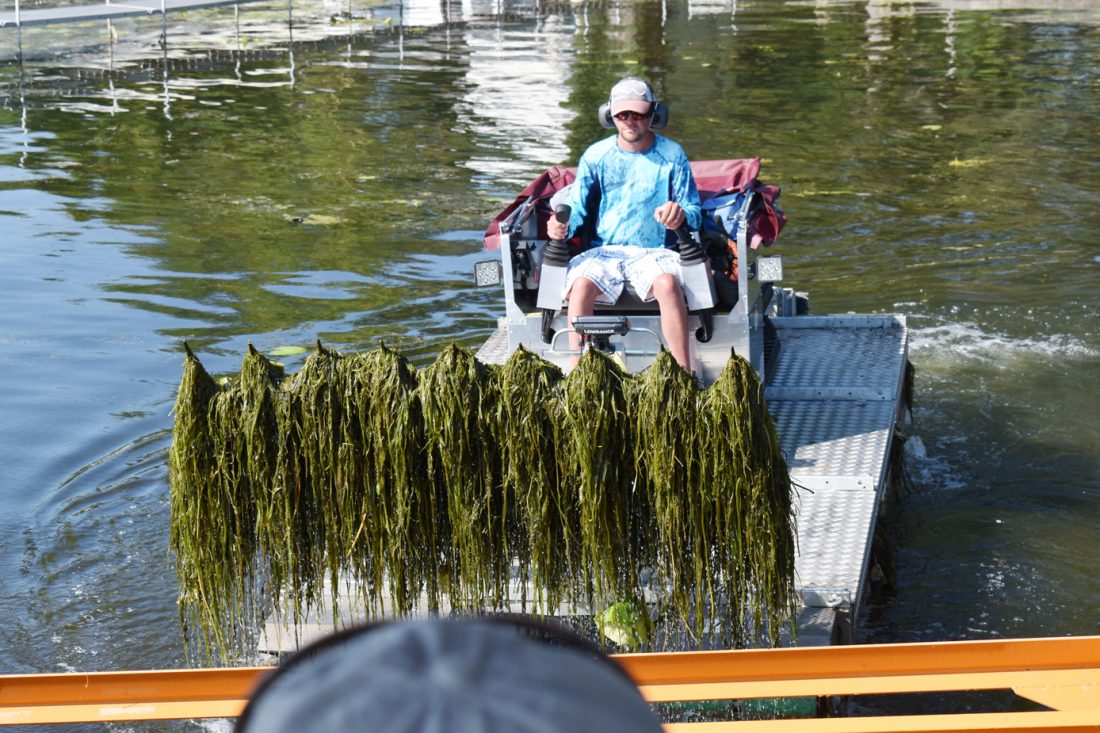
Chautauqua Lake Association crews and Mobitracs from the town of Chautauqua have coordinated on the cleanup of aquatic plants and debris this summer, including last week’s efforts in Bemus and North Harmony. P-J photo by Jay Young
The use of herbicides in Chautauqua Lake north of Long Point State Park is shaping up to be a contentious issue in 2021.
Applications for herbicide permits in Chautauqua Lake have already been delivered to the state DEC asking for permission to use herbicide on about 900 acres of Chautauqua Lake.
A study of submerged vegetation throughout the lake by North Carolina University students found Eurasian milfoil as the second-most prominent type of vegetation in the town of Chautauqua’s waters. Out of 381 sampling locations, 93% contained vegetation, with 44% of the locations having moderate vegetation and 28% sparse vegetation. In Mayville 113 locations were samples, all of which had vegetation and 72% of which were moderate or dense with vegetation. The most dominant species recovered was Eurasian milfoil, which was seen in 84% of locations with an acreage estimate of 291.2 acres.
“In summary, our point intercept and echosounding findings were consistent with 2018 and 2019 surveys and found that non-native Eurasian watermilfoil is the most dominant (submerged aquatic vegetation) SAV within the waterbody,” the study notes. “It was most commonly found at 5 foot depth and was widespread throughout the lake. The distribution and abundance of Eurasian watermilfoil should be considered with future management decisions.”
The Chautauqua Lake Memorandum of Agreement that took effect May 1, 2019, and ends April 30, 2021, limits use of herbicide to 25% or less of the littoral zone south of Long Point. In a letter to the state DEC, Chautauqua Institution points to a request from the requests from the state Department of Parks, Recreation and Historic Preservation to not to apply herbicides north of Long Point State Park.
“You may also recall that in previous herbicide application comment periods, the New York State Department of Parks, Recreation and Historic Preservation indicated that under no circumstances should herbicides be applied adjacent to or near Long Point State Park, demonstrating their concern over potential negative impacts to patrons and the ecology of the park. These areas are being requested again in this submission. Why would these herbicide application concerns from the State not apply again this year, and apply to other areas on Chautauqua Lake, including Chautauqua Institution?” wrote John Shedd, Chautauqua Institution vice president of campus planning and operations.
State DEC officials are reviewing the permits at a time when there has possibly never been more information available about the state of vegetation in Chautauqua Lake. Four organizations spent time on Chautauqua Lake last summer documenting lake vegetation — Princeton Hydro, which performs third-party monitoring of herbicide applications on Chautauqua Lake; North Carolina State University. which partnered on a lakewide study of macrophytes with the Chautauqua Lake Partnership; Racine-Johnston, which works annually with the Chautauqua Lake Association; and Solitude Lake Management, which partners with the Chautauqua Lake Partnership.
What does this wealth of information say? It’s complicated.
Randall Perry, Chautauqua Lake Watershed Management and Alliance director, said having such a variety of information is good even if the information doesn’t always agree.
“With all the passion and all the differing opinions about things and the different science and data that is out there that can be interpreted in different ways, there’s always a challenge to try to get that,” Perry said. “We do our best to try to help fill that void. We also understand the other pieces of information that are coming out from our members are important information as well to add to the overall assessment of things.”
PRINCETON HYDRO THIRD PARTY MONITORING
Completed late last year and released to the public in January, the Princeton Hydro report documents the effects of herbicide applications on Chautauqua Lake in 2020.
The study showed reductions in non-native submerged aquatic vegetation biomass in the treatment and non-treatment zones following treatment. This included reductions in the target non-native Eurasian watermilfoil, and also the nontarget, non-native curly-leaf pondweed. The study’s authors note reductions in Eurasian milfoil are likely associated with the herbicide application while reductions in curly-leaf pondweed may be related to natural plant die-off, potential in-lake chemical movement or other factors. Native macrophyte species richness increased in the treatment zone following treatment as did floristic quality per the Floristic Quality Index.
Overall, average biomass (all species minus chara) decreased in both the treatment and non-treatment sites between pre-treatment and post-treatment. The largest decline was at the treatment site where average biomass decreased from 108.1 g/m2 to 46.1 g/m2.
Macrophyte and water quality data showed the treatment program to have been successful in reducing Eurasian watermilfoil biomass and allowing for increasing native vegetation. The number of species identified in the treatment and non-treatment zones increased at the treatment zone between the pre-treatment survey and post-treatment survey. Species richness at the non-treatment site remained the same.
“Macrophyte data showed reductions in non-native SAV biomass in the Treatment and Non-Treatment zones following treatment,” the report states. “This included reductions in the target non-native, Eurasian watermilfoil, and also the nontarget, non-native, curly-leaf pondweed. Reductions in the former are likely associated with the herbicide application while reductions with the latter may be related to natural senescence, potential in-lake chemical movement, or other factors. Native macrophyte species richness increased in the Treatment zone following treatment as did floristic quality per the Floristic Quality Index.”
NORTH CAROLINA UNIVERSITY STUDY
Three University of North Carolina masters students sampled close to 1,000 points in the lake to see what weeds were present. Their results show the upper basin of the lake have a healthy mix of vegetation natural to the lake and also invasive vegetation while the lower basin on the other hand has fewer types of weeds and a lot of the invasive vegetation and algae that obscures the water and prevents a clear view of the lake bottom.
The students found that Eurasian watermilfoil and curly-leaf pondweed are the two most prevalent non-native submersed species in Chautauqua Lake. Eurasian watermilfoil was the most abundant and frequently is found with other native vegetation instead of being confined in densely populated monocultures. The study also noted the species richness is greatest from Snug Harbor Marina north to the Chautauqua Marina. The greatest density of Eurasian watermilfoil was in the north basin near the town of Chautauqua.
“While non-native species can reduce ecologic and recreational function by dominating the habitat, future management direction should consider maximizing (Eurasian watermilfoil) control while minimizing native species impacts in the highly diverse portions of the lake.”
Overall water quality and clarity is better in the north basin than in the south basin of Chautauqua Lake. Eurasian watermilfoil is found with a 58% occurrence across the lake. The student report also noted the presence of starry stonewart at 13 sampling locations across the lake. Starry stonewort is an algae with a plantlike structure native to Europe and Asia first discovered in the St. Lawrence Seaway in 1978. It may outcompete native plants and phytoplankton that provide food and shelter for invertebrates and fish while its dense mats can hinder the spawning of some species of fish.
RACINE-JOHNSON REPORT
The Chautauqua Lake Association received its fall report from Racine Johnson Aquatic Ecologists in early January.
Racine-Johnson veys showed a slight increase in plant species in Chautauqua Lake n September. While there were 52 macrophyte species in 1937, the number has ranged from 24 in 2015 to 28 in 2020, reaching a low of 21 in 2016. The Racine-Johnson scientists reach a different view of how Eurasian milfoil and curly-leaf pondweed interacts with other plant species in the lake, however.
“These two non-native species are an integral part of the macrophyte species community in Chautauqua Lake and their presence has not changed native species richness over this long-time span,” the report states. “Importantly, data from 2003 to 2020 does not show an increase in the percentage of M+D abundances (biomass) of Eurasian watermilfoil, but rather a decline. This suggests that Eurasian watermilfoil has not increased over this time. While occurrences (number of locations with Eurasian watermilfoil) trend upward from 2003 to 2020, this only suggests the species is well dispersed and naturalized around the lake.”
The longstanding presence of Eurasian milfoil and curly-leaf pondweed, as well as the decrease in the two invasive species from 2000 surveyed levels and the two invasive species’ role as a habitat for herbivrs that attack Eurasian milfoil, prompt Racine-Johnson to recommend against using herbicides to target Eurasian milfoil and curly-leaf pondweed.
“The current misguided drive to eliminate macrophyte species that are an integral part of and supply vital ecosystem functions just because they are termed “non-native” is problematic. Eurasian watermilfoil and curly-leaf pondweed are long-term inhabitants of Chautauqua Lake and live in this healthy lake ecosystem as naturalized species,” the report states.
Top stories
Maple Grove AP Class Makes Trip To D.C.

Honing Her Routine: Erinn Sluga Readies For State Competition
Resident Says Fulton Street Improving Despite Change, More Help Is Still Needed
County Helping Fight HABs in Findley Lake
MAYVILLE – Chautauqua County is helping address Harmful Algal Blooms in Findley Lake. During the county ...
Protecting The Waters: DEC Releases Algae Bloom Roadmap
Ellicott Police Respond To Homeless, Trespass Complaints
FALCONER - Although progress has been made, safety and compliance problems concerning the homeless population are ...