Reed Optimistic On Second Relief Package
-
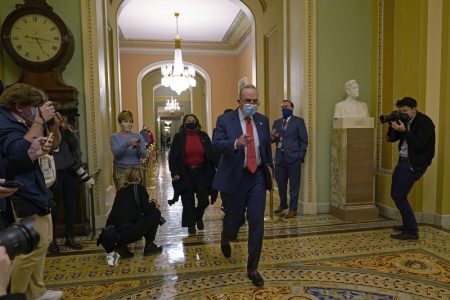
- Senate Minority Leader Sen. Chuck Schumer of N.Y., walks past reporters on Capitol Hill in Washington, Tuesday, Dec. 15, 2020. (AP Photo/Susan Walsh)
-
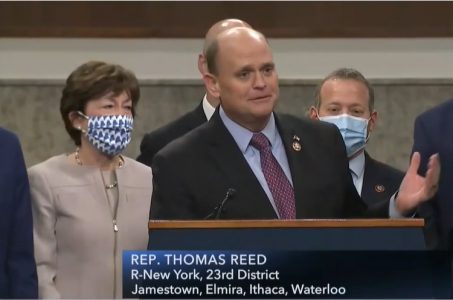
- U.S. Rep. Tom Reed
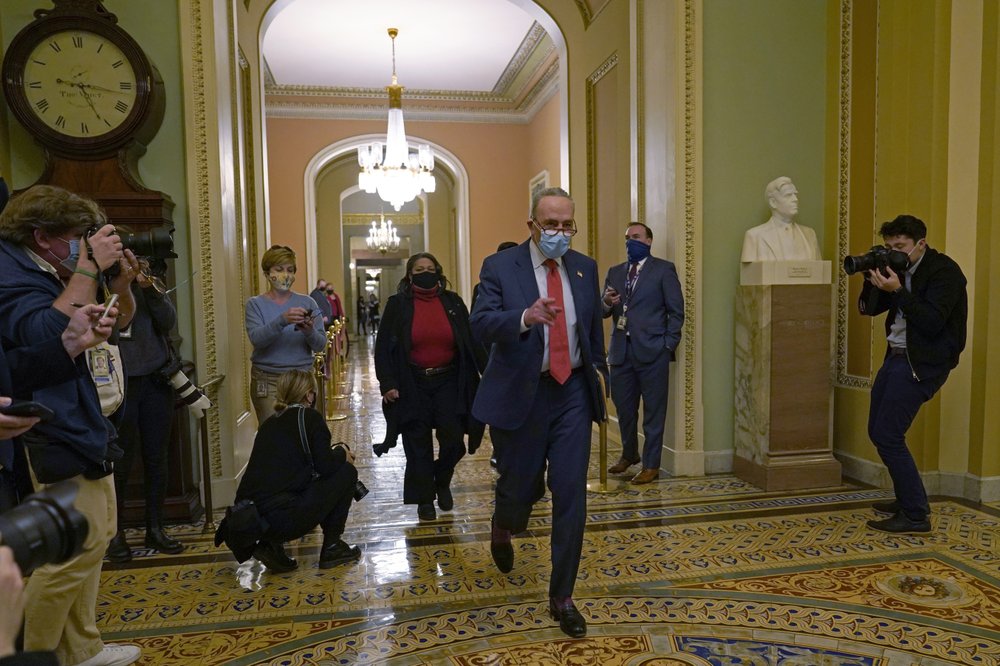
Senate Minority Leader Sen. Chuck Schumer of N.Y., walks past reporters on Capitol Hill in Washington, Tuesday, Dec. 15, 2020. (AP Photo/Susan Walsh)
U.S. Rep. Tom Reed, R-Corning, is optimistic that a second COVID-19 relief package will be reached in the coming days. During a conference call on Thursday, Reed said he was confident that Congress would reach a consensus on the $900 billion stimulus bill before Christmas.
“I am very confident,” Reed said. “I know this is going to happen and it is going to happen before we leave here for the Christmas holiday.”
Among the many details being finalized are food and housing assistance, COVID-19 vaccine distribution resources and federal jobless benefits.
“We see things in this package, things like the paycheck protection program, where $300-plus billion is going to be delivered to our small businesses,” Reed said. “To those restaurants, to those industries that have been particularly hit as a result of COVID-19. We’re going to see unemployment be extended to make sure those that have lost their job during these difficult times get assistance, and they don’t lose it the day after Christmas.”
The relief is expected to include $600 checks to individuals, half of the $1,200 that was proposed by some lawmakers.
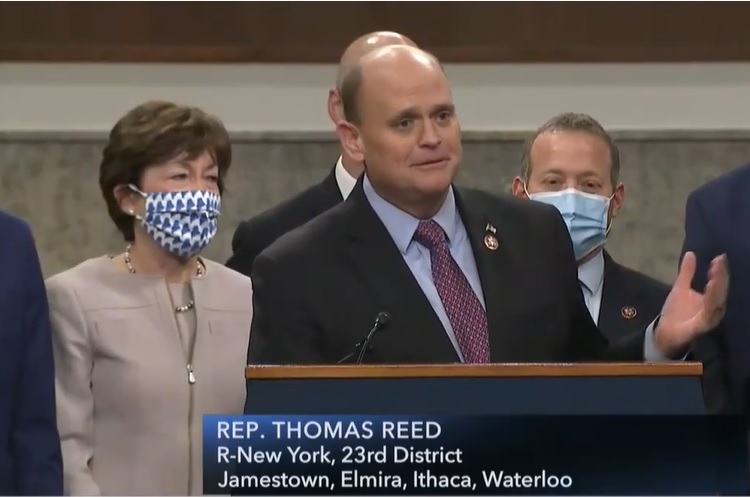
U.S. Rep. Tom Reed
Reed said that there has been opposition to individual stimulus checks on both sides of the aisle, and that a compromise of $600 was reached.
“Now is the time to not let the perfect be the enemy of the good. This deal needs to be done for the American people,” he said. “At the end of the day in order to find common ground, in order to get people to come together to get this deal done, a compromise was reached. The number at $600 was kind of where it resulted, and also (that) worked within the parameters to stay within that $890-$900 billion amount.”
It remains to be seen if any changes will be applied from the first relief checks received by Americans, such as income threshold requirements. Reed expressed his support for sending checks directly to individuals.
When asked if the package will include any specific relief for the live performance venues hit so hard by the pandemic, Reed replied that a bigger perspective may be appropriate.
“Rather than focus on each industry specifically line-by-line, I think we can solve this looking at the big picture,” he said. “I know there is a lot of discussion about making sure that specific types of requests like that get addressed. I encourage folks to pull back and look at the big picture of the programs that are going to be in here. Like the paycheck protection program that will provide a tremendous amount of relief to venues, to stages.”
Funding from the stimulus is expected to help facilitate deployment of the COVID-19 vaccine, which is being directed to key groups at the federal level.
Once frontline healthcare workers in close contact with COVID-19 patients receive the first doses of the vaccine, states may take different approaches with distribution.
“There may be some tweaking of that state-by-state, but overall I think the general prioritization will be very clear as folks look at the data, where the need is,” Reed said. “The federal level has set kind of the priorities if you would with regards to making sure that our healthcare workers were the first group–the top priority and rightfully so. They are addressing the COVID-19 emergency right on the front line, closer than anyone else on a day-to-day basis. Then you see it filter to the state. We set the federal standard, the federal prioritization, but each state needs to recognize the unique characteristics of its state and its need in its community.”
PARTISAN DIVIDE
Two areas that continues to divide Republicans and Democrats on the issue are liability shielding in addition to state and local relief.
GOP lawmakers have pressed for federal liability protection against future lawsuits stemming from the pandemic, while Democrats continue to ask for aid to state and local governments.
“You’ve got folks on both (different) sides of the aisle that are adamantly supportive of getting them done,” Reed said. “On the Republican side you’ve got the liability folks that want to have that taken care of, and on the Democratic side you see a tremendous amount of interest in getting the state and local aid done.”
Reed cited new data from The Urban Institute indicating that state and local governments may be weathering the financial impact of the pandemic better than previously expected, and sympathized with the desire for a liability shield.
“There are significant risks of lawsuits,” Reed said “We’re just starting to see the initial filing of lawsuits against entities, and the exposure is real. We’re going to have to deal with that liability exposure, especially as you get further down that path and those lawsuits pile up.”
Top stories
City Man Charged After Allegedly Firing Gun
A Jamestown man faces charges after allegedly pointing a gun at a police officer who was responding to a domestic ...
Since Accident In December, Falconer Department Going Without Ambulance

El Equipo Holds ‘Baby It’s Cold Outside’ Event For Homeless
Planner Discusses Early Safe Streets Projects
Plans to improve both pedestrian and driver safety in the city under the Safe Streets For All project are ...

Langworthy’s Jamestown Office Reopens