
Small Groups, Shared Effort: Fletcher teachers help young readers grow
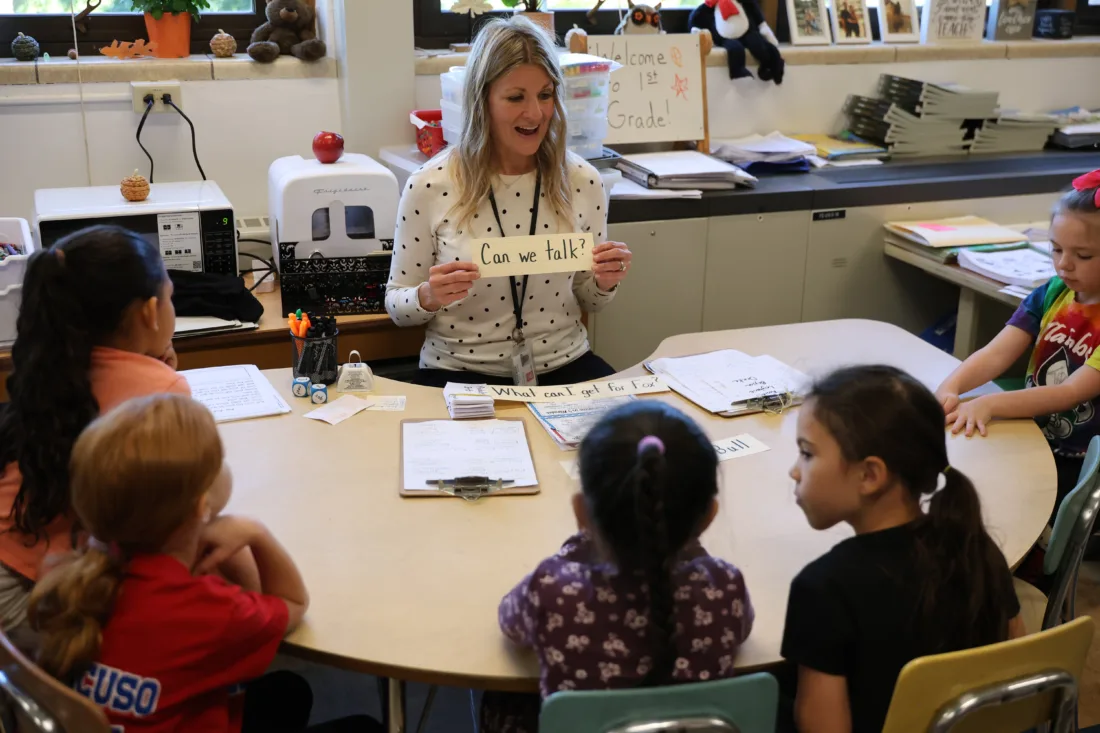
Fletcher Elementary School first grade teacher Johnna Conti-Guido works on a reading exercise in a small group setting with her students.
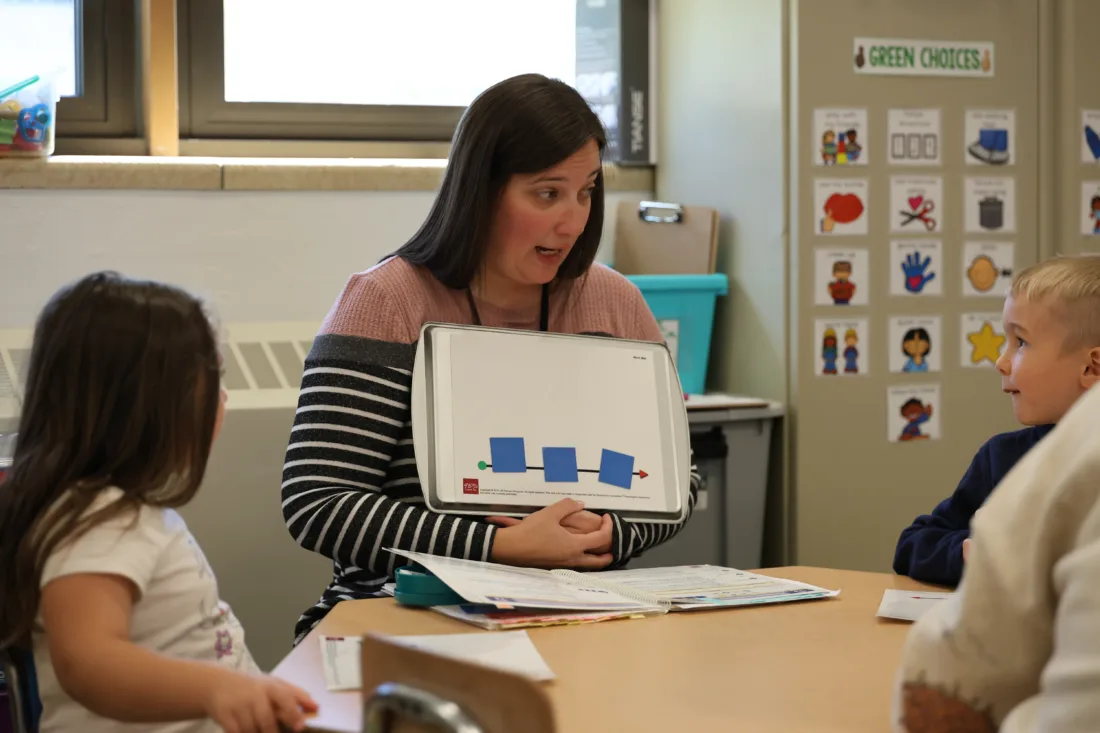
Fletcher Elementary School reading teacher Rachel Benjamin works with students in Melissa Gormley’s kindergarten class on an exercise in a small group setting.
Fletcher Elementary School first grade teacher Johnna Conti-Guido works on a reading exercise in a small group setting with her students.
Fletcher Elementary School reading teacher Rachel Benjamin works with students in Melissa Gormley’s kindergarten class on an exercise in a small group setting.
Trending
"I can do hard things."
"I will keep trying."
Those are some of the words kindergarten teacher Melissa Gormley hears during small-group learning time at Fletcher Elementary School. Around her classroom, children practice skills, ask one another for help, and discover what they can accomplish.
Behind those moments is a team of teachers working together to help children succeed. They compare notes, share ideas, and celebrate progress -- all to make sure students get the practice, encouragement, and support they need to grow as readers.
"The reading teachers strive to be collaborative partners with the classroom teachers," said Rachel Benjamin, one of Fletcher's five reading interventionists. "Classroom teachers provide core reading instruction while the reading teacher provides additional targeted support to meet their individual reading needs."
That partnership takes shape each day in classrooms like Gormley's, where students follow a slideshow that directs them to a different station every 15 minutes. They may work with her, meet with a reading specialist, or practice independently using activities organized in color-coded bins. Each child knows which color to choose based on the skills they are working on.
Planning those activities takes ongoing attention. Gormley and her reading specialist use assessments and what they notice in students' daily work to organize groups and keep children challenged.
During that time, Gormley sees students learning more than letters and sounds.
"They are collaborating with each other, they are helping one another with a skill that they may be needing a bit more help with," she said.
She also hears children asking for help and encouraging one another to keep trying.
"My kindergartners get excited about this time of day," Gormley said. "They say the activities are fun and always want to know what is new this week."
That same care goes into small-group instruction in Johnna Conti-Guido's first-grade classroom. Students practice skills from their classroom reading lessons through activities such as reading books, writing sentences, building words with letters, and working with playdough.
"The students gain a great deal through this time," Conti-Guido said. "They get to practice what they have learned in a more relaxed way. The students can learn and help one another."
Conti-Guido works closely with reading interventionist Kristy Winchester, who has completed individual assessments with her students. Together, they review what those assessments reveal and plan groups around the children's needs.
"We look at what the needs of the children are and how we can best support them," Conti-Guido said.
For Conti-Guido, the partnership begins with a shared goal.
"We want the students to be successful," she said. "We want them to learn and feel happy."
Fletcher's reading interventionists work inside kindergarten classrooms and bring students in grades one through four into their own classrooms for small-group instruction.
"The simple explanation of my role is helping students develop the skills they need to become a confident, independent, and successful reader," Benjamin said.
That work begins with finding out what a child already does well and where they need more practice, whether it is connecting letters and sounds, reading smoothly, or understanding a story.
"During and after instruction we are monitoring the student's progress," Benjamin said. "We will use assessments to determine if the student is gaining the skill and then adjust our instruction accordingly."
Keeping that support connected to classroom learning means teachers stay in regular contact. Some days, they sit down for meetings. Other days, they share an email, update a progress tracker, or catch one another in the hallway.
"Sometimes it looks as simple as a sticky note passed between us," Benjamin said.
For Gormley, having a colleague to share both challenges and successes makes a difference.
"It's especially meaningful to have a colleague who can recognize the small wins, celebrate students' growth, and remind each other of the impact we're making each day!" she said.
Benjamin hopes families understand that reading intervention is another way the school helps children grow.
"Reading intervention is extra support designed to help your student strengthen their reading skills," she said. "It is not a punishment and it does not mean your child is a 'bad reader.'"
Families are part of that effort, too.
"Families play an important role in the process," Benjamin said. "Reading together, practicing skills, encouraging effort, and celebrating growth can make a huge meaningful difference."