
A ‘Flying’ Start for Families: Fletcher’s First Flyers Program builds connections with youngest students’ families
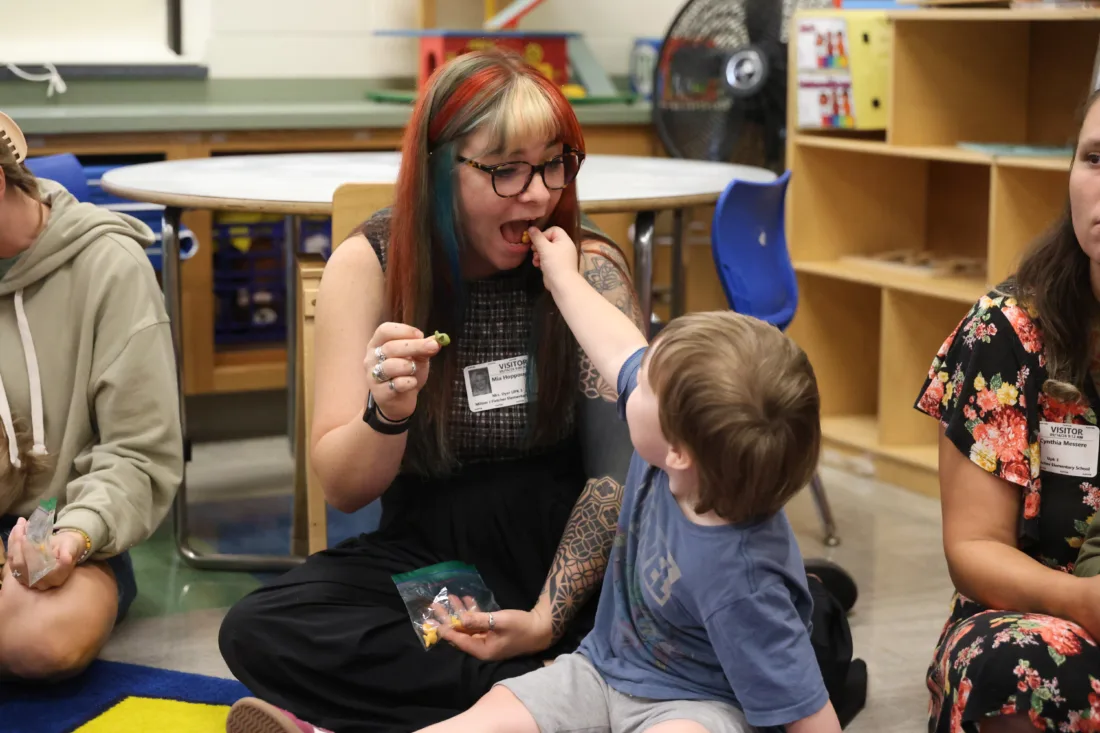
Fletcher Elementary School parent Mia Hoppough shares a moment with her son Felix during the first Fletcher Falcons First Flyer program. A new parent engagement program, First Flyers is helping relationships between UPK 3 students, their families, and school staff.
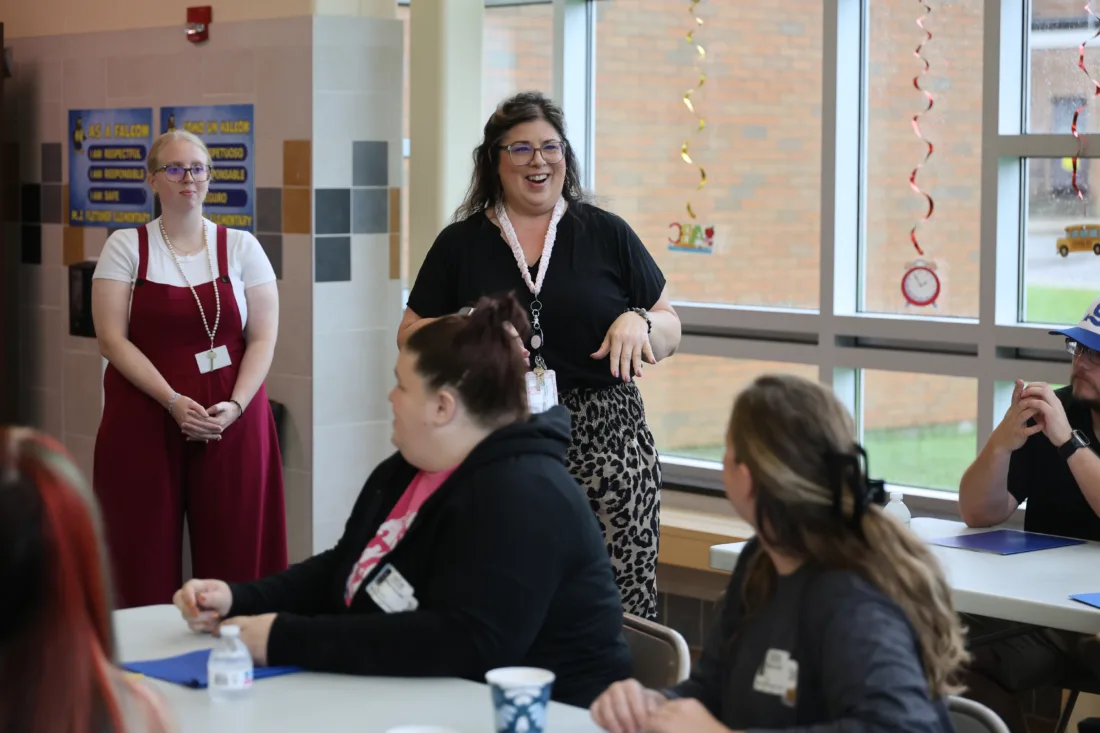
Fletcher School social worker Christina Marsh leads a session of the First Flyer parent engagement program.
Fletcher Elementary School parent Mia Hoppough shares a moment with her son Felix during the first Fletcher Falcons First Flyer program. A new parent engagement program, First Flyers is helping relationships between UPK 3 students, their families, and school staff.
Fletcher School social worker Christina Marsh leads a session of the First Flyer parent engagement program.
Trending
For families of Fletcher Elementary School's youngest students, the start of school is also the beginning of a new relationship -- with teachers, support staff and other families who will share in their child's educational journey.
A new parent engagement program is helping those relationships take flight.
Launched this school year by UPK 3 teacher Amber Dyer and school social worker Christina Marsh, the Fletcher Falcons First Flyers program brings families into school to meet staff, learn about resources and spend time learning alongside their children.
"We really just want to build that communication," Dyer said. "Get those parents comfortable, get them comfortable coming into this building and just feeling like they can talk to us."
The idea grew out of conversations during Dyer's first year at Fletcher last year. Having started a similar initiative in another district, she brought experience with inviting parents into the classroom to work with their children. Marsh saw an opportunity to help families feel welcome from their earliest experiences with school.
"It was really important to me to think of how we can serve these youngest families, these youngest students," Marsh said. "And how can we help them to engage in the school and not feel uncomfortable with their first experiences?"
The two also learned about an established program at Love Elementary School, with a goal of starting small at Fletcher and eventually expanding to include UPK 4 families.
Sessions are planned for the third Wednesday of most months. Each combines a learning opportunity for parents with a classroom activity that allows them to apply what they have discussed with their children. Families also receive activities and information to take home, extending the connection between school and home.
"We want our families to know from the very beginning that they belong here and that we are partners in their child's education," said Amanda Sischo, principal of Fletcher Elementary School. "Amber and Christina have created a wonderful opportunity for parents to build relationships, ask questions and see firsthand how their children are learning. First Flyers helps lay the foundation for a strong connection between home and school that we hope will continue throughout their years at Fletcher."
The first session focused on introductions. Families met administrators, office staff, the nurse, counselors, teachers and other staff members they or their children might encounter throughout the school day. They also received information about child development and community resources.
"At this age, so much learning happens through play and everyday routines," said Megan Brown, Fletcher's assistant principal. "First Flyers gives families a chance to see that learning in action and leave with ideas they can use at home, whether they're reading a story together, counting or helping their child practice a new skill."
For Dyer, putting faces to names was an important first step. Children often talk at home about adults who visit their classroom, but parents may not yet know those staff members or the roles they play.
The gathering also gave families an opportunity to connect with one another -- relationships that could continue well beyond preschool.
Marsh said those introductions help make school services easier to understand and encourage families to ask questions. She hopes parents will feel comfortable seeking support when they have a concern or need help finding a resource.
"My concern is not only academic, but it's also the mental well-being of all of our students," Marsh said.
Another central goal is helping families understand how young children learn through play.
The first session included a "sunshine circle," a therapeutic activity designed to strengthen attachment and connection between children and their parents. Families received a packet of activities they could continue at home.
"Play is how we learn. We learn through play," Marsh said. "It's not just building with blocks. You're learning so many more things when you're doing that."
Dyer said welcoming families into the classroom also helps them see the learning behind activities that may look like simple songs or games.
"It's sometimes tricky in UPK 3. We don't always send home paperwork because we're not paper-pencil. We play a lot," Dyer said. "It may look like that, but there is so much going on."
Early feedback has been encouraging. Dyer said parents appreciated seeing the classroom, learning more about their child's day and having uninterrupted time together.
"They enjoyed that they got some focus time with this one child in the classroom," Dyer said. "They really just had an hour to focus with their child."
With PTA support for breakfast and cooperation from school staff, Dyer and Marsh hope to continue building a program that makes families comfortable, informed and involved from the beginning.
"We really want to start with our youngest friends," Marsh said. "And the parents are an integral part of that. We can't do that just with the child. We need the parent."