
Area fully plugged in to data center debate
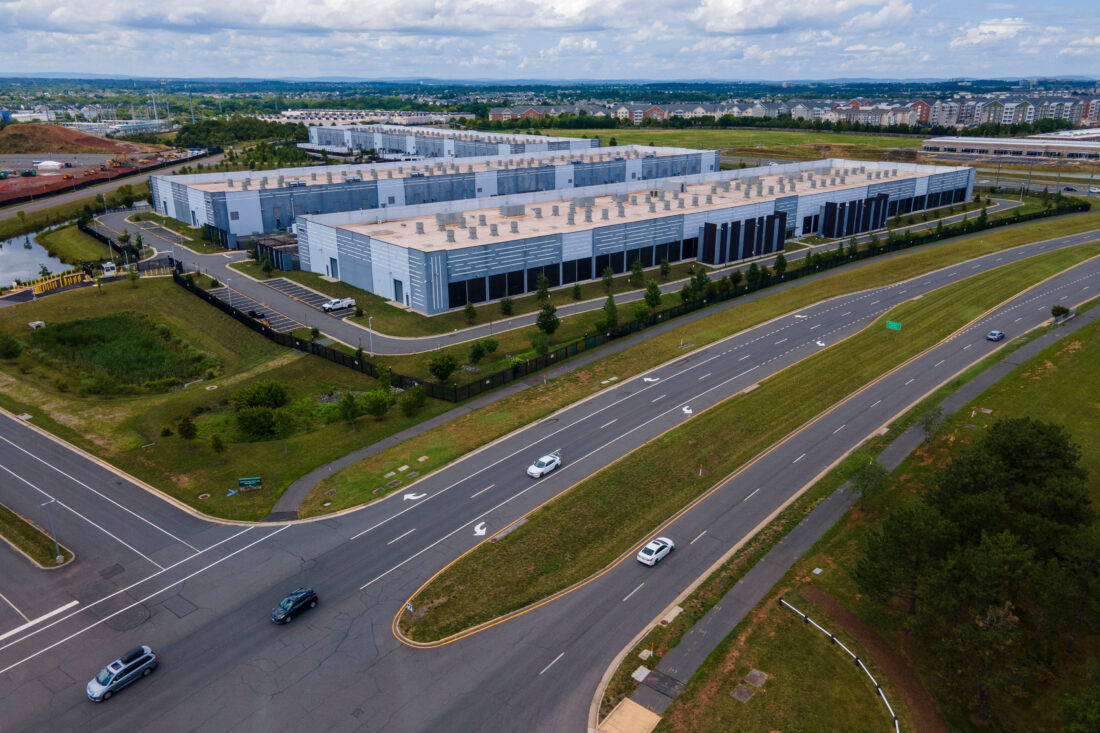
Pictured are data centers in Ashburn, Va., that officials say has helped the economy while lowering the local tax rates. AP photo

Pictured are data centers in Ashburn, Va., that officials say has helped the economy while lowering the local tax rates. AP photo
Trending
Maybe Portland town Supervisor Rich Lewis and Town Board members were testing the waters in March. That is when the body passed a resolution expressing its support for a proposed data center to be located on the grounds of the former Sugar Hill Golf Course.
If anything, they had the residents at a boiling point. Within the next three months, an online petition was started and a Facebook Grape Belt Community Group with a modest 210 members was started to send a message of opposition to any such plan.
Located near the shoreline along Route 5, the former golf course property is overgrown and unkempt. In November 2024, the town voiced its strong opposition to an inquiry from New York State Department of Parks, Recreation and Historic Preservation regarding a purchase of the land. The Town Board did not want to give up more property from its tax roll, including the sizable plots utilized for Lake Erie State Park and Lakeview Correctional Facility.
Western New York and Chautauqua County are not alone in the anxiety. Across the nation, data centers have become the hot-button "not in my backyard item" that solar panels and wind turbines were for the previous two decades.
With renewable energy, campaigns in Westfield in the early 2000s included bumper stickers with the phrase, "Good idea. Bad location." Even today, there is a consistent and vocal movement to keep the tall towers and spinners out of Lake Erie.
In May, The Rockefeller Institute of Government released a policy brief detailing the rapid increase in planned data centers and the responses by federal, state, and local governments to address energy, water, and other concerns associated with these projects.
As generative artificial intelligence (AI), cryptocurrency mining, and cloud-based storage expand, data centers have become the essential backbone of the modern internet. While these facilities offer potential for economic growth and expanded local tax bases, they also present significant demands on public infrastructure, including intense energy and water usage. The report, which can be found at https://rockinst.org/issue-area/clouds-cables-and-megawatts-states-and-localities-grapple-with-the-data-center-boom/, is titled "Clouds, Cables, and Megawatts: States and Localities Grapple with the Data Center Boom." It examines how different jurisdictions are balancing competing priorities through new regulatory frameworks and legislative actions.
“As data centers become increasingly central to our digital economy, federal, state, and local governments face difficult tradeoffs,” said Rockefeller Institute Policy Analyst and report author Mathilda Scott. “The emerging policy responses across the country suggest a shift toward more targeted regulation aimed at protecting ratepayers and ensuring that rapid infrastructure growth does not outpace or overburden public capacity.”
That report notes some of the associated impacts that come with the centers, including:
-- Experts estimate that in 2023, data centers used about 4.4 percent of total US electricity consumption and that this could increase to between 6.7 and 12 percent of total US electricity consumption by 2028.
-- Hyperscale data centers, which are massive facilities with at least 5,000 servers and building footprints greater than 100,000 square feet, consume as much energy annually as 81,000 homes. They can use an estimated 5 million gallons of water per day.
-- From October 2024 to October 2025, residential utility bills increased 6% on average nationwide. These increases were more pronounced in states with heavy concentrations of data centers, like Virginia, 13%, and Illinois, 15%.
Interestingly, two neighboring counties in Virginia were the recent topic of a weekend commentary in The Wall Street Journal. Loudoun County has reported the facilities bring in nearly $1.3 billion in tax revenue -- 45% of the overall total. Those investments have led to a tax cut of nearly 30% for property owners. Nearby Prince William County, however, lost a potential center due to local haggling and debate.
Even though New York has proposed a one-year moratorium on these locations at the moment, northern Chautauqua County - and its access to water -- could be ripe for future possibilities. Those include the former power station in Dunkirk, purchased by Genover, and the 657-acre Eagle Bay property on Route 5 in Sheridan that recently received funding from Empire State Development.
Thus, the real dilemma. Almost everyone relies on their phones for information that is tied to data centers. No one wants or is willing to give up that convenience.
Even those who oppose the building of these structures likely rely on them -- each time they seek out information on the internet.
John D'Agostino is editor of The Post-Journal, OBSERVER and Times Observer. Send comments to jdagostino@observertoday.com or call 716-487-1111, ext. 253.