
State rep visits Westfield for conversation
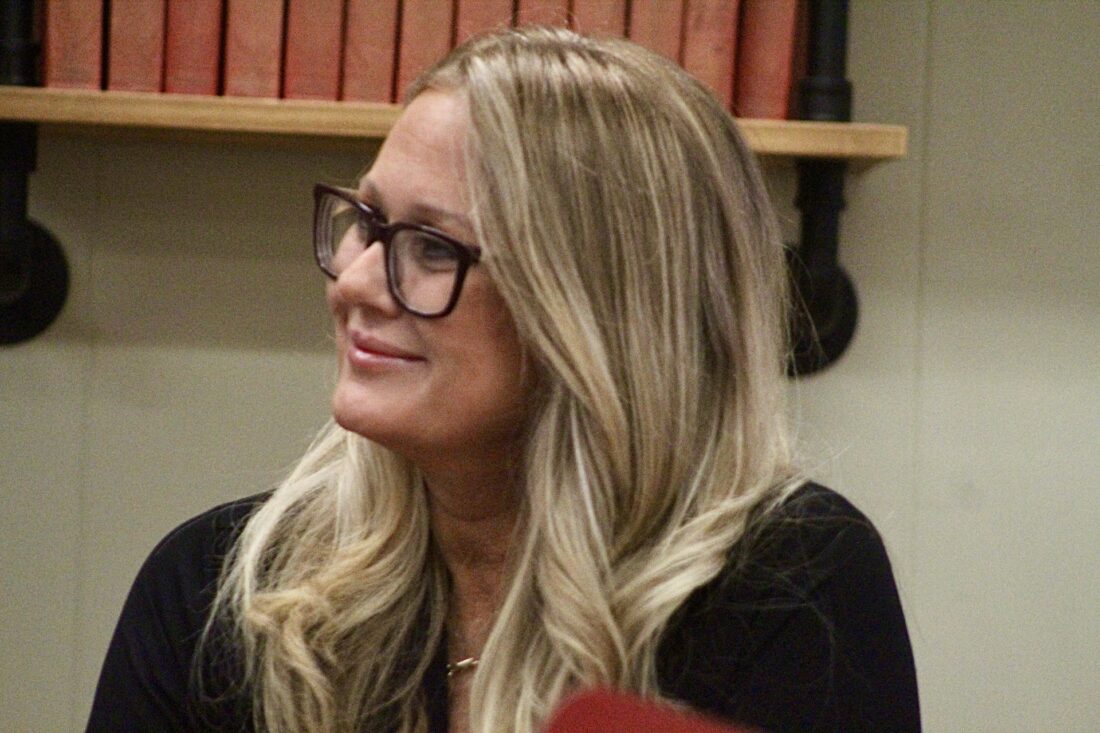
Stephanie Stevens, YWCA Westfield Executive Director, organized a community conversation to address needs within Chautauqua County. Photos by Braden Carmen
WESTFIELD — There is a common narrative that people in small towns across New York State feel left out of the conversation when it comes to decisions at the state level. This month, a village at the edge of Western New York had the attention of one of the state’s decision makers.
Kelli Nicholas Owens, executive director of the New York State Office for the Prevention of Domestic Violence, visited the YWCA in Westfield to discuss Gov. Kathy Hochul’s proposed 2026-27 Executive Budget with members of the community. Owens was invited to share highlights of the budget and hear the issues that small towns face from those who live those issues every day.
“When you come to a small community, everybody is bought in. They want to have a conversation, and that’s what I was here to do,” Owens said. “I really enjoyed it. … It was really great to hear everybody and have an authentic conversation with people.”
Roughly 20 community members were in the audience for Owens’ presentation. The event was organized by Stephanie Stevens, YWCA Westfield Executive Director. Stevens invited Owens to the YWCA because of the important role that community organizations — such as the YWCA — play in strengthening communities across the region.
The presentation itself lasted nearly 90 minutes, with roughly a dozen voices participating. Stevens was smiling throughout the morning as different members of the audience advocated for the needs of their community.
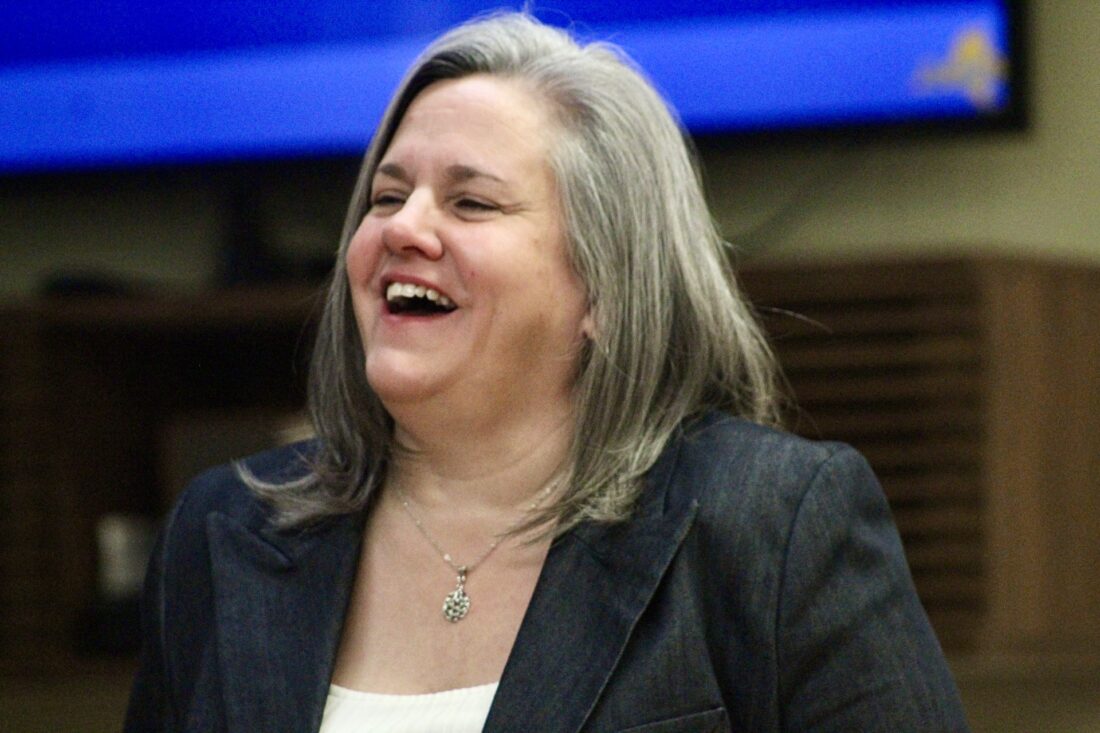
Kelli Nicholas Owens, Executive Director of the New York State Office for the Prevention of Domestic Violence, visited YWCA Westfield to discuss resources available from the state.
“I felt like a proud mom,” Stevens said. “They took over. They went with it. That was a proud moment for me. My community came, they asked questions, and she listened.”
Stevens organized the event to give community members an opportunity to ask questions and receive feedback from a high ranking representative at the state level. In an era where many people are focused on what they saw on social media, with a significant amount of misinformation spread online, Stevens wanted to bring an expert to the region to speak firsthand on the resources the state is making available.
“I don’t have all the answers, so I need to give people the resources to utilize the tools to ask their own questions and form their own opinions,” Stevens said. “… I want to be giving the tools they need to make the decisions and have educated conversations with our children.”
In touring the state to share details of the proposed Executive Budget this year, Owens made a point of visiting smaller, rural communities, such as Westfield. Owens — and Hochul — are hoping to represent small towns in upstate New York by addressing “a different set of challenges” that they deal with that bigger cities in the state do not.
-
- Stephanie Stevens, YWCA Westfield Executive Director, organized a community conversation to address needs within Chautauqua County. Photos by Braden Carmen
-
- Kelli Nicholas Owens, Executive Director of the New York State Office for the Prevention of Domestic Violence, visited YWCA Westfield to discuss resources available from the state.
In her position in Albany, Owens is a member of Hochul’s Cabinet. She discussed several statewide initiatives focused on supporting women, families, survivors, and community partnerships throughout New York State.
As part of the Governor’s proposed 2026-27 Executive Budget, there is no proposed state tax increase. While federal funding has decreased by more than $10 billion this coming fiscal year, a projected increase of more than $17 billion in state revenue over the next two years will help balance the budget. A significant portion of that state revenue is generated in New York City.
Because of the increased state revenue, the Executive Budget is able to include a total investment of $4.5 billion in childcare and Pre-K. That represents an increase of $1.7 billion over the current fiscal year. Universal Pre-K will be expanded to all four-year-old children by 2029. Hochul’s Executive Budget also includes $3 billion in vouchers to address waitlists, as well as expanded eligibility and funding for the Child Care Assistance Program.
The Executive Budget also includes an extra $3 billion in law enforcement measures. Approximately $352 million is dedicated to prevent gun violence; $305 million is aimed to improve fairness and access in the criminal justice system; and $35 million worth of grants are available to address hate crimes.
The state also plans to extend orders of protection for defendants who fail to appear in court, while also extending evidence kit retention periods in sexual offenses. Roughly $5 million is allocated to Survivors Access Financial Empowerment (SAFE) funds, while $4.5 million is allocated to the Enough is Enough campus sexual assault prevention initiative.
Owens also discussed youth mental health, especially in terms of technology. The state is increasing its efforts to block predators from contacting minors online through direct messages on social media and online gaming. Owens said of technology facilitated abuse through predatory behavior online, “It is rampant, and we’ve got to catch up to it.”
Regarding opportunities to develop facilities, the Governor’s Executive Budget includes $750 million to continue economic development programs in rural areas, including $400 million for the NY Works Economic Development Fund; $200 million for the Downtown Revitalization Initiative and New York Forward grants; and $150 million for the Regional Economic Development Council.
A major theme from the audience at the event was transportation, as oftentimes, even with services available, it is challenging to access them, if at all.
“Without transportation, nothing happens,” Stevens said. She acknowledged that it impacts her own programming at YWCA Westfield, as it is sometimes challenging for people to access the services the YWCA offers.
Another theme was childcare — an issue Stevens knows all about firsthand. After giving up her job to become a mother, Stevens ran her own group childcare program at her home to generate income. She came up with the idea to avoid living off one income or being forced to pay for childcare to maintain her career.
Members of the audience also raised the issue of accessibility of funds, specifically the amount of hurdles that often stand in the way of accessing the funds that are available. Owens spoke to the topic of accessibility of funds in a variety of ways at length.
“One of the things that I’ll bring back is how do you access the resources that we’re making available to people? How do we troubleshoot with communities about how to do that? We’re funding things, but how people are getting to that is what I’ll bring back,” Owens said.
Throughout the conversation, Owens offered to connect members of the audience with other state representatives regarding specific issues they raised.
Visiting the Westfield YWCA was deeply personal for Owens, who previously worked with the YWCA as Regional Director of Public Policy. “YWCAs are part of who I am. It changed who I was. It made me realize the work that needed to be done around issues with gender and girls,” Owens said. “… YWCAs are amazing places. They do work that other folks don’t do, and that’s why I came.”
Stevens is a former president of the YWCA at the statewide level. She has visited Washington D.C. to speak, and often visits the Governor’s Mansion in Albany. She planned a trip to the state capital just days after the visit from Owens for Governor Hochul’s celebration of Women’s History Month.
With so much on her own resume, Stevens thought nothing of organizing the recent event. She said, “You don’t have to be anybody to do this. You just have to make the phone calls.”
Stevens said of how the community conversation went, “I couldn’t be more happy.”
Local News
State rep visits Westfield for conversation
Aspire acquires former WCA Home

Seneca Casino To Host Kansas, Deep Purple Tour Date
Superlative Support: WCA Foundation Makes Largest Allocation In Its History To UPMC Chautauqua
Grange history focus of Thursday program in Westfield
WESTFIELD — The history of the National Grange, with a focus on the organization’s first working grange in ...
Resolution For Second Street Parcels Transfer To JURA Up For Council Approval
The Department of Development is looking to transfer ownership from the city to the Jamestown Urban Renewal Agency ...