Prophetic Energy Warning Beleaguers State
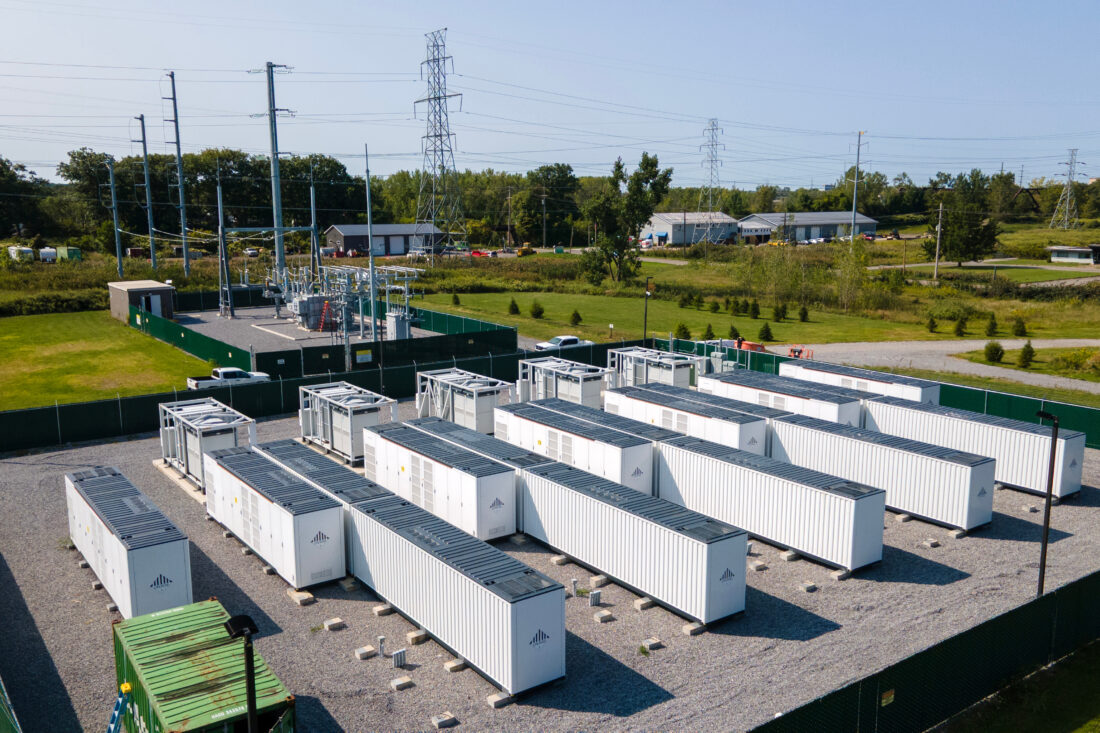
A large lithium battery energy storage system operated by Key Capture Energy that can power 15,000 homes for two hours during outages or high demand is pictured in Blasdell. AP photo
Public Service Commission member John B. Howard was quickly aware of the shock value that loomed for utility users following a decision made on a February 2023 afternoon. After the panel approved $6.6 billion in transmission upgrades to reduce congestion in three regions by a 4-2 vote for cleaner energy, his immediate remarks remain wistful today.
“The saddest part of what we’re doing … is that no one will know. No one will pay attention,” he said after voting against the plan. “No one will know that upstate rate payers are potentially having higher impacts than downstate rate payers. … It will be after the bill impacts hit — and I guarantee you when these costs hit our rate cases — the howl from these same constituencies will be heard from here to Timbuktu.”
Howard’s tenure on the commission ended in 2024. His words of warning, specifically that “no one will pay attention,” blare greatly today as residents across the state are paying some of their highest rates ever.
He was, unfortunately, right on the money. In 2023, no one batted an eye when those decisions were made.
Today, the uproar is very apparent each time a National Grid, Jamestown Board of Public Utilities or New York State Electric & Gas bill arrives in the mailbox.
Albany leaders, mainly the minority Republicans, are blaming state energy policies pushed by Democrats in the Climate Leadership & Community Protection Act of 2019. Within the last month, the party has been traveling across the state to promote its “Lights On With Energy Relief” — LOWER — Plan they say is a comprehensive approach that promises to deliver where the governor and legislative majorities have failed.
Part of the Assembly Republican proposal includes quick relief initiatives aimed at reducing costs and putting money back into New Yorkers’ pockets. It includes an Energy Price Rebate Check Program, Utility Bill Credits and an immediate reinvestment into previously retired gas plants and investment in new natural gas plants.
Some of those gimmicks could provide some relief, but getting former coal plants — such as the NRG Energy location in Dunkirk online — will take time and work. To begin, most of these plants have been stripped of important parts while being dormant for nearly a decade.
As the northern Chautauqua County location sits idle, the former Huntley plant in Tonawanda — also owned by NRG — could become property of the town as it plans eminent domain proceedings. What happens next to the north is anyone’s guess.
All this posturing — three years later — goes back to Howard’s “no one will know” remarks. Leaders waited to respond until they heard the “howl.”
As of this month, New York state has some of the highest household energy prices in the nation, according to Empire Center and U.S. Energy Information Administration data. In December, the state’s average residential electricity price reached 27.39 cents per kilowatt-hour — sixth highest in the U.S. and 59% above the national average. Prices increased 3.7% from November and 12 percent over the past year, rising twice as fast as the national average and four times faster than inflation.
Making matters worse, the Empire Center noted earlier this month, is that since 2019, New York’s average residential electricity prices have risen 58%, outpacing the national average increase of 36%. As of December 2025, the roughly 10 cents per kilowatt-hour gap between New York’s electricity prices and the U.S. average was the widest since 2001.
“Electricity demand is increasing everywhere,” said Zilvinas Silenas, President of the Empire Center. “Yet other states manage to provide electricity for almost half the price.”
Solar panels and windmills, despite being despised by many Republicans, have gained a foothold in a heavily red upstate. Though job creation through the building and placement of renewables is minimal once construction is complete, payment in lieu of taxes deals are rarely challenged. Instead, rural municipalities welcome the financial windfall of these contraptions that also contribute to your increasing electric bills as part of the state’s Climate Leadership & Community Protection Act of 2019.
Battery Energy Storage Systems are one more piece of controversy to the changing grid puzzle. Town of Dunkirk officials have agreed to another moratorium on these projects for now.
That is not the case in the neighboring city. Last month it was revealed at a Chautauqua County Industrial Development Agency meeting that the GCI Lighthouse Energy Storage plan for the area of Brigham Road and Lucas Avenue will cost $550 million to construct.
Its proximity to the city middle and high school on Sixth Street is a concern due to a potential for lithium fires that can be difficult to extinguish and may reignite hours or days later. GCI, in February, said the city Fire Department “is comfortable with the project.”
According to the New York Independent System Operator, these storage resources make up less than 1% of the electricity on the state grid. At the moment, that is an expensive piece that comes with very little bang for the buck.
John D’Agostino is the editor of The Post-Journal, OBSERVER and Times Observer in Warren, Pa. Send comments to jdagostino@observertoday.com or call 716-487-1111, ext. 253.
Local News

City Woman To Serve 7 Years In Prison

Super San Antonio: Lengthy Trip Takes Writer To The Riverwalk, The Alamo And A Beaver

Poll Opens Door For Comptroller Candidate

County Kicks Off Child Abuse Prevention Month Activities

Battling It Out: Annual JHS Event Raises $6,100 For Kids, Sibs Summer Camp