Offensive On Iran Tests Trump, Nation
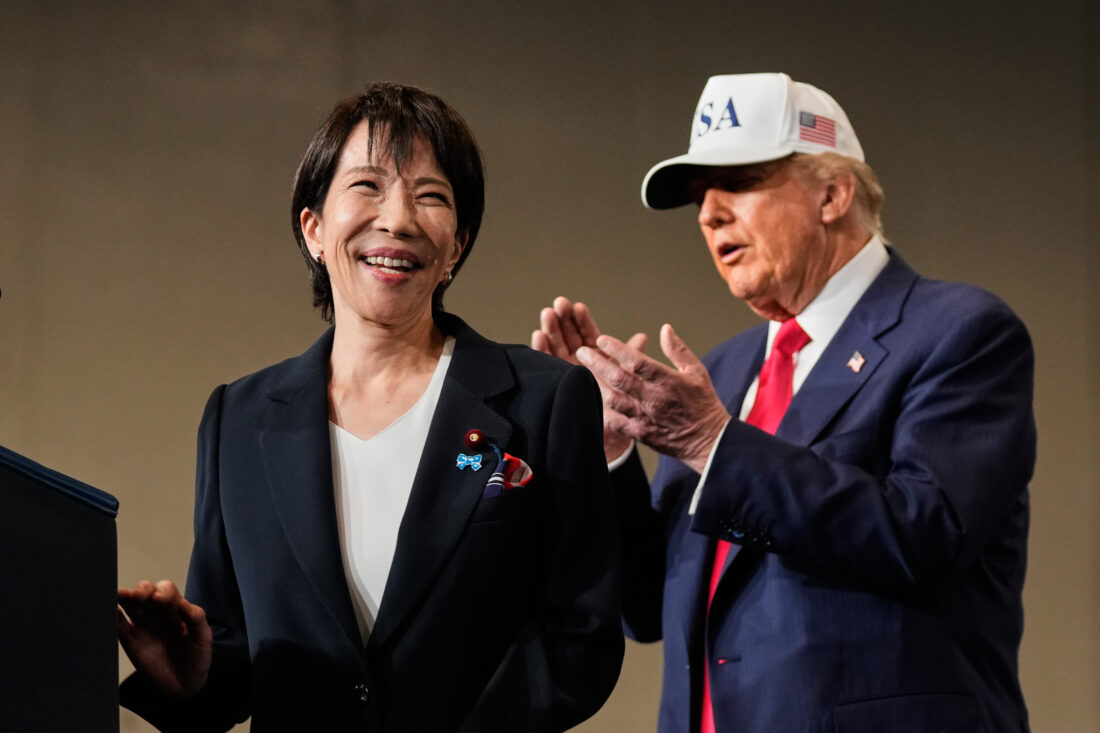
President Donald Trump is meeting with Japanese Prime Minister Sanae Takaichi, left, this weekend and talks will ultimately turn toward Iran. AP file photo
Shortly before the United States and Israel began taking military action against Iran, U.S. Rep. Nick Langworthy was proudly reflecting on President Donald Trump’s ability to command negotiations with high-ranking and powerful international officials. It occurred last July when Trump was finalizing a trade deal with Japan in the Oval Office.
Langworthy remembers he and other Rules Committee leaders were awaiting a scheduled meeting with the president that was consistently being delayed by the discussions. After some time, that group of lawmakers was invited into the room to witness the happenings.
“Watching an American president use the American economy as leverage to get a better position for American workers, American taxpayers and treasury, I found it incredibly fulfilling.,” Langworthy said in February during an interview in his Jamestown office. “People get sidetracked on things about the president, he was putting America first in that room that night.”
Calling it the “art of the deal in real time,” the Congressman who represents New York’s 23rd district was in awe. Trump was in total control getting Japan to agree to a $550 billion package for American investment.
As Japanese Prime Minister Sanae Takaichi visits Washington this week, there is a newfound urgency for both world powers. Mideast tensions are rising — and a global divide could be playing out before our eyes with China and Russia watching intently.
Brokering an agreement with Japan is a laudable feat that is a win for Trump and America. Having Iran pay the same amount of attention and respect was nearly impossible — until what happened on the morning of Feb. 28.
Since that day, global deal-making has come off the table. Trump’s past successes internationally are still significant, but not in a glaring spotlight.
Current uncertainty has led to higher gas prices, worries over inflation and an unstable economy that is apparent on Wall Street.
Our nation’s politics also seem overly fractured. Usually when our troops are involved in a conflict, unity between parties and a concern for their well being is the priority.
During this battle, a sense of American togetherness is missing. That is not the fault of one party. In the end, both are responsible.
In Pennsylvania, only rogue Democrat U.S. Sen. John Fetterman quickly voiced his support for
the assault in the Mideast. “Iran is the world’s leading sponsor of terrorism and cannot have nuclear capabilities,” he wrote on X. “I’m grateful for and salute the finest military in the world.”
On the flip side, Republicans are not helping matters by stubbornly shutting down comments. Senate Majority Leader John Thune told reporters last week he didn’t expect public hearings on the Iran war, but noted it would inevitably come up in the regular rhythm of testimony on military policy and spending.
“They have briefed us,” Thune, R-S.D., told the Associated Press, pointing to classified briefings from the administration. Those sessions have been held behind closed doors and most lawmakers refuse to disclose more than the broad topics of discussion.
Most Americans understand Iran’s decades of erratic nature makes it a powderkeg. But the lack of one voice from Washington on what is transpiring allows doubt to seep in as prices rise.
That’s where the president — and members of Congress — needs to be more vocal and unified. “May God watch over our incredible U.S. servicemembers who are tasked with this mission and those deployed across the region,” Langworthy said shortly after the attacks. “This is a moment for us to stand united for lasting peace for America, the Iranian people, and all countries across the Middle East.”
That message needs repeating.
John D’Agostino is editor of The Post-Journal, OBSERVER and Times Observer in Warren, Pa. Send comments to jdagostino@observertoday.com or call 716-487-1111, ext. 253.
Local News
Consistent north county sites eyed for Code Blue
Throughout the last few months the area has been continually blasted by cold and brutal weather conditions, ...
Offensive On Iran Tests Trump, Nation

‘Very Fulfilling’: Webster Named To Buffalo Broadcasters’ HOF
Council Committee Backs Taser Purchase
Dunkirk Lobbies County For North County Brush Site