
Charging ahead: $500M Dunkirk battery storage project seeks tax assistance
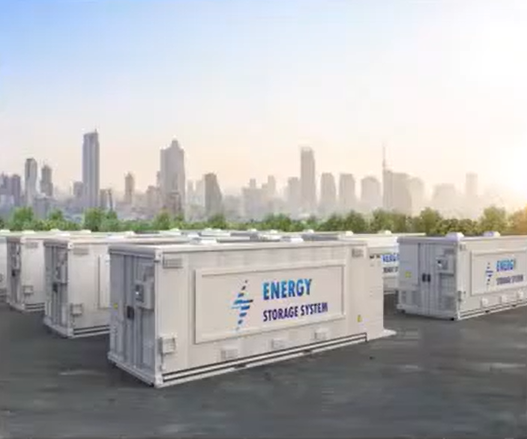
A screenshot of what a Battery Energy Storage System looks like. This image was shared with the Chautauqua County Industrial Development Agency.
-
- A screenshot of what a Battery Energy Storage System looks like. This image was shared with the Chautauqua County Industrial Development Agency.
-
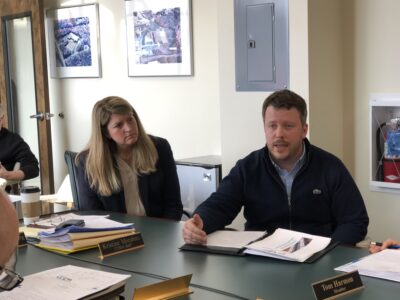
- Daniel Brennan with GCI Lighthouse Energy Storage discusses the proposed $500 million battery energy storage project in Dunkirk. Also pictured is Kristine Morabito with the county Industrial Development Agency.
Daniel Brennan with GCI Lighthouse Energy Storage appeared at the recent Chautauqua County Industrial Development Agency meeting.
It was his first time appearing before the IDA Board of Directors, although the project has been in the works for a couple of years.
In December, 2024, Brennan first appeared before the Chautauqua County Planning Board and then met with the board again 12 months later, where the board gave its backing.
Brennan has also met with the Dunkirk City Planning Board which also voted in favor of the development.
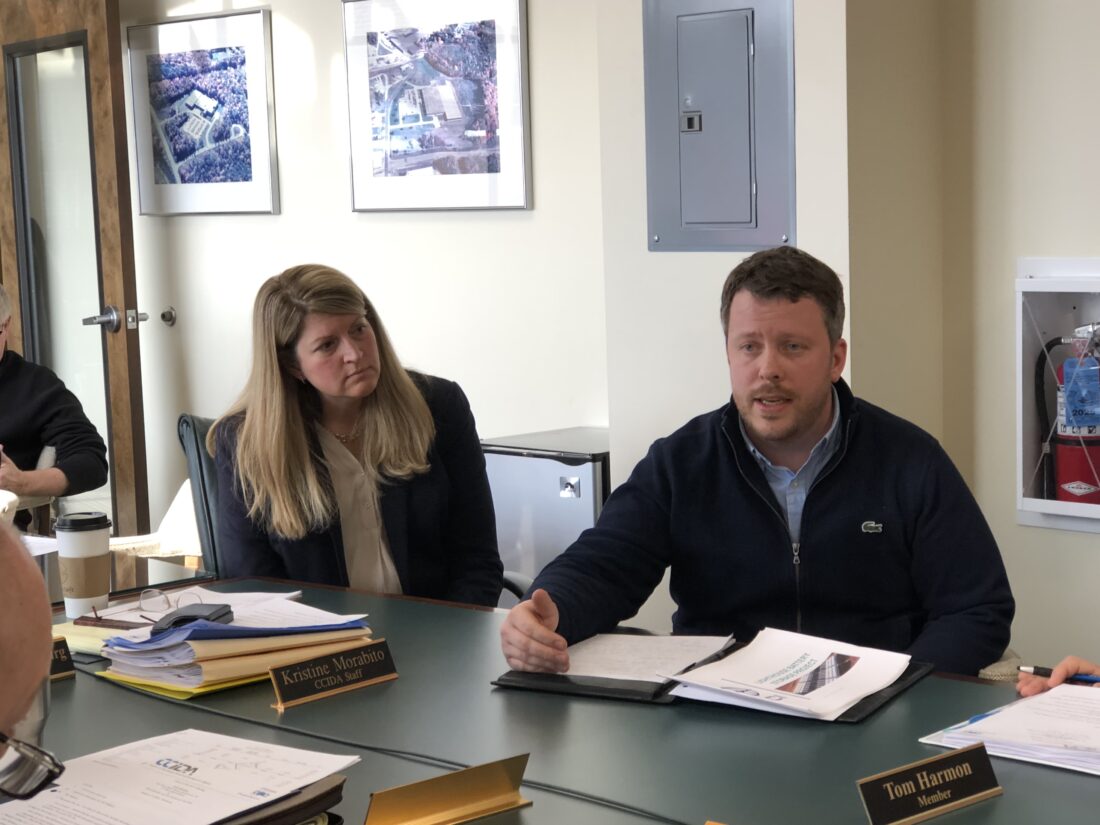
Daniel Brennan with GCI Lighthouse Energy Storage discusses the proposed $500 million battery energy storage project in Dunkirk. Also pictured is Kristine Morabito with the county Industrial Development Agency.
GCI Lighthouse Energy Storage is looking to purchase about 16 acres of land at 653 Brigham Road. On that property it wants to place a Battery Energy Storage System with an interconnection capacity of up to 250 megawatt.
“The total project cost right now is estimated at up to $500 million, subject to a NYSERTA award,” explained Kristine Morabito with the county IDA.
NYSERTA, the New York State Energy Research and Development Authority, has not stated when they will decide on GCI Lighthouse Energy’s proposal, but Brennan said he believes a decision will be made sometime in the next couple of months.
If that happens, GCI Lighthouse would like to start construction in 2028 and have the project completed by 2030.
GCI Lighthouse Energy Storage is seeking incentives through a Payment In Lieu Of Taxes agreement, including real property tax sales tax abatement and mortgage recording tax abatement.
“We’ve been moving forward in the permitting process and we’re really excited at this stage to talk about how the project is going to work and the financial benefits that, frankly, we need to make this project viable,” Brennan said.
PROJECT BENEFITS, DETAILS
Brennan said a benefit of a Battery Energy Storage System is that it “adds reliability and resiliency to the grid.”
It doesn’t matter if the energy comes from a wind turbine, a solar project, or a power plant. “When the batteries are charged, they’re just electrons. It could be that it’s charging from a gas power plant, from Niagara Falls, or from wind and solar. It’s technology agnostic,” he said.
During low demand, batteries are charged from the grid. At peak times, the batteries can discharge their energy back to the grid. “It’s a more efficient way of using the transmission grid. In addition to the reliability, it provides the potential for additional capacity on the grid, to add new generation sources, that could be anything from new solar projects, wind or nuclear,” Brennan explained.
He said the additional energy reliability will provide “the opportunities for further economic development in Chautauqua County and in Western New York.”
Brennan continued, “Industry users will be attracted by the reliability of the electrical grid in this region. They will know that they have access to a resilient and reliable power grid.”
The development would look like shipping containers lined up in a row. Brennan said they would be around 12 feet tall, with a concrete pad underneath. “Essentially it’s like having thousands of individual battery cells, arranged into large shipping containers that are placed next to each other, with a small distance in between, as required by the regulations, and then connected together,” he said.
The project would create 50-80 construction jobs and take about 20 months to complete.
No full-time on site employment would take place once the project is up and running. Brennan said it would be monitored off-site.
There will be maintenance and repair specialists that will visit the site when needed.
The property that the storage units would be placed on is a vacant industrial site, surrounded on three sides by railroad right-of-ways and two large electrical transmission lines. “Most people will not know that this battery system is operating there,” Brennan said.
SAFETY, DECOMMISSIONING CONCERNS
One of the biggest questions about the Battery Energy Storage System project that has been asked multiple times is if it is safe, especially if there’s a fire.
Brennan said they have a safety plan and shared it with Dunkirk city officials.
He said the technology they plan to implement is more advanced than other battery storage projects in the state. “They will be using the most sophisticated battery management systems and designs, the Tesla Megapack 2, which has been proven to be the safest system that’s available,” Brennan said.
According to Brennan, they have met with the Dunkirk City Fire Department to discuss their emergency response plan. “The Dunkirk Fire Department has provided us with a letter explaining that they’re very comfortable with the project,” he said.
The Post-Journal/OBSERVER requested a copy of the letter from both the Dunkirk Department of Development and from the Dunkirk Fire Department but neither department responded to the email sent.
For decommissioning the project, Brennan said they don’t have their plan finalized yet, but are working on it, using a template from NYSERTA.
He said they will likely be issuing a decommissioning bond as well, which is used if a company goes bankrupt.
Brennan said after 25 years, some parts of the project will still have a lot of value. “We will almost certainly be able to recycle at least parts of the batteries,” he said.
NEXT STEPS
At the county IDA meeting, Dunkirk Development Director Vince DeJoy noted the city’s support. “This is another project that will benefit the manufacturers and the people in the city of Dunkirk in a number of ways,” he said.
DeJoy said a state environmental quality review has taken place and it was determined the project will not have a negative impact on the environment.
He said the project will be a benefit financially as well. “This will provide significant financial benefit, not only to the county and the school district, but to the city of Dunkirk,” he said.
The county IDA Board of Directors approved a “due diligence” resolution, which allows the IDA to explore various tax incentive options.
The IDA Board of Directors will meet again after the IDA finishes looking at options, including holding a public hearing, which has not been scheduled.
After the regular meeting, the IDA Board of Directors met with Brennan in executive session. No action was taken following the closed meeting and therefore no minutes were taken.
Local News

Superlative Support: WCA Foundation Makes Largest Allocation In Its History To UPMC Chautauqua
Grange history focus of Thursday program in Westfield
WESTFIELD — The history of the National Grange, with a focus on the organization’s first working grange in ...
Resolution For Second Street Parcels Transfer To JURA Up For Council Approval
The Department of Development is looking to transfer ownership from the city to the Jamestown Urban Renewal Agency ...

Cassadaga Valley Hosts Educational Professional Development Summit
The Old Immigrant
I met him on a playground by chance while visiting my daughter—an old man who had grown up in Cuba, under the ...
Thanks, Reginald, For Lending Me A Song
Around this time of year, Sally and I have a four-week period of time, which we could call our Celebration ...