Point Of Pride: Jamestown Native Discusses Home Heating In South Korea
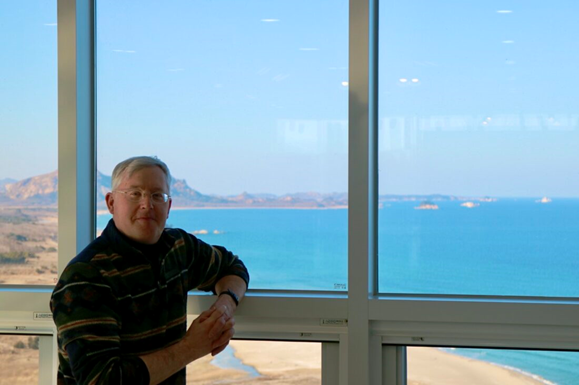
Pictured is Jeffrey Owen, a Jamestown native who resides in South Korea and wants readers to know about the “ondol” heating system in Korea. Submitted file photo
-

- Pictured is Jeffrey Owen, a Jamestown native who resides in South Korea and wants readers to know about the “ondol” heating system in Korea. Submitted file photo
-
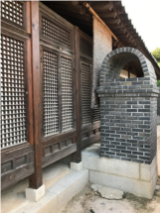
- The back view of this renovated hanok in Namsangol hanok village in Seoul shows the outside chimney that is connected to the underfloor ondol. Submitted photo
With Jamestown in the midst of winter, one of the things Owen finds fascinating is the difference in the way South Korean and American homes are heated. For Owen, the autumn season is the best time to travel around South Korea, spending time outdoors, sightseeing, or walking in a historic neighborhood in the 600 plus year old capital city of Seoul. Autumn also means that soon it will be time to test and ready the underfloor heating system for the upcoming winter.
“Koreans are rightly proud of the history and utility of the underfloor heating system used in essentially all residential housing throughout Korea,” Owen said. “This underfloor heating system is called ‘ondol’ in Korean and the meaning is easy to understand. The word ‘ondol’ means heated stone.”
Underfloor heating systems have been developed in other societies around the world, including the “hypocaust” in the ancient Roman world, and the heated raised bed called “kang” used in parts of China, but the ondol system is uniquely Korean. No matter the outside temperature, Owen said a heated floor from the ondol warms most of someone’s living space.
“I mention most areas of a home because the typical bathroom design in homes in South Korea does not have underfloor heating, and a small storage area or veranda would probably not have underfloor heating, either,” Owen said. “With some modern house designs, a bathroom floor can be heated by the ondol system, but this would not be typical in most residential buildings.”
The back view of this renovated hanok in Namsangol hanok village in Seoul shows the outside chimney that is connected to the underfloor ondol. Submitted photo
The ondol system is one that Owen said would also not generally be used for heating places like office buildings or most public use government buildings, or in places like museums and hotels. Some hotels do have rooms available with ondol heating that Owne said may cost less than rooms with hot air heating.
“In older times, the usual custom for sleeping during winter in Korea was to sleep on a soft mat placed on the floor heated by underfloor heat from the ondol system,” Owen said. “Nowadays, most families in Korea prefer to live in convenient high-rise buildings and sleep on beds but in traditional Korean homes, people still sleep on a soft mat laid out on the floor heated by the ondol system.”
-
- Pictured is Jeffrey Owen, a Jamestown native who resides in South Korea and wants readers to know about the “ondol” heating system in Korea. Submitted file photo
-
- The back view of this renovated hanok in Namsangol hanok village in Seoul shows the outside chimney that is connected to the underfloor ondol. Submitted photo
In traditional Korean houses, called “hanok” in Korean, the ceiling height might be lower than the familiar ceiling height in most western homes, Owen said. In the past, few pieces of furniture were available for most people, so daily activities such as preparing foods, studying or reading, relaxing, and sleeping, were all done while sitting or lying on the floor. A low table was often used as the table for meals to be shared while sitting on the floor. That remains a custom today in some private homes and restaurants, but as the members of society have aged, it has become less popular.
“I want to share a little of my experience enjoying the Korean ondol heating system while living in South Korea and introduce a couple of hanoks that are over one hundred years old,” Owen said. “Visitors to Korea can learn about the history and use of ondol in several ways, such as visiting the neighborhood in northern Seoul known as ‘Bukchon’, meaning north village where interpretative programs and brief explanations about the styles of hanoks in Seoul are available. The Bukchon neighborhood in particular has become overcrowded with tourists so the time of day when visitors are allowed to walk around the area is strictly enforced.”
There are opportunities to see renovated or preserved hanoks in other areas of Seoul, such as the Namsangol hanok village, which Owen said is a park-like complex where there are five hanoks that were saved from being torn down by relocating the homes to that public space near central Seoul. There are ongoing efforts to offer more educational programs about hanoks and encourage the use and preservation of hanoks in Korea.
“The long-term existence of hanoks in modern times faces many pressures, especially from the force of neighborhood development and the lure of financial benefits of commercial buildings,” Owen said. “As part of the efforts to preserve and modernize some characteristics of hanoks, many have been repurposed to provide authentic Korea-style accommodations for tourists.”
While the design of the ondol system itself has most likely evolved over a few thousand years and the exact designs and details of the earliest use have been lost to history, Owen added that some records of the development of ondol heating do exist and have provided insights to the history of the ondol system.
“Because underfloor heating uses the principle of radiant heat to maintain a comfortable living space, it’s thought to offer several advantages compared to other heating systems,” Owen said. “One major advantage is that the ondol system uses the mass of stone or cement under the floor to retain heat and release the heat for a fairly long time period, therefore providing a stable temperature. But a short time is needed to first heat the mass under the floor before the heat reaches the living space in the house.”
Other advantages of the ondol, Owen said, are related to the fact that the heat from the system is generated from under the floor and radiates upwards. The heated floor warms a person’s feet and anything that is touching the floor.
“Many Koreans believe that sleeping on a heated floor is beneficial to health, but I haven’t read any medical studies on the specific effects on human health,” Owen said. “Again, because the heat moves upwards as warm air rises and cooler air sinks, a gentle natural circulation of warm air from the floor to the ceiling and cool air from the ceiling to the floor is set up.”
According to Owen, in older hanoks, the ondol system burned wood or crop residues in a firebox that had one or more horizontal channels, similar to a chimney laid on its side, to conduct the heat under the floor and exit through a vertical chimney on the opposite side to generate a draft. The horizontal channels were topped with stone slabs and layers of oil coated paper, all under the floor material of masonry or wood. In more modern ondol systems, the fire is replaced by either horizontal pipes to circulate hot water from a boiler or electric heating cables to provide heat. Modern floors are usually cement that can accommodate the installation of pipes or cables during construction.
“In more than ten years of experience in Korea, I do not think I have ever seen a personal residence that did not include an ondol system,” Owen said. “Several years ago, I noticed some mentions of old hanoks, or traditional Korean houses, on a tourist map of Gangwon Province, a large province located to the east of Seoul with its eastern edge positioned along the beautiful east coast of Korea. I finally made the effort to visit two old hanoks in that region with the help of a hired driver and a retired professor who lives in Gangwon Province. The purpose of the short trip was to learn what I could about those traditional homes and collect a few photographs. As I mentioned, living in modern high-rise apartment style homes is very much favored these days in Korea. Hanoks are perhaps seen as quaint but impractical for modern living by most Koreans. Some old hanoks have been torn down due to neglect while others have been lost to urban development and economic forces.”
While older hanoks are likely to be heated using wood fires, many older homes and traditional style houses will have a boiler system installed with underfloor pipes to provide heat.
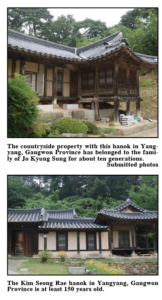
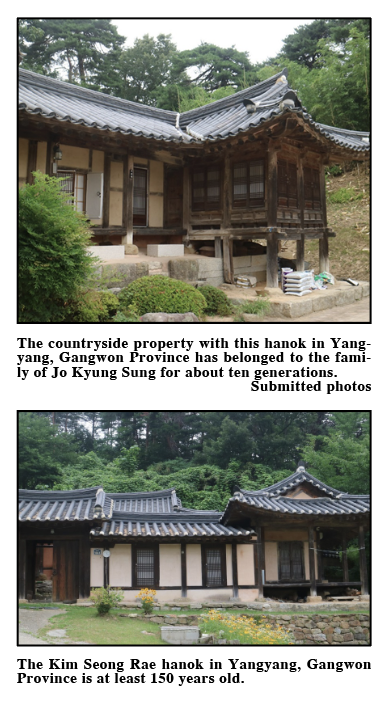
“The first old hanok I want to introduce is a recognized Gangwon heritage property that has been in the family of Jo Kyo Sung for about ten generations, but the year that the house was built is unknown,” Owen said. “Until the most recent couple of years, this house used ondol heating by burning wood. The Jo Kyo Sung house is now heated with the ondol system that uses a boiler with circulating hot water. It’s a beautiful example of a countryside hanok.”
A second old hanok that Owen has learned about is the Kim Seong Rae house, which is also a Gangwon house property with a history of at least 150 years. This hanok had a thatched roof made of rice straw in the past.
“Some visitors to Korea find the tile roofs on hanoks to be beautiful; I do hope readers will appreciate the beauty of the tile roofs on these old houses,” Owen said. “American architect Franklin Lloyd Wright experienced ondol heating sometime near 1916 or 1917 while visiting Tokyo as a guest of a client in a ‘Korean room’ and noted the ‘indescribable warmth’ from the floor. That experience inspired Wright to later test several designs for incorporating floor heating in projects in Japan and the USA. For example, the house designed by Wright in 1937 in Madison, WI now known as the Jacobs house, used circulating hot water in the floor for heating. On most any trip to South Korea during cold weather you can have an opportunity to learn about the Korean ondol system and perhaps even try sleeping on a floor with ondol heating.”
Local News
Folsom Prison Experience Comes To Reg Lenna
The Reg Lenna Center for the Arts will present the Folsom Prison Experience at 7 p.m. Saturday, April 18. The ...
Chamber To Host State Of County Speech
Chautauqua County Executive Paul M. Wendel Jr. will deliver his 2026 State of the County Address on Tuesday, April ...

Active Minds Bemus Reading Program Themed Around Olympics
BESS, Brooks on planners’ agenda
The Fredonia Planning Board has important items on its agenda Wednesday. A site plan review of a proposed Battery ...
Fredonia Mayor Sounds New Warnings Over Water Situation
Fredonia Mayor Michael Ferguson said Fredonia “will be a ghost town” unless a plan to connect with the North ...