
Fitting Memorial: Wright Air Museum Exhibit To Commemorate 1951 Napoli Plane Crash
-
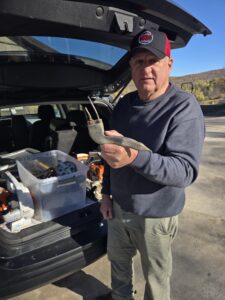
- Ron Donhauser of Springville hoists a propeller blade from Flight 44-2 donated by author Tim Lake.
-
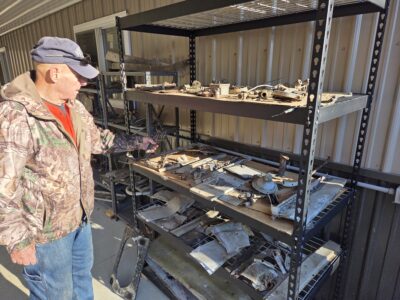
- Robert Rockwell of Napoli examines artifacts from Flight 44-2.
-
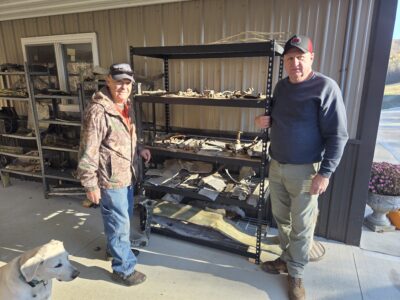
- Robert Rockwell of Napoli and Ron Donhauser of Springville (with Rockwell’s dog) Standing with Flight 44-2 Artifacts.
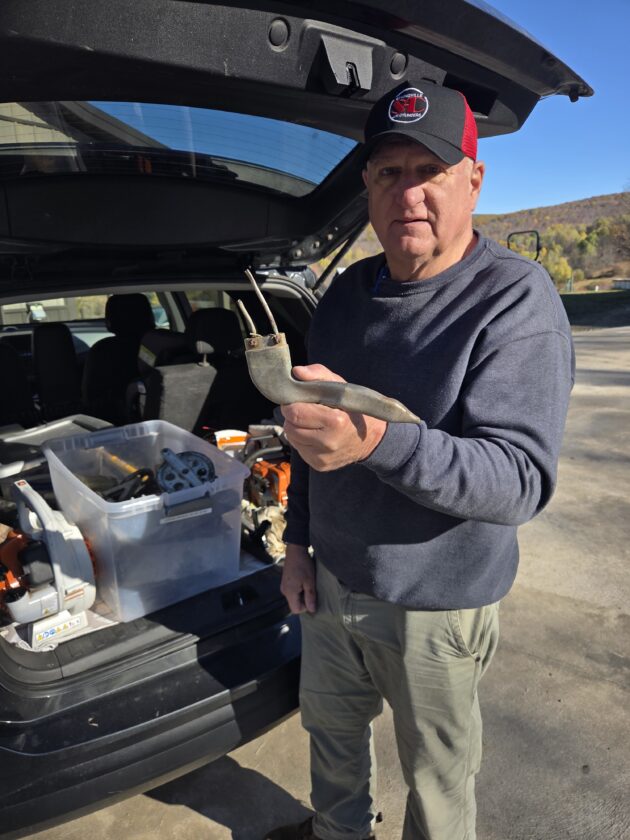
Ron Donhauser of Springville hoists a propeller blade from Flight 44-2 donated by author Tim Lake.
The Lucile M. Wright Air Museum has acquired over 150 artifacts from Continental Charters Flight 44-2, which crashed in the Cattaraugus County Town of Napoli
-
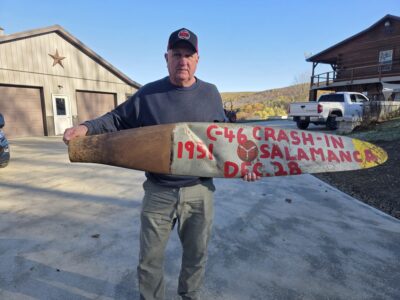
- “Ron Donhauser of Springville hoists a propeller blade from Flight 44-2 donated by author Tim Lake”
-
- Robert Rockwell of Napoli examines artifacts from Flight 44-2.
-
- Robert Rockwell of Napoli and Ron Donhauser of Springville (with Rockwell’s dog) Standing with Flight 44-2 Artifacts.
The artifacts were collected from the debris field after the official salvage operation concluded and were held privately until now. The museum received the crash remnants from Robert Rockwell, who lives near the crash site, and Ron Donhauser, a collector from Springville, NY. The donations were coordinated by Tim Lake, author of Hang on and Fly (Lake Publishing, 2015), the definitive book on the tragedy and heroism of Flight 44-2.
The artifacts range in size from small cranks, aluminum shards, and the airplane’s original equipment to a significant portion of one of the wings. Additionally, Lake is donating a blade from one of the plane’s propellers, which he purchased at an Erie County auction earlier this year. The propeller blade includes an inspection sticker that is an exact match for those seen in vintage 1951 photographs of the wreckage. He said, “After all the years of research and studying the story of the crash, it felt surreal to hold pieces of the airplane in my hands. While I understand how the plane crash parts remained on a Napoli farm for so long… under today’s rules of air crash investigations, it didn’t seem possible.”
Continental Charters was a non-scheduled airline service operating in a regulatory gray area in the post-World War II era. The plane used for Flight 44-2 was a recently converted C-46 military aircraft reconfigured for commercial use. The flight was hours late when it completed the first leg of its journey from Miami to Pittsburgh. In an attempt to get back lost time, the pilots made a disastrous decision to fly to Buffalo on a visual flight plan, despite bitter winter weather that required an instrument flight plan.
The aircraft slammed into Bucktooth Ridge in Napoli at approximately 10:25 PM and was ripped apart. Most of the 26 fatalities occurred immediately upon impact. Fourteen survivors braved two nights in life-threatening weather before one of the largest rescue operations ever in Western New York brought them to safety. It remains the longest stranding of a large group of airline crash survivors in the history of commercial aviation in North America.
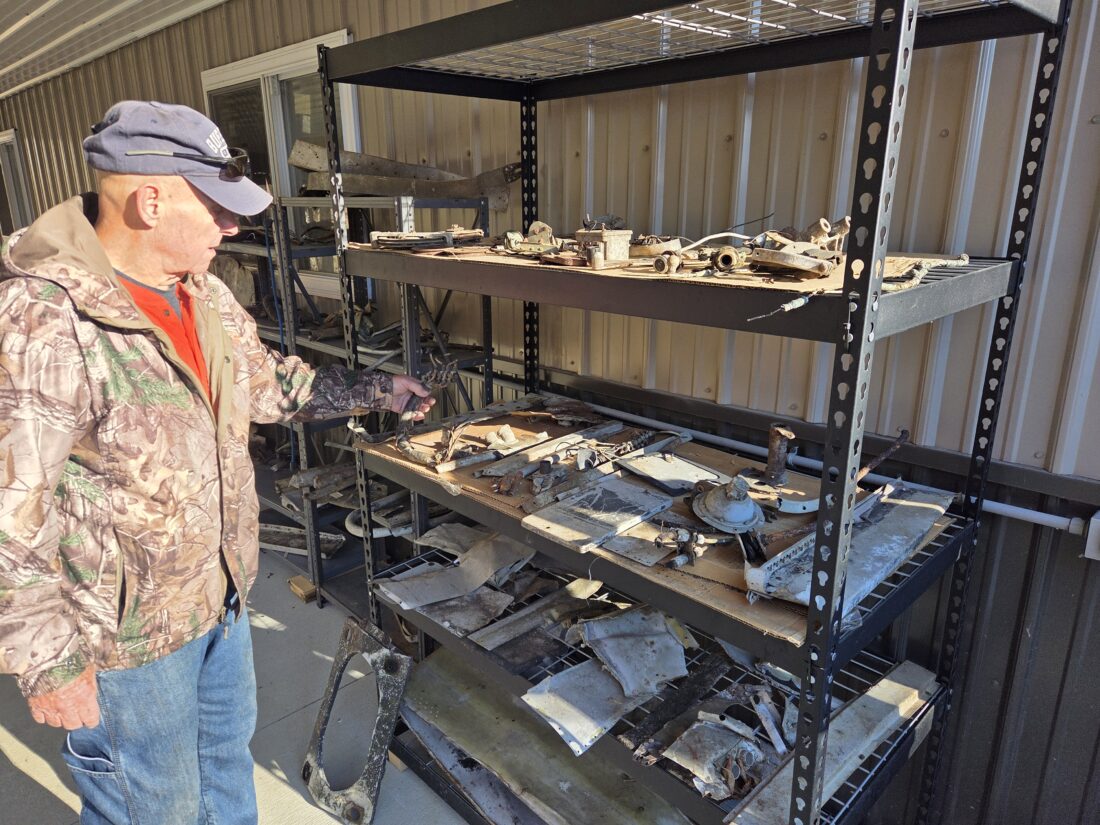
Robert Rockwell of Napoli examines artifacts from Flight 44-2.
“It is most appropriate as we approach the 75th anniversary of this event to remember those who lost their lives on Flight 44-2 and the courageous efforts of the people of Cattaraugus County who participated in the rescue of the survivors,” said Dennis Webster, curator of the Wright Air Museum
“I wrote at the end of the book that there was no monument or memorial to the crash victims and survivors. Finally, the exhibit at the Wright Air Museum will provide one,” Lake said.
The Lucile M. Wright Air Museum was established in 1986 as a place to document the aviation history of Southwestern New York and to motivate young people in aviation. The museum is named for Lucile M. Wright, a pioneer 20th-century aviator in the Jamestown area whose story is told there.
The Wright Air Museum’s exhibit on Flight 44-2 is expected to be completed in late 2026.
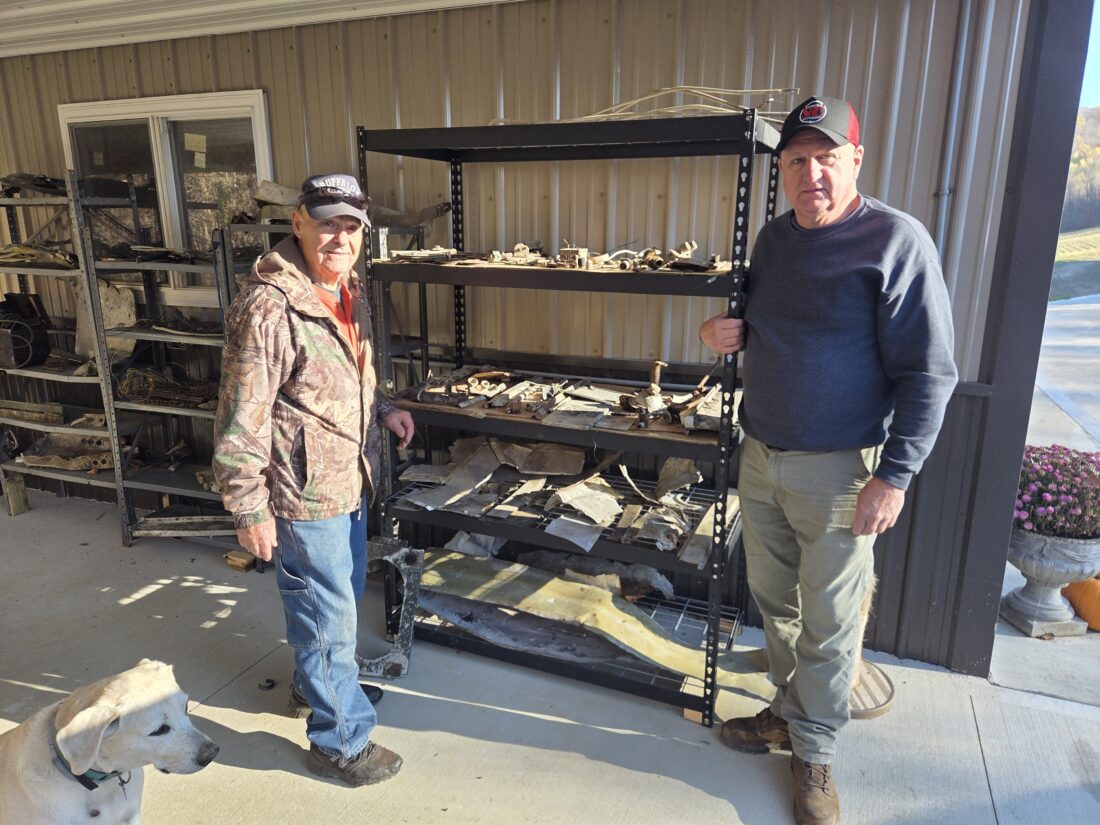
Robert Rockwell of Napoli and Ron Donhauser of Springville (with Rockwell’s dog) Standing with Flight 44-2 Artifacts.
Local News
Langworthy Presents $1M Funding For Randolph Sewer Project
Group Effort: Area Churches Read In The New Year

Residency Trajectory Still Going South
Senior Sweetheart: Lakewood Resident Wins Chautauqua County Award
CSP Merger Forums Begin Next Week
Bradford hospital transitioning to outpatient care center
Another rural hospital is downsizing operations from patient, emergency and long-term care services to an ...