Environmental mitigation efforts on lake shown to area educators
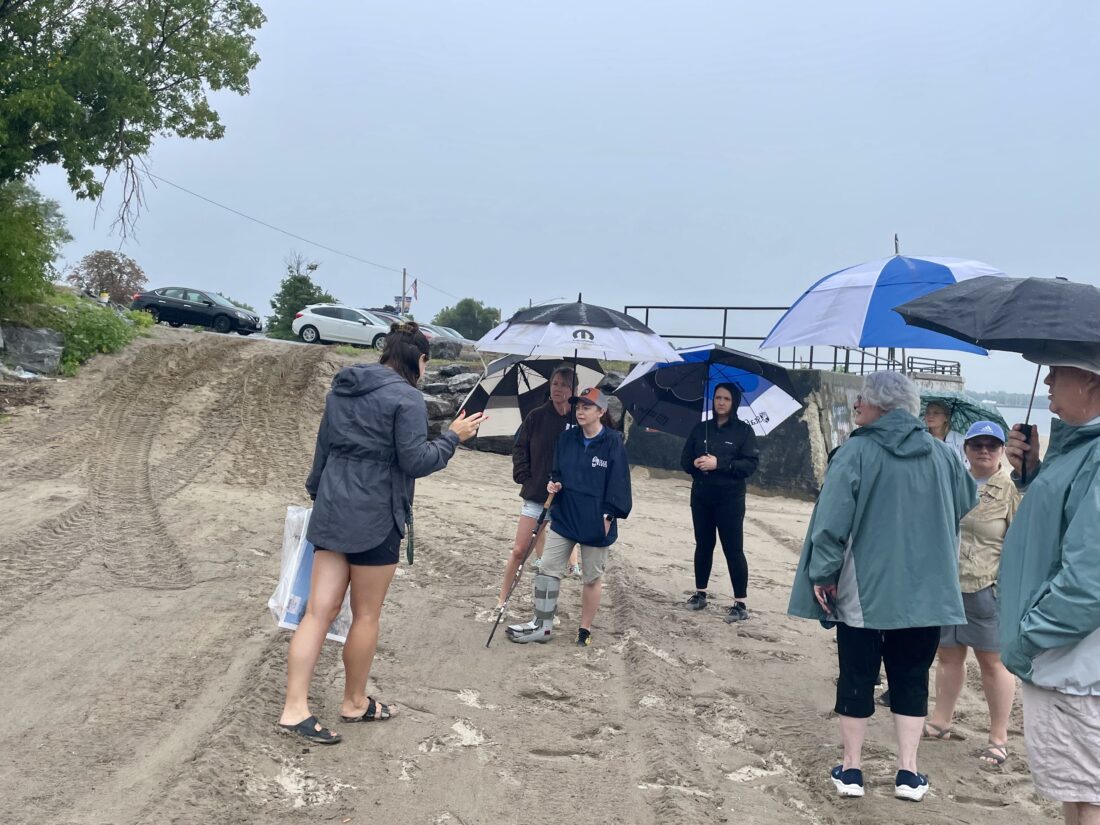
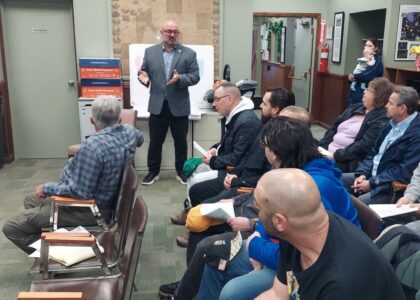
Pictured is a group of area educators at Wright Park Beach to witness efforts to mitigate stormwater and erosion concerns surrounding Lake Erie. P-J photos by Braden Carmen
-
- Pictured is a group of area educators at Wright Park Beach to witness efforts to mitigate stormwater and erosion concerns surrounding Lake Erie. P-J photos by Braden Carmen
-
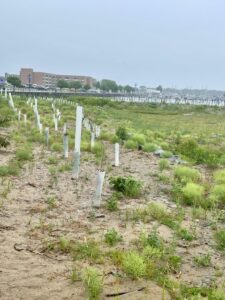
- Pictured is an area designated for stormwater runoff near Main Street Beach in Dunkirk. Small trees and bushes are planted and nurtured as they grow to later absorb the excess water.
-
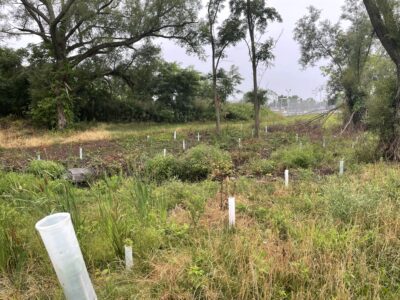
- Pictured is an area designated for storm water runoff near Hyde Creek near Wright Park in Dunkirk. Small trees and bushes are planted and nurtured as they grow to later absorb the excess water.
Nate Drag, New York Sea Grant Great Lakes Literacy Specialist, led a recent workshop for nearly a dozen educators from across Western New York to discuss shoreline challenges associated with Lake Erie and real-world ways to address the issues. The rainfall presented an example in real time of the need to mitigate flooding of storm water in the region.
Drag highlighted a big issue Lake Erie is currently facing is stronger storms throughout the year, coupled with less ice cover throughout the winter months. Due to those factors, erosion is increasing because the shores are being impacted year round.
Strong storms also lead to an increase in stormwater runoff, with more water rushing into streams faster. Contamination such as litter, fertilizer or pesticides, and sewer overflow rush into the waterways.
“All of these factors are coming together right at the shoreline of the lake,” Drag said.
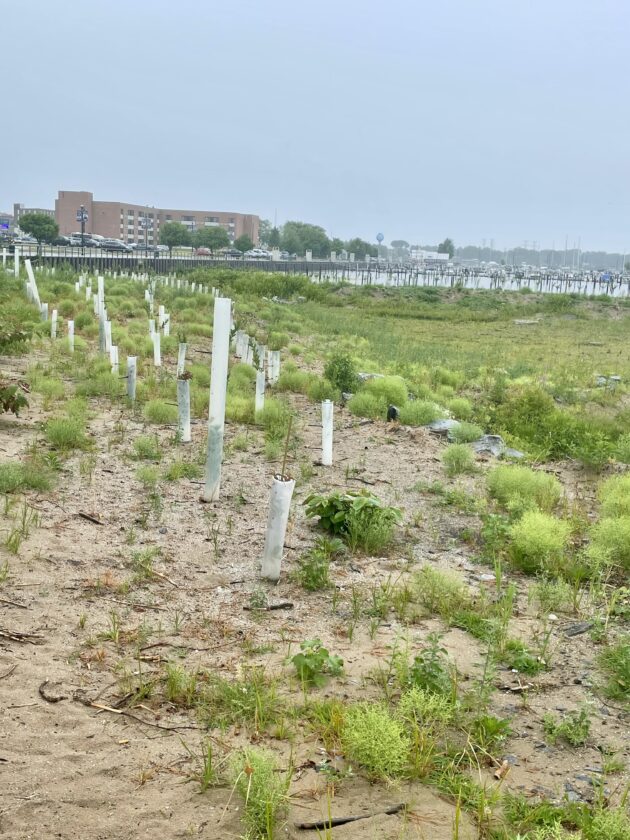
Pictured is an area designated for stormwater runoff near Main Street Beach in Dunkirk. Small trees and bushes are planted and nurtured as they grow to later absorb the excess water.
Many projects are already in place or will be implemented in the future to mitigate stormwater runoff, such as slowing the flow to allow for the water to soak into the ground and planting vegetation to help absorb the excess water. The group of educators accompanied Drag and Cassandra Pinkoski, Grant Specialist from the Chautauqua County Soil and Water Conservation District, as they visited three areas around Dunkirk where work is being done to address stormwater runoff and erosion concerns near Lake Erie.
The group visited Wright Park Beach, Hyde Creek at Wright Park, and the beach off Main Street in Dunkirk. Pinkoski informed the educators about specific measures being taken at all three sites to mitigate flooding and erosion.
Flooding concerns from all three sites were mitigated through the United States Environmental Protection Agency’s Great Lakes Funding Program. Chautauqua County Soil and Water Conservation District also receives funding from the County itself for lakes and waterways, along with frequent awards from the State DEC Environmental Protection Fund.
Specifically, at Hyde Creek, a culvert was replaced under specific parameters to divert the storm water away from residential areas and into a seldom used area of the park.
At Wright Park Beach, the area surrounding the slope that is often used as an entrance to the beach was modified with as few rocks as possible to remain as an entrance.
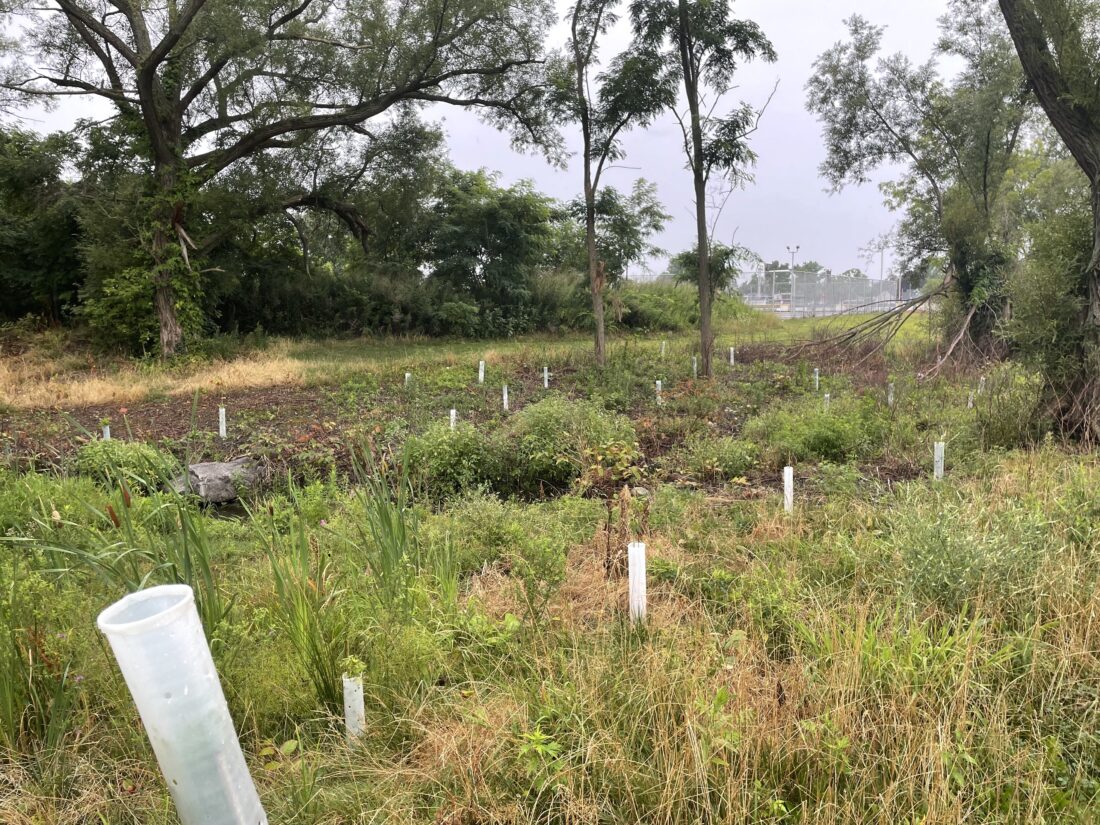
Pictured is an area designated for storm water runoff near Hyde Creek near Wright Park in Dunkirk. Small trees and bushes are planted and nurtured as they grow to later absorb the excess water.
Vegetation has been planted along the edges of the lake and the streams to mitigate the rising water. At Main Street Beach, the trees and bushes planted in an area between the beach and the marina to absorb the excess storm water and rising water levels were chosen specifically to not obstruct the view of the lake.
“This is one way of taking an area they didn’t use and providing a function they didn’t know they needed,” Pinkoski said.
The recent workshop was hosted at the SUNY Technology Incubator in Dunkirk by the Center for Great Lakes Literacy, an initiative to connect educators with experts in the field along with lesson plans and curriculum to use in their classrooms.
The purpose of the workshop this month was to inform local educators about the issues and the projects being done to address them so they can better inform their students. An interactive board game known as “The Watershed Game” was given to each of the educators to demonstrate real life scenarios for their students.
“We’re trying to highlight some of those projects and hoping they will use them as examples with their students. This is a real project happening in your area, in your community. These are real people doing these jobs, with good skills, good impact on the environment, happening right here in our neighborhood,” Drag said.
Drag said everyone can do their part in mitigating the concerns the area faces by limiting single use plastics and being conscious of what products are used on their own lawns. He also noted a big way to help is by being informed and connected to the water sources in the region.
“Connecting and spending time in the water, to me, that’s huge. When you’re near the water, you’re seeing how it changes every day,” Drag said. “… When you have that connection to it and you see the impact, you think about how you can make personal changes yourselves.”
Drag knows better than anyone what being near the water regularly can do to inspire someone to make a change for the better.
Drag grew up in Dunkirk and even served as a lifeguard at the beach he took the group to at Wright Park. It was back during those days, during summer break from Dunkirk High School, when Drag would wonder why no one was swimming and the beach was always closed.
“I had to tell people they couldn’t swim because the beach was closed,” Drag said. “All of those days sitting in the lifeguard chair, I was wondering, why is the beach closed? What’s with these dead fish? What’s with this algae?”
That curiosity led Drag to take science courses in college. He searched for policy solutions in graduate school, and eventually got into the field where he now helps local educators spread literacy of the Great Lakes in and around his hometown.
“No place else in the world has this much fresh water, and we take it for granted because it’s always there,” Drag said. “… The lake is always part of your life, but when you realize the rest of the world doesn’t have something like this, it’s really important for us to connect to it and take care of it.”
Local News
Acceptance Of STRIVE Grant On Council Agenda For Work Session
The New York State Division of Criminal Justice Services has announced their grant awards through the Statewide ...

Coffee Spot: New Cafe Sets Ribbon Cutting And Grand Opening Date
Court rejects water lawsuit in village
State Supreme Court Justice Grace Hanlon was apparently not impressed with the arguments of the trio of Fredonians ...
No Easy Way Out For Struggling Entities

Borrello Supports Tuskegee Airmen Commemoration Day