Treated Seed Ban On Way To Governor’s Desk
-
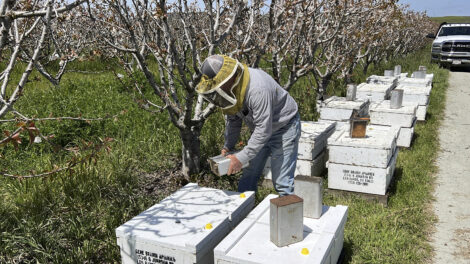
- Beekeeper Gene Brandi checks the condition of his hives at a cherry tree orchard in San Juan Bautista, Calif., Thursday, April 6, 2023. AP photo
-
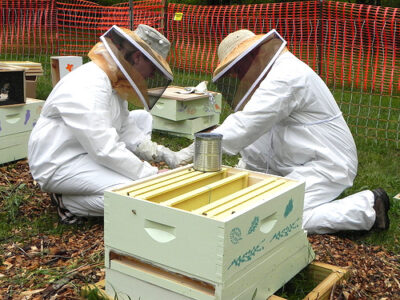
- Dennis and Laura Lamonica, owners of the Panama Bee Farm and longtime beekeepers, are pictured. Submitted file photo
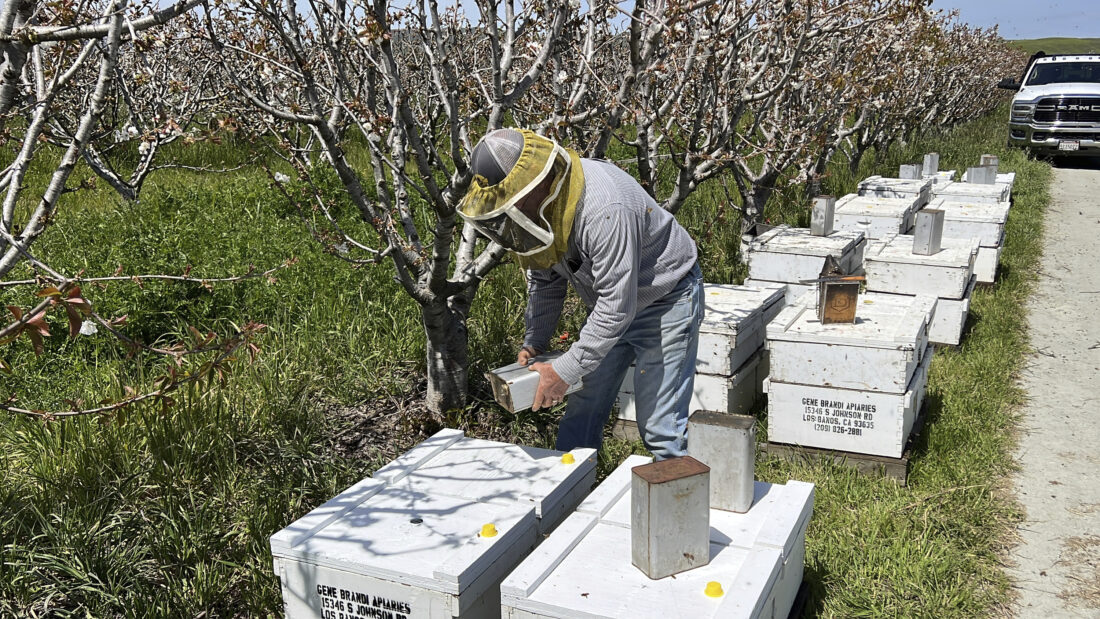
Beekeeper Gene Brandi checks the condition of his hives at a cherry tree orchard in San Juan Bautista, Calif., Thursday, April 6, 2023. AP photo
The Birds and Bees Protection Act is on its way to Gov. Kathy Hochul’s desk for possible approval after the Senate approved it before the end of the regularly scheduled legislative session.
S.1856 was passed by the Senate 45-16 last week. The bill was approved earlier in the session in the Assmebly by a 100-49 vote. Sen. George Borrello, R-Sunset Bay, Assemblyman Andrew Goodell, R-Jamestown, and Assemblyman Joe Giglio, R-Gowanda, all voted against the legsilation.
Legislators want to prohibit, starting Jan. 1, 2026, the sale, distribution or purchase by any person within the state of corn, soybean or wheat seeds coated or treated with neonicotinoids, a class of insecticides that have been formulated to control harmful agricultural pest infestations on many crops grown in New York. Specifically, the Birds and Bees Protection Act would ban pesticides with the active ingredients clothianidin, imidacloprid, thiamethoxam, dinotefuran, or acetamiprid as well as prohibit the application or treatment of outdoor ornamental plants and turf, except for the production of agricultural commodities, with a pesticide containing the active ingredients imidacloprid, thiamethoxam or acetamiprid on or after July 1, 2025; and, the active ingredients clothianidin or dinotefuran effective immediately unless the DEC justifies their use with a detailed written order that a valid environmental emergency exists, that the pesticide is effective addressing the problem and no other, less harmful pesticide or practice can address the emergency.
“I am deeply disappointed at the Senate’s passage of this bill which will ban neonicotinoids which are seed treatments that contain extremely small amounts of pesticides,” Borrello said. “Use of this innovative technology has helped farmers optimize crop yield and quality and allowed them to greatly reduce the large-scale spraying of older, more toxic and environmentally harmful pesticides. Pesticide application rates will increase by an estimated 375 percent per acre if this bill is enacted into law. Neonic safety for bees and other pollinators has been confirmed by studies and the product has been registered for use by the U.S. Environmental Protection Agency (EPA) and the New York State Department of Environmental Conservation. This attempt by legislators to override the DEC’s regulatory authority and expertise in this area is reckless and sets a dangerous precedent. Ultimately, if this misguided bill is signed into law, it will be another blow to New York State farmers whose livelihoods have been under attack by this legislature over the past three years. Multi-generational family farmers are finding it increasingly difficult to compete with other states because of the continuing and unreasonable mandates, costs and regulations that are being heaped on them. I strongly urge my colleagues in the Assembly to reject this harmful and unjustified measure.”
The legislation is opposed by the New York Farm Bureau, which says treated seeds are highly regulated, just as foliar and soil-applied pesticides are, or any other pesticide approved for certain uses by the EPA and DEC and that a prohibition on the use of these products would force farmers to revert to using older, less safe products on a more frequent basis. The DEC reclassified the use of neonicotinoids effective Jan. 1, 2023, so they are no longer available over the counter. But the DEC has allowed them to be used in targeted instances by qualified professional applicators and are only available for sale to certified applicators.
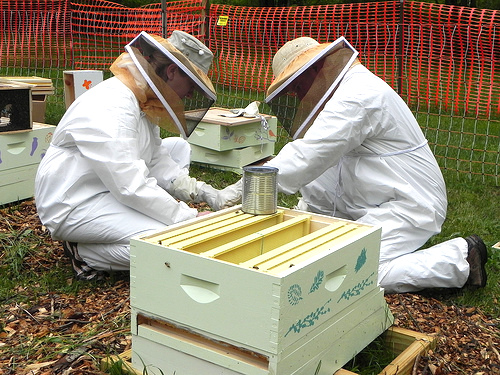
Dennis and Laura Lamonica, owners of the Panama Bee Farm and longtime beekeepers, are pictured. Submitted file photo
Goodell countered that honeybee populations are rebounding in New York state and across the nation after the Colony Collapse Disorder noted in the mid 2010s while the Cornell University study showed crop loss due to pests on untreated crops can be substantial. Farm Bureau officials note many farmers count on bees and other pollinators to grow their crops, often planting thousands of acres of wildflowers around their crops to attract pollinators and often engaging in beekeeping themselves to do their part to foster pollinator populations. The Senate version of the bill has not yet advanced out of committee.
“Over and over today I’ve heard these are neurotoxins,” Goodell said during floor debate in the Assenbly. “Yes. they are designed to kill insects. We’re not feeding insects a nutritious, organic insect food. But this insecticide is applied in such a miniscule amount, it is just applied on the seed itself. It’s not even applied on the plant. Over and over again we’ve heard the phrase, ‘Let’s follow the science.’ Let’s acknowledge the expertise of others. And indeed today we should follow the science. We should acknowledge the expertise in our own Agriculture and Market agency and acknowledge the expertise in the DEC and we should acknowleg they don’t need us to second guess them legislatively at tremendous risk to our agriculture industry.”
Local News
Poll Opens Door For Comptroller Candidate

County Kicks Off Child Abuse Prevention Month Activities

Battling It Out: Annual JHS Event Raises $6,100 For Kids, Sibs Summer Camp

Country legend Skaggs brings bluegrass to Struthers
Renold Announces $3M Expansion