
Road Salt Presents Water Quality Challenge
Trending
Water quality is all about context.
It can mean different things depending on the situation. If you ask a researcher to take samples from a stream, a lake, or an ocean, there is a laundry list of different measurements that they could provide you with. Depending on what you hope to learn, you will be looking at certain variables more closely than others. When it comes to Chautauqua Lake and similar bodies of freshwater, water quality monitoring is often focused on things like algae growth, nutrient levels, clarity, pH, oxygen, or temperature.
These factors play key roles in how freshwater ecosystems function, and they tend to be closely related to the conditions that people care about for things like recreation and human health. The conversations that stakeholders often have about these variables can move around quite a bit, depending on the main topic at hand, but there can be noticeable long-term trends. Over the past several decades, a new but familiar topic has entered many of these conversations--salt.
Water quality improvement has been described as a journey, not a destination. Using this analogy, there are a lot of obvious steps early on in the journey of safeguarding our water. We want to make sure that freshwater environments and drinking water sources are safe and usable for generations to come. Decades ago Lake Erie was perceived as a "dying lake" due in part to high levels of man-made pollution that decimated the ecosystem. A first step on that water quality improvement journey was to enact legislation to reduce and better regulate pollution. Early water quality improvement efforts in freshwater lakes like Chautauqua have been similarly obvious, such as removing and replacing outdated sewer systems. After beginning to address water quality problems that are glaring, you often can start to look at other variables in a more subtle way. Problems will not always be as obvious as "stop discharging untreated sewage into the water", or "don't dump industrial waste into a lake." Salt is a good example of one of these more subtle challenges that has cropped up in recent years.
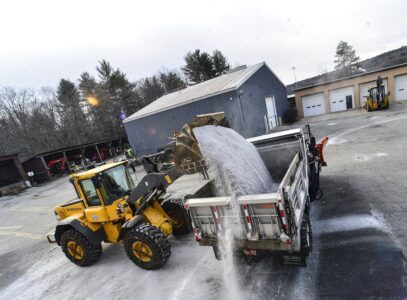
Simply put, where you have snow and people you need salt. Since cars became widespread in the 1930s and 40s, we have watched a steady increase in the amount of salt that is applied to roads each year in the United States. Today, in excess of 20 million tons of salt is spread on American roads each year. There is of course a very good reason for this. Making sure that sidewalks and roads are free of ice and snow is a public good that keeps people safe and trucks on the road. However, as we have continued to use more and more, we are learning an obvious lesson--all of that salt has to go somewhere. During spring thaws, salt makes its way into our watersheds, our lakes, and our groundwater. Freshwater ecosystems in North America and Europe have seen significant increases in salinity as we have continued to battle winter storms for decades and decades. In the case of freshwater lakes, changes in salinity can impact plankton, the organisms at the bottom of the food web, in addition to fish and invertebrates. Due to salt's effect on water density, increased salinity can also affect a lake's ability to "turn over", the natural mixing of shallower and deeper waters that can happen with seasonal changes in temperature. Mirror Lake in the Adirondacks is one such example of a lake with documented salinity issues, with salt concentrations, at times, preventing turnover and affecting trout populations.
As the issue has come to the forefront of water quality discussions, a lot of work is being done to develop solutions that strike a balance between human and environmental needs. Since 2015 the Lake George Association has hosted its annual Salt Summit, where researchers and stakeholders come together to discuss salt reduction strategies. The Adirondack Watershed Institute, the AuSable River Association, and other partners are also continuing to work at Mirror Lake to monitor salinity and reduce the amount of salt entering the environment. These water quality improvement plans often include accurate tracking and calibration of salt spreading equipment, purchasing more modern salt spreaders and plows for trucks, brining road surfaces before storms, and using cameras to monitor road conditions and inform operations. Optimistically, many of these best management practices not only reduce the amount of salt entering our water, they also save municipalities money by making de-icing more efficient. Presenters at the 2021 Salt Summit indicated that once application rates are fine-tuned and best management practices are implemented, municipalities can experience around a 50% savings in their salt usage while still maintaining similar road conditions.
Fifty years ago, road salt was not the water quality issue that it is today. There was plenty of low-hanging fruit to grab first, like addressing industrial pollution. One reason we are now able to talk in greater detail about the salinity of our lakes and streams is because we have made a lot of progress from those early days. We are looking harder at the long-term tradeoffs of how we interact with freshwater--one of our most precious resources. As we prepare to celebrate Thanksgiving, we are grateful for all those who brave the elements and work tirelessly to keep our roads safe to use during the winter months. To learn more about how we can continue to keep our roads clear and our lakes healthy visit lakegeorgeassociation.org/act-now/reduce-salt.