State Education Delay Hits Falconer Central School
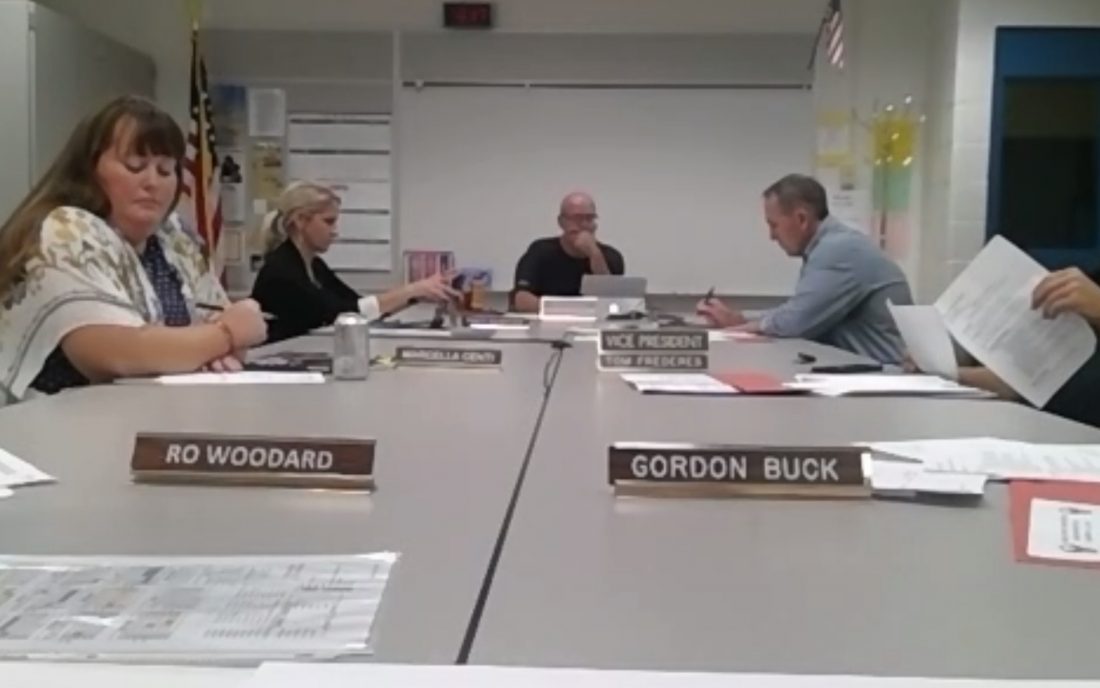
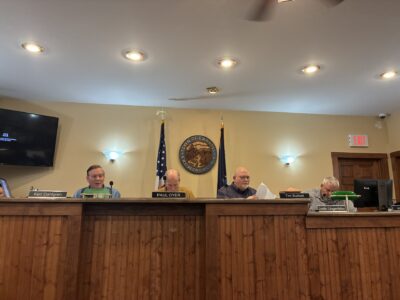
The Falconer Central School District Board of Education, along with school boards around the county, are anticipating that 20% of some New York state aid will be withheld due to COVID-19. P-J photo by Jay Young
FALCONER — School districts could soon be facing the reality of a 20% decrease in financial aid from New York state due to the financial impact of COVID-19.
The Falconer Central School District Board of Education discussed the matter Tuesday, which was originally announced in late August.
In order to offset lost revenue from the pandemic, the state announced that it would reduce spending through June by nearly $4 billion through withholding payments to municipalities and schools.
“(The payments) have been approved to be released to school districts, but the Division of Budget has reduced these payments by 20%,” Lisa Almasi, Jamestown Public Schools chief operations officer, reported in August. “We will be receiving 80% of the aid amounts that we should be receiving. We are not sure if or when we will receive the 20% that is being withheld.”
The financial cuts come at a time when schools are preparing to open in unprecedented circumstances, and have been forced to allocate new funds and effort for a range of COVID-19 procedures, equipment and increased sanitation.
As part of its reopening plans, Falconer purchased digital thermometers that will be fitted to school buses to measure the temperatures of students — one part of a much larger pandemic spending pie.
“Once again, this is just another difficult situation that schools are being asked to face on top of all of these additional costs that are coming into play with bringing kids back to school,” said Falconer Superintendent Stephen Penhollow. “This is a continuous pattern of, when the state has a gap and they need to close it, they do it by taking the aid of schools. As of right now they are doing it universally across the board. Those schools that are rural, high poverty areas, low income, are getting hit much harder than those more affluent school districts because their tax bases can handle a 20% reduction.”
Penhollow acknowledged that the state is currently referring to the change as a delay in funding, not a reduction.
“We don’t get to delay our payments but the state is obviously delaying theirs to us,” Penhollow said. “This is going to be very similar to the Gap Elimination of 2010 where they hit us with $1.9 million and then $1.75, then it went to $950,000 and $500,000.”
In 2010 the state created Gap Elimination Adjustment in an attempt to balance the budged at reduce school aid, causing frustration for some schools in rural areas.
There is concern that federal assistance could be needed in order to fill in the expected gap in state funding, which would likely require congressional cooperation on another COVID-19 relief package.
“I strongly believe that this is the governor’s plan to, with the reductions, to kind of force congress to take a look at supplementing the loss of income in states like New York and provide income to the states so that way the states can reimburse schools and hospitals as well as municipal governments and things like that,” Penhollow said. “It wasn’t like we were looking for new aid, this is not new aid on top of a baseline from last year. This is last year’s money minus 20%.”