‘Oil And Water’
Fenton Lecturer Discusses Early Days of Chautauqua Institution
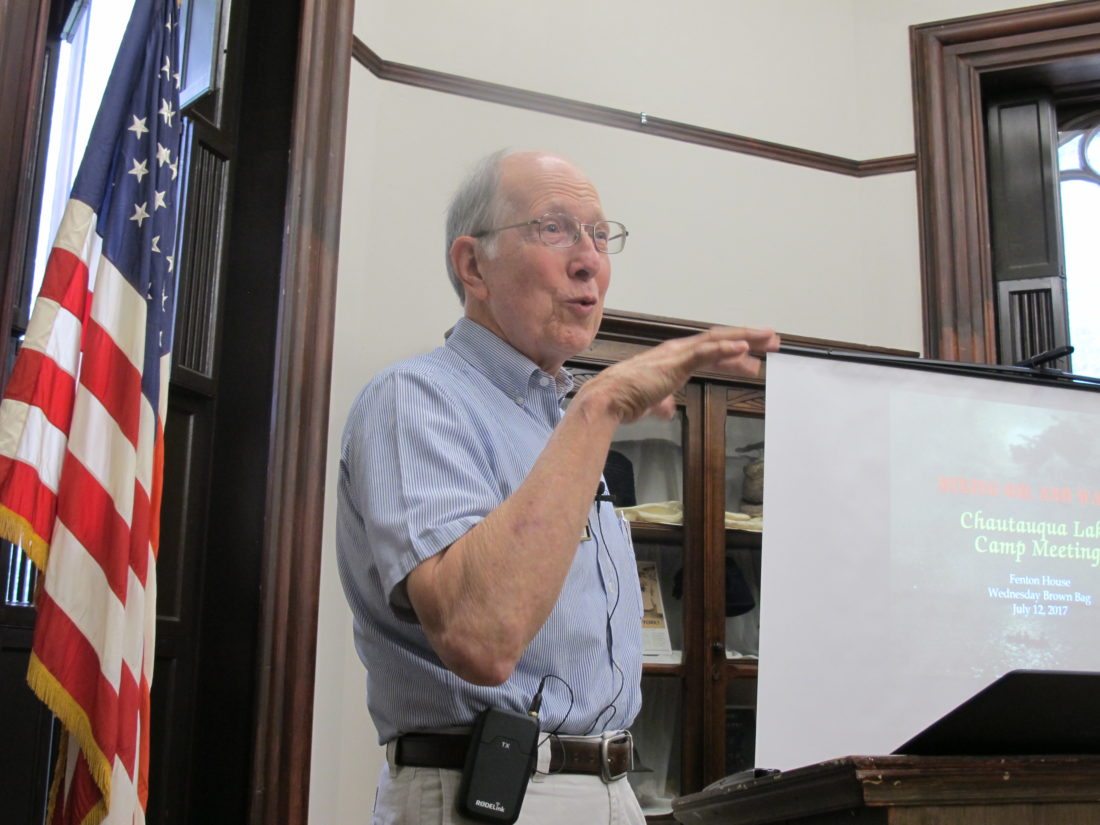
Richard P. Heitzenrater, Duke University Divinity School professor of church history and Wesley studies, gave his presentation titled Mixing Oil and Water: Chautauqua Lake Camp Meeting on the early days of Chautauqua Institution. P-J photo by Dennis Phillips
Oil money played an important role in the creation of Chautauqua Institution.
On Wednesday, Richard P. Heitzenrater, Duke University Divinity School professor of church history and Wesley studies, gave his presentation titled Mixing Oil and Water: Chautauqua Lake Camp Meeting on the early days of Chautauqua Institution.
Heitzenrater said initial camp meetings for the Erie Conference of Methodist, which started in 1871, led to the creation of Chautauqua Institution, which is a nonprofit education center and summer resort for adults and youth located on 750 acres in Chautauqua. He said the Erie Conference of Methodist stretched through a large portion of Ohio, Pennsylvania and Western New York, which went west to east from Cleveland to Olean and had a southern border around Punxsutawney, Pa.
Heitzenrater said the Erie Conference started using the land around Chautauqua Lake following Homer Moore’s attendance of a camp meeting in Saratoga. Moore, who lived around Erie, Pa., thought a perfect location for a camp meeting for Western New York would be around Chautauqua Lake.
Moore, along with Sanford Hunt of Batavia and Theodore Flood of Concord, N.H., who would soon move to Jamestown, started searching for land for a camp meeting around Chautauqua Lake. They selected the property that was known as Fair Point at the time, which was a popular weekend destination for those who wanted to have a picnic next to Chautauqua Lake.
The area of 50 acres cost the Erie Conference around $10,000, which was a lot of money for land back in the 1870s, said Heitzenrater. The Erie Conference raised the funds for the property from those who had profited from the first commercial oil well at Drake’s Well in Titusville, Pa., in 1859.
In 1874, inventor Lewis Miller and Methodist Bishop John Heyl Vincent then started Chautauqua Institution after paying the Erie Conference $1 for the land. By 1876, camp meetings started for several different religions just not Methodist. Heitzenrater said the tradition of religious lectures, which is open to all religions, continues still today at Chautauqua Institution.
Heitzenrater said there aren’t many books that have the history of the early days of Chautauqua Institution. He said one of the best sources for what was happening during the early days is from the newspaper The Daily Journal, which was located in Jamestown. He added that the newspaper, which constantly had great things to say about activities along Chautauqua Lake, would run articles summarizing the early sermons at Chautauqua Institution.
Local News
Poll Opens Door For Comptroller Candidate
County Kicks Off Child Abuse Prevention Month Activities

Battling It Out: Annual JHS Event Raises $6,100 For Kids, Sibs Summer Camp
Country legend Skaggs brings bluegrass to Struthers
Renold Announces $3M Expansion