CLPOA Lawsuit Results In Annulment Of Freshwater Wetlands Act Regulations
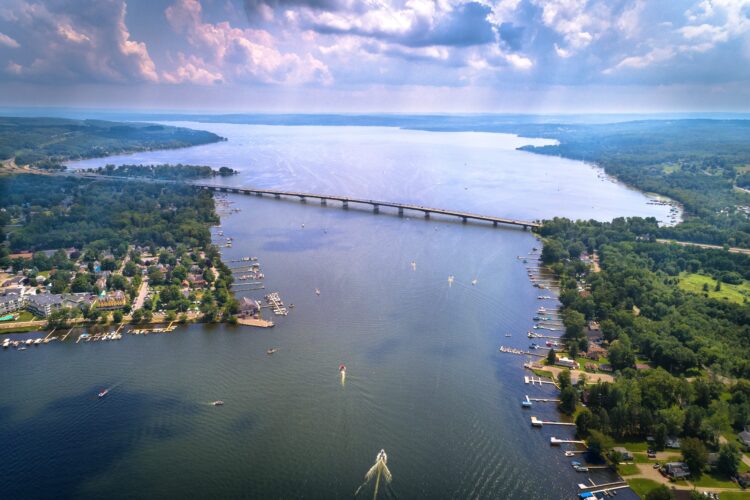
A lawsuit filed by the Chautauqua Lake Property Owners Association has resulted in the annulment of the state DEC’s Freshwater Wetlands Act regulations that took effect Jan. 1, 2025.
Of all the arguments made by the local organization, Judge Richard Platkin said the DEC did not do its due diligence on issues raised by organizations like the CLPOA.
“Having concluded that DEC did not adequately identify the relevant areas of environmental concern, did not take a ‘hard look’ at them and did not make a reasoned elaboration of the basis for its determination of non-significance, the court concludes that the subject action – the promulgation of the new Part 664 regulations – must be annulled for noncompliance with (the State Environmental Quality Review Act),” Platkin wrote in his decision, which was released Tuesday to parties in the lawsuit but not uploaded to the state court website until Wednesday afternoon.
Platkin ruled petitions in cases filed by the Chautauqua Lake Partnership, village of Kiryas Joel and Business Council of New York State were also granted on SEQRA violations – though other contentions were denied.
Platkin said the DEC’s completion of a short-form Environmental Assessment Form indicated there would be no impact, or a small impact, across 11 different dimensions that included whether the new regulations would result in a change in the use or intensity of the use of land. DEC officials had said the new Part 664 regulations would increase the amount of regulated wetlands that would lead to a reduction in adverse impacts on the wetlands as more projects were required to avoid, minimize or mitigate impacts on wetlands. Platkin said the DEC received public comments identifying specific areas of potential environmental concern with the new part 664 regulations in the Freshwater Wetlands Act update, including the prospect of urban sprawl and other growth-inducing impacts; impact to aquatic ecosystems, algae blooms and invasive species; effects on urban communities that included sprawl; and growth-inducing impacts.
“Part 664 affects millions of acres of freshwater wetlands, and DEC’s discretionary regulatory choices – including the blanket Class II designation for urban wetlands, the categorical 100-foot buffer zones and extended adjacent wetlands of variable size – have the potential to work significant changes through alteration of development patterns, land-use intensity and/or the capacity of affected lands to support existing uses,” Platkin wrote. “Nothing in the Short EAF indicates that DEC identified any of these potential environmental concerns as relevant areas warranting a hard look. The Short EAF’s analysis rests entirely on the narrow premise that expanded wetland protection is inherently beneficial to wetlands, and there is no indication that DEC considered anything other than that objective when it determined that Part 664 had no potential for adverse impacts.”
This story will be updated.
Latest News
CLPOA Lawsuit Results In Annulment Of Freshwater Wetlands Act Regulations
Woman Charged With Driving Stolen Vehicle
A Warren woman has been charged after allegedly driving a stolen vehicle on Fairmount Avenue in Lakewood. ...
No charges expected in officer involved shooting in Mina
Ellicott Police Respond To Homeless, Trespass Complaints
Recently the town of Ellicott Police Department had been called to the hotel, and to school grounds to address ...
100 And Counting