Cases Of New Virus Double Overnight In NY To 22
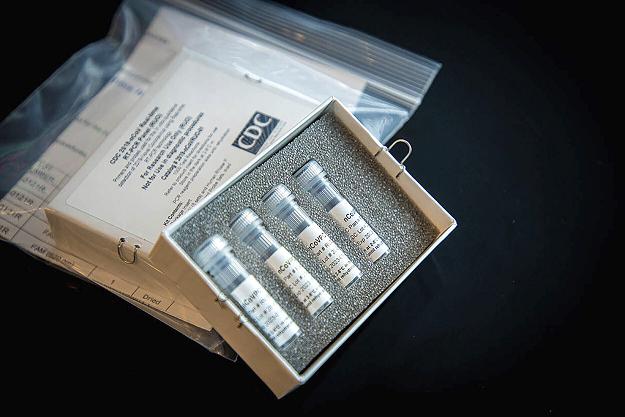
FILE - This undated file photo provided by U.S. Centers for Disease Control and Prevention shows CDC's laboratory test kit for the new coronavirus. New York Mayor Bill de Blasio implored the federal government Thursday, March 5, 2020, to send more coronavirus test kits as the city confirmed two more COVID-19 cases, both in hospitalized patients with no known travel history or personal connections linking them to the virus. (CDC via AP, File)
NEW YORK (AP) — New York state’s coronavirus caseload doubled overnight, to 22, as the mayor of the nation’s largest city implored the federal government Thursday to send more test kits for the new virus.
The newly diagnosed cases include two hospitalized, intensive-care patients in New York City and a hospitalized man in Long Island’s Nassau County, Gov. Andrew Cuomo said.
The other positive tests were in people with mild symptoms — or none at all — in Westchester County, where a cluster of cases emerged earlier in the week and a 50-year-old lawyer at the center of it has been hospitalized since last week.
“The number will continue to go up” as testing increases, the governor warned, adding that he expected “significant” spread through the public.
Mayor Bill de Blasio said the two newly diagnosed patients in New York City, a man in his 40s and a woman in her 80s, are both in intensive care. The Long Island patient, a 42-year-old man, is not in intensive care.
Meanwhile, officials in neighboring New Jersey said Thursday that the state’s first positive test for the new coronavirus came from a 32-year-old man from Fort Lee.
De Blasio, a Democrat, urged the federal Centers for Disease Control and Prevention to supply New York with more test kits and to speed the approval of tests that private companies may be developing.
“Our single greatest challenge is the lack of fast federal action to increase testing capacity,” he said. “Without that, we cannot beat this epidemic back.”
After an initial batch of test kits that the CDC sent to state and big city public health labs proved largely faulty last month, New York City and state officials pressed for permission for their labs to run their own tests.
The state got approval Saturday to run its own version of the test. Gov. Andrew Cuomo, a Democrat, said Wednesday that the state lab is now able to run about 200 tests a day, and aiming for 1,000 daily.
New York City, meanwhile, got a new batch of CDC test kits. De Blasio said Wednesday that the current testing capacity was dozens of tests a day “and we need to get to hundreds, quickly.”
City and state officials have stressed for weeks that they expected the coronavirus that has sickened thousands around the world to make its way to New York, a major travel hub.
SCHOOLS MONITORING SITUATION
“The Southwestern Central School District is aware of concerns in the community about the issues related to the COVID-19 virus,” Maureen Donahue, Southwestern superintendent, said in a statement. “The district is closely monitoring this fluid situation and following guidance from the U.S. Centers for Disease Control, the New York State Department of Health, Chautauqua County Department of Health and the New York State Education Department.
“If a student or staff member shows respiratory symptoms, we will follow our best practices for handling respiratory illness, subject to any additional guidance forthcoming. The district has infectious disease protocols in place and has been taking steps, such as cleaning and disinfecting throughout its schools, to minimize the spread of viruses and a variety of other illnesses.”
Bret Apthorpe, Jamestown Public Schools superintendent, issues a similar statement this week.
“Please be assured that Jamestown Public Schools is closely monitoring daily developments regarding the novel coronavirus, COVID-19. Like all New York school districts, Jamestown Public Schools relies on guidance from state and federal agencies, including the Chautauqua County Department of Health & Human Services, the New York State Department of Health, and the national Centers for Disease Control when addressing evolving public health issues like coronavirus,” Apthorpe said.
There are a number of steps that students, staff and community members can take to minimize the spread of all respiratory illnesses, including COVID-19, according to the state Department of Health:
• wash your hands often with soap and water for at least 20 seconds. If soap and water are not available, use an alcohol-based hand sanitizer. Heavily soiled hands should be washed.
• avoid touching your eyes, nose and mouth with unwashed hands;
• avoid close contact with people who are sick;
• stay home when you are sick;
• cover your cough or sneeze with a tissue, then throw the tissue in the trash;
• clean and disinfect frequently touched objects and surfaces;
• stay up to date on vaccinations, including influenza.
Latest News
State warns of extreme heat conditions for region
New Yorkers are being urged to prepare for a period of extreme heat starting Tuesday with "feels-like" temperatures ...
Cooking fire at condemned home leads to drug bust Thursday
County offers statement as altercation under investigation
MAYVILLE — Chautauqua County has issued a statement regarding an incident Thursday at the clerk's ...

Overnight fire damages Jeremy’s Bel View
Gies wins big in Democratic primary for District 23