
Woodpecker Whimsy
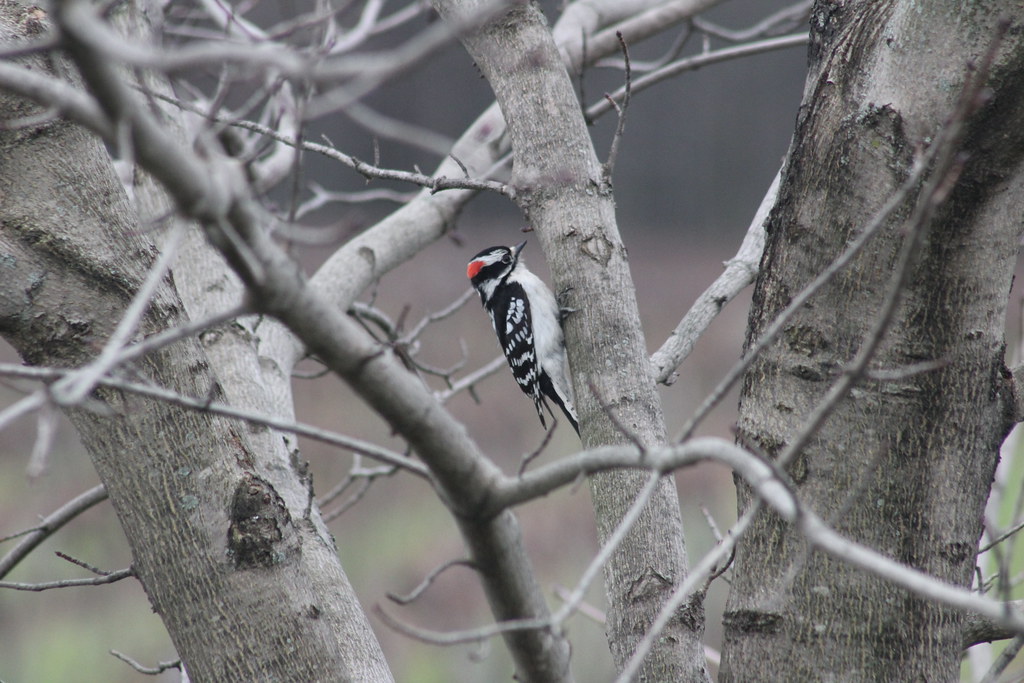
A Downy Woodpecker is pictured foraging. Photo by Emma Pryll
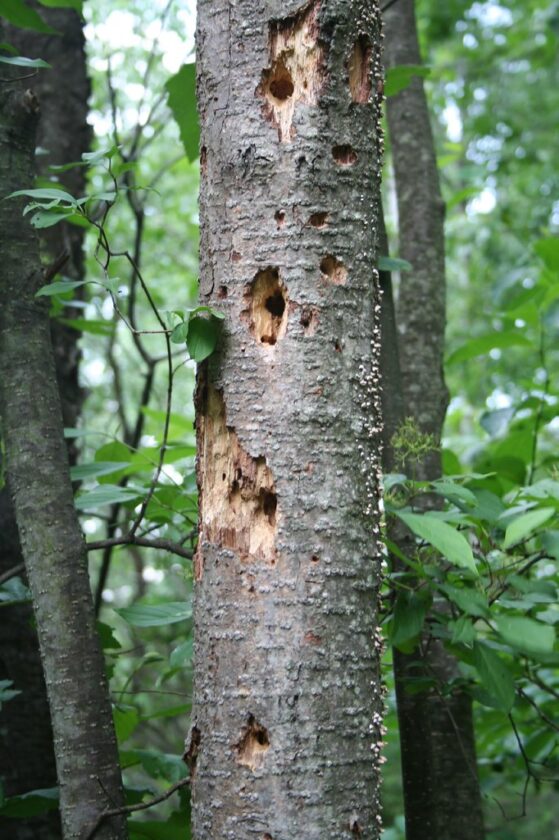
Tree that has been excavated by woodpeckers while foraging for food.
A Downy Woodpecker is pictured foraging. Photo by Emma Pryll
Tree that has been excavated by woodpeckers while foraging for food.
Trending
Since starting at Audubon last November, I have absorbed an extensive amount of information about the environment and nature surrounding me. One particular topic that has resonated with me most is truly how many different types of birds there are. Through lunch time conversations that started as observing frosty feeders from the comfort of the Nature Center’s heated exhibit hall, to hoping the sun will come out so we can eat outside and listen and look for any new feathered friends arriving with the warmer weather. Small moments like this have given me the opportunity to ask so many questions about these animals I have always known but never truly acknowledged. All of these questions have led me to expanding not only my knowledge on birds but my blossoming interest in them.
As I learned more about birds I started paying more and more attention to which species were around me. Whether I was on a hike or relaxing outside my own home, woodpeckers were always nearby. To me woodpeckers have always been a bird I heard, but never truly acknowledged. Watching them creep up trees and hang upside down at feeders is what first sparked my love for the species. That interest only grew when I started spotting different species of woodpecker and could start identifying them. Once I could differentiate the species I was seeing I made it my goal to see all the woodpecker species in the area.
In our region of New York, you can find roughly six different native species of woodpecker belonging to the Picidae family. Species like Downy, Hairy, Red-headed, Red-bellied, and Pileated Woodpeckers, as well as the Northern Flicker can be found in Western New York. Each of these species has a unique morphology that classifies them in the Picidae family.
Woodpeckers are known for the echoing drum of their strong bills against both standing and fallen trees. Using their chisel like bill, woodpeckers are experts in excavation. Their bill has three layers enforcing each peck and protecting the structure of their beak from withstanding damage. Having the power to drill into trees does not come lightly; woodpeckers’ bodies have had to adapt to the vigorous drumming that they're known for.
Woodpeckers’ skull morphology has adapted to protect their brain from being rattled, avoiding damage as they drill into wood whether for nesting, foraging, or mating. A combination of spongy bone and fluid keeps their brain cushioned and in place within the skull. In addition to a more cushioned skull, woodpeckers also have an exaggerated hyoid bone that aids in reducing some of the mechanical stress produced by drumming. The hyoid bone provides stability to throat muscles and anchors the tongue within the skull. For woodpeckers this exaggerated hyoid wraps around the outside of the bird’s skull providing that extra layer of protection from the vigorous pecking and the stress it can inflict on the body and brain of the bird.
Woodpeckers’ tongues not only have adapted to absorb the stress induced from drumming, but also to enhance their ability to forage for food deep within a tree. Woodpeckers’ unusually long tongues are coated in a sticky saliva and barbed in order to capture prey hidden within crevices or within their own excavation sites. Species like Downy Woodpeckers are known for their excavation method of foraging for food resulting in shorter tongues. Meanwhile species like Northern Flickers rely mainly on probing surfaces such as the ground or crevices previously made to forage for food.
Another one of the woodpeckers’ distinguishing morphologies are their zygodactyl or clinging feet. Zygodactyl feet are characterized by toe arrangement, more specifically two toes in the front and two toes in the back of the foot. A zygodactyl foot shape is beneficial to woodpeckers as it allows these birds to scale trees as well as hang upside down. Zygodactyl feet are seen in other species of bird, like parrots and owls. This foot shape stabilizes woodpeckers as they climb trees while foraging or nest excavation.
All of these unique morphologies of woodpeckers are things I first learned from my coworkers here at Audubon. Setting a goal so out of my control would’ve never crossed my mind in the past, but having such knowledgeable and kind people working alongside me has allowed me to discover new passions I would’ve never pursued. Through those conversations at lunch, walks to clear our minds, and even commutes for classroom programs I have learned so much from the people I work with.
As for my goal I mentioned. So far, I have been able to check off plenty of Downy, Hairy, and Red-bellied Woodpeckers. All frequent visitors at my birdfeeders and our trails at Audubon. My most recent sighting being a Pileated Woodpecker foraging amongst the forest while on a hike at Stony Brook State Park. I have spotted multiple Northern Flickers in flight, but have yet to be able to watch and observe them. As I continue to pursue my goal of seeing all the woodpeckers in our region I have been able to build upon my knowledge of not only the birds but the nature that surrounds us.
Audubon Community Nature Center builds and nurtures connections between people and nature. ACNC is located just east of Route 62 between Warren and Jamestown. The trails are open from dawn to dusk and birds of prey can be viewed anytime the trails are open. The Nature Center is open from 10 a.m. until 4:30 p.m. daily except Sunday when it opens at 1 p.m. More information can be found online at auduboncnc.org or by calling (716) 569-2345.