
Finding wonder under old logs
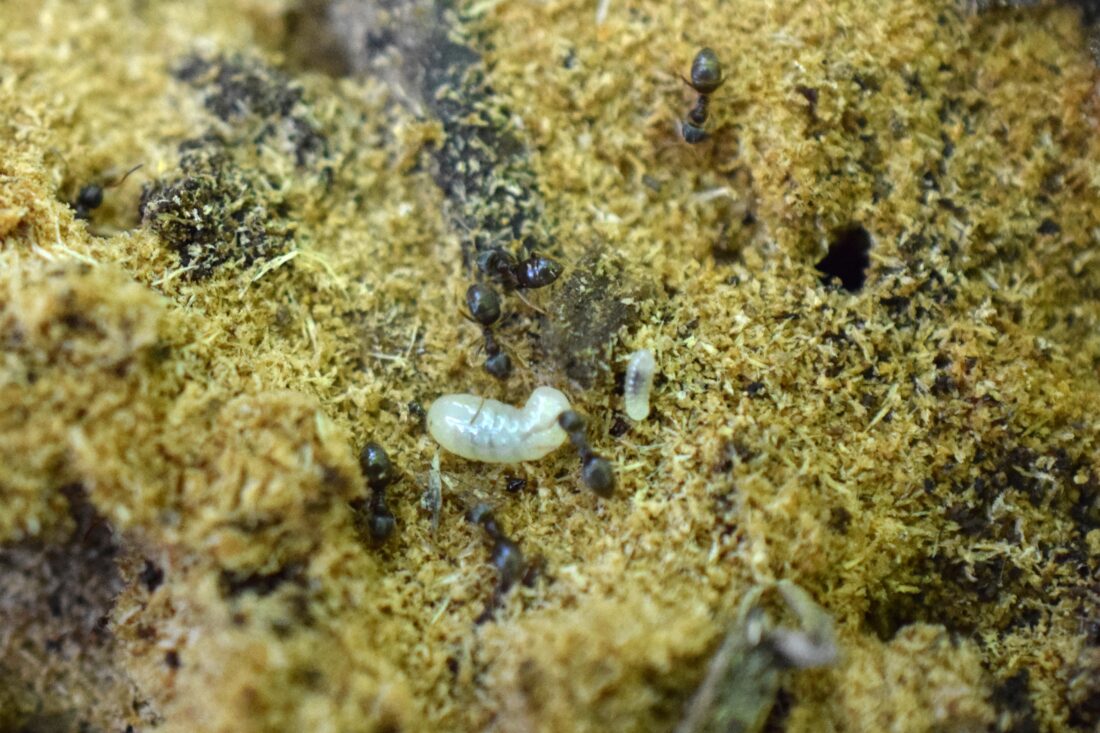
Photos by Charlotte Schmaltz Exposed ants gather to protect their larva.
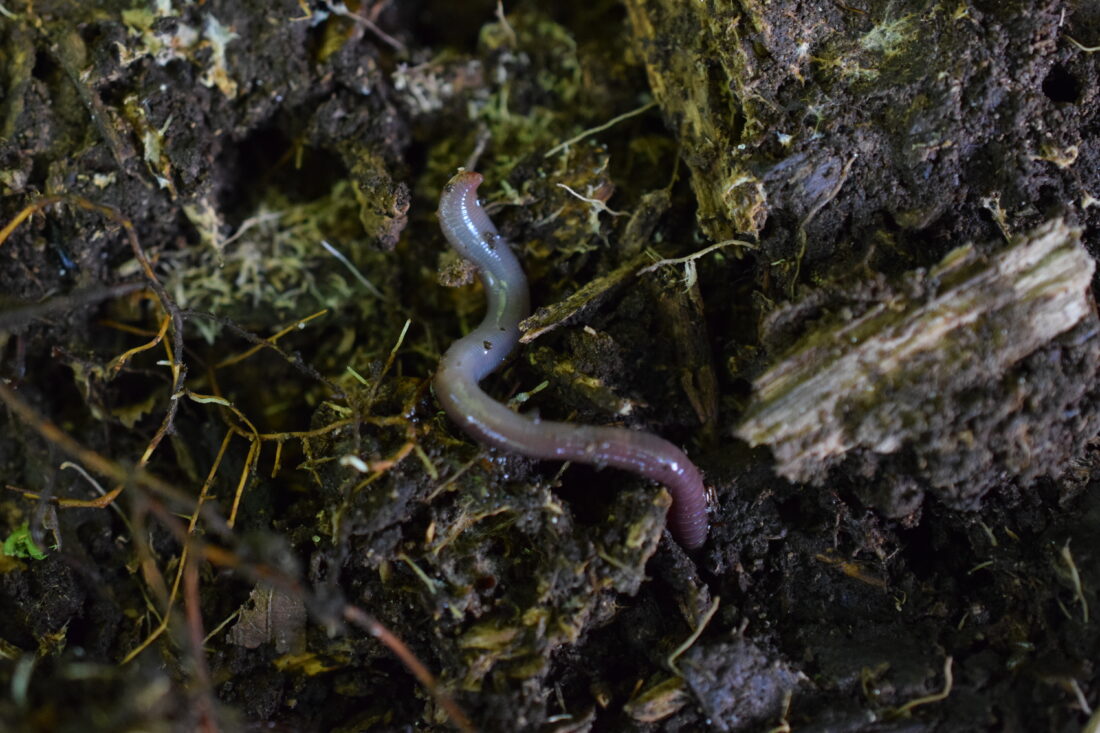
Worms are a common and welcome sight under logs.
Photos by Charlotte Schmaltz Exposed ants gather to protect their larva.
Worms are a common and welcome sight under logs.
Trending
Right now at Audubon, it is Discovery Walk season, where schools come to us for field trips to explore nature. One activity that we regularly do on these walks is flipping over logs to find the creatures living underneath.
Before turning over a log, you can make observations that tell a story. A fallen log may contain holes, carved by insects or birds looking to eat them. Mushrooms may be growing on the log and using it as fuel, breaking it down back into soil. Moss sometimes covers the top like the softest green carpet.
The main attraction, however, is what lies underneath. By flipping over a log you get a glimpse into the lives of many creatures. One common sight is a critter that goes by many names. Whether you call it a pill bug, roly poly, or potato bug, the names all refer to the little animal that curls up into a ball when touched. These are not insects, but rather they are a member of the crustacean family, more closely related to crabs. If you watch them closely as they move around, you can see their many legs. Sowbugs look almost identical to pill bugs, but they have 2 tiny "tails" instead of one. They also don't curl up when disturbed. Both animals can be found under almost any object on the ground, including rocks.
Like our friends the pill bugs, millipedes will also curl up and hide when spotted, though they are not as round. They are usually a gray color that blends in with the wood and can be quite small. Sometimes staying still is a good way to avoid being noticed, as movement naturally catches our eyes and attention. Unlike millipedes, centipedes move quickly when revealed, often surprising the person who finds it. At Audubon we rarely have the children pick them up because they can bite. However, they are a bright orange color and can easily draw your eyes to a new discovery as they crawl away.
Another movement you might see when turning over a log are earthworms digging through the cool dirt, providing soil for future plants to grow. Their pink hue makes them stand out among the many browns and grays. When flipping logs with children, I find that worms are also a wonderful way to engage them with nature, as many kids love to hold one in the palm of their hand, and watch it squirm and wiggle before gently putting back down in the soil.
There have been a few times where I have found an ant colony underneath a log. When disturbed, they scramble to protect their grub-like young, oftentimes bringing them deeper into the nest--whether that's in the log itself or underground. Watching them work is somewhat mesmerizing. The colony moves and works like a well-oiled machine, every ant knowing exactly where to go and what to do.
If you're lucky, you may even find a salamander under a log. There are several species that call western New York home, and many prefer the cool, damp environment a log provides. I once found an adorable Spotted Salamander under a log, it was completely black except for the bright yellow spots running up and down its body. Other salamanders in this region can be different colors or have different patterns on their bodies, like stripes.
The most important part of log flipping is the last step, which is putting the log back where you found it. When flipping logs with kids I liken it to taking the roof off of their house and putting it back on. By flipping a log, you get a glimpse into the lives of these little creatures, but it is just as important to respect them by putting their home back the way you found it. This minimizes the disruption and allows them to get back to their life with minimal stress.
In addition to some of the common residents I've discussed here, there are countless other creatures, including many insects, that can be found if you take the time to slow down and look. These discoveries can happen anywhere when there's a log, stone, or other object sitting on the ground for an extended period of time.
Audubon Community Nature Center builds and nurtures connections between people and nature. ACNC is located just east of Route 62 between Warren and Jamestown. The trails are open from dawn to dusk and birds of prey can be viewed anytime the trails are open. The Nature Center is open from 10 a.m. until 4:30 p.m. daily except Sunday when it opens at 1 p.m. More information can be found online at auduboncnc.org or by calling (716) 569-2345.