Senses Come Alive In Spring
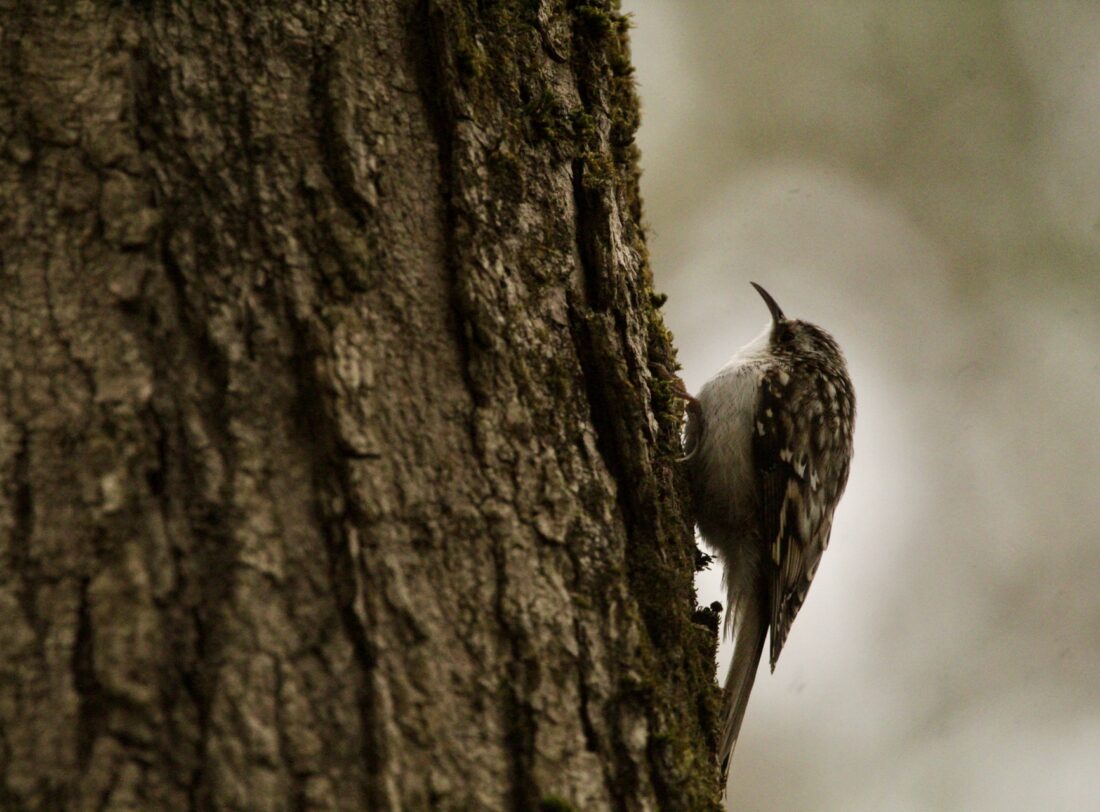
Brown Creepers require the most attentive of mindsets, encouraging you to focus
The clocks have ‘sprung forward,’ daylight hours are growing, and the natural world is coming back to life. Being present in a ‘go-go-go’ world is hard to achieve, but all you need is your body and an outdoor space. Mindfulness is the practice of fully embodying what is happening in the present moment and using your senses to absorb all the sounds, sights, and smells of an environment. Use your senses in spring by allowing nature to define your outdoor experience. Chances are you’ll discover something new or embark on a journey off the beaten path.
I know spring is officially here when I hear the ‘meep’ of an American Woodcock at dusk, pick up on the droning hum of Spring Peepers, and most importantly, when I smell rain hitting the ground, also called petrichor.
There is an added dimension and depth to the scent of freshly wet grass and wild plants. After months of nothing but sharp cold air in my nostrils, this first sensory experience is simply rekindling with what returns every spring–rain. For those who have smelled this sweet earthy aroma, you know exactly what I am talking about. But what causes this pleasant scent? Humidity rises upon the arrival or departure of rain and plants release compounds called geosmin when raindrops make contact with the soil. These particles make their way to the air around us as droplets disrupt their grounded stillness. As a result, we can easily pick up this naturally sweet odor.
When I’m getting my garden ready to plant, I rarely wear shoes. Letting the soil dig between my toes and feeling dirt on the soles of my feet brings me to the present moment. When ‘grounding myself’ in nature, the first thing that goes are my shoes. There is no better sensory experience than walking on the beach or grass with bare feet, as long as you are safe from any pointy objects. After all, a little dirt never hurts.
On days when the sun is high, twinkling its warm light through waving trees, I close my eyes and see shades of reds and oranges dance beneath my eyelids. The next time you are outside on a sunny day, grant yourself the opportunity of experiencing your internal ‘kaleidoscope’ right under your eyelids. Turning toward the subtle sounds of wind as it travels through the forest allows me to anticipate the moment when it reaches the trees I am beneath. Feeling the warm winds of spring on my arms and face, I remind myself of how lucky I am to experience such small pleasures in life.
At the base of towering trees, pillows of moss await exploration. Soft textures and the push-back felt by pressing your hands into moss is one that I frequently rediscover once the snow melts, revealing forgotten miniature landscapes. When on a walk, many forget to stop and allow their eyes to examine the textured details on leaves and budding sprouts on trees. There are many patterns and swirls that have yet to be admired. A close friend and I were exploring at Audubon when she stopped in her tracks to pick up the smallest piece of bark. On it, were little lichen patterns with the most vibrant shades of yellow. If she were not mindful in the moment, chances are she would’ve walked right past it. This is the type of discovery you can make the next time you walk slow and with intentional curiosity.
There is a stark difference between listening ‘to’ something versus listening ‘for’ something. This internal goal and mission make it hard to let your mind wander elsewhere. If I listen to a song, sometimes I find it drifts into the background and my thoughts inside my mind become the main noise I hear. Shift your listening from a sound that simply fills a space to a sound that defines a space. This simple alteration can encourage mindfulness and curiosity.
At the heart of it, sound is multi-dimensional. We are gifted with ears that are shaped with waves and textured curves that give us the ability to hear in front of us, beside us, and behind us. When you find yourself practicing mindfulness in the forest, pay close attention to figure out if you can pinpoint where sounds are coming from and choose to follow it. You never know what animals are waiting for you.
Quieting my mind is easy with the soundtrack of birds to focus on. Calls of Red-winged Blackbirds, chattering of warblers, and thrumming of thrushes bring my hearing beyond the voice between my ears. One small bird that requires the most attentive of listening skills is the Brown Creeper. This small, chittering bird is one that can only be heard if you empty your mind and fill it with the sounds you hear around you. The softest “pee wee willow wee” is heard around tree trunks as these birds spiral upward, looking for insects. Brown Creepers encourage us to play along with nature’s scavenger hunt, for their camouflage is excellent and their subtle movements keep me in the present moment.
With technology comes the ability to use tools that have not been previously invented. One tool I have on my phone is Merlin ID. If you’re new to birdwatching or are just curious about the birds that share a space with you, this online tool ‘listens’ for bird calls and songs around you and is able to identify those birds. This encourages listening to the present moment and enjoying all the sounds nature provides for us.
If you’re not tech-savvy, keeping a nature journal can go a long way, encouraging you to write, draw, or document whatever catches your attention in the forest. Consider spending a few minutes focusing on one object, absorbing even the smallest of details you notice or wonder. These practices continue to develop mindfulness and create a peacefully attentive mind.
Each of our senses are designed to help us gather information about an environment, using them to explore or to simply be curious. Our senses in spring are for touching soft moss that has been forgotten, listening to the music of bird songs, and feeling the return of glowing sunshine. As landscapes come back to life, allow your mind to empty as your senses define experiences in nature for you. This is what our bodies were made for.
Audubon Community Nature Center builds and nurtures connections between people and nature. ACNC is located just east of Route 62 between Warren and Jamestown. The trails are open from dawn to dusk and birds of prey can be viewed anytime the trails are open. The Nature Center is open from 10 a.m. until 4:30 p.m. daily except Sunday when it opens at 1 p.m. More information can be found online at auduboncnc.org or by calling (716) 569-2345.
Community

JBGC Honors February Youth Of Month
Jamestown Duo Facing Drugs, Weapons Charges
A pair of Jamestown men are facing federal drugs and weapons charges. On Thursday, U.S. Attorney Michael ...
Senses Come Alive In Spring
Jamestown Police Department’s SWAT Team Receives Federal Grant
The Jamestown Police Department has been awarded $75,000 through the Tactical Team Grant Program to support its ...

Brookdale Chicken, Biscuit Dinner To Benefit Jamestown Kiwanis Club