
LOGIC Discusses Energy At Picnic
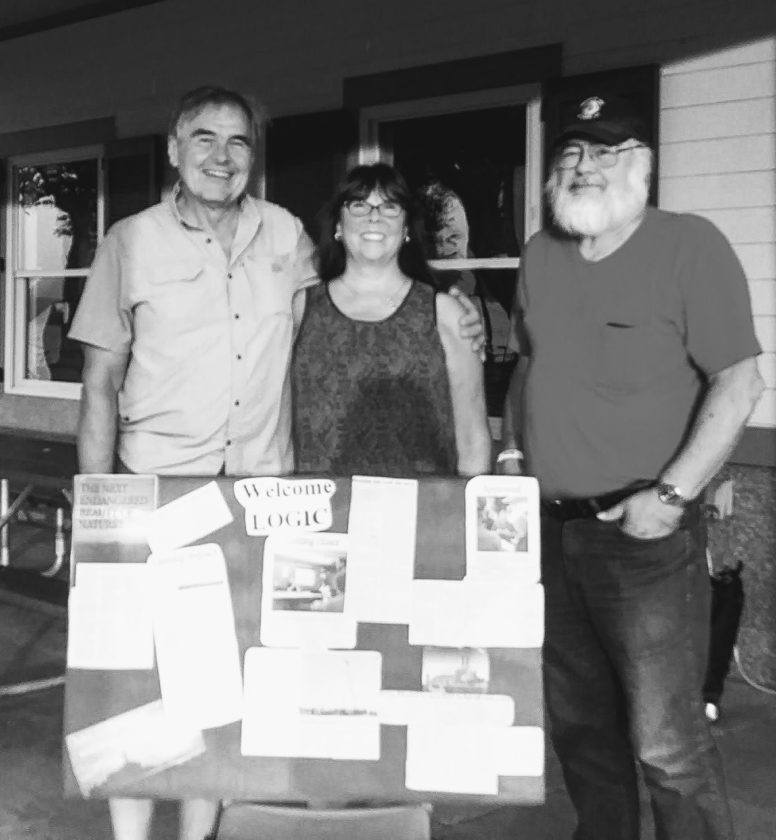
Pictured are Mark Twitchell his wife Michelle Twitchell and Mike Wiltsey. Submitted photo
MAYVILLE — Energy transition was one of the topics discussed at the annual LOGIC picnic held at Lakeside Park in Mayville.
Over time, energy transition has occurred natural sources of energy such as wind and water power to drive sailing ships and saw and grist mills, to 19th century reliance on coal, oil, and gas; to 21st century technology where concerted efforts are being made due to concern for climatic changes to focus once again on naturally occurring sources of energy such as wind.
Nonetheless, wind energy is not without its critics particularly when we consider fossil fuel powered electricity generation at NRG equaled 600 megawatts on 100 acres of land which produced steady, reliable power 24 hours a day, seven days a week. Wind-powered electricity for three proposed facilities in Chautauqua County requires 80,000 acres for 300 megawatta of power which is non-dependable. That’s half the capacity on 800 times the acreage.
With so much land required for production the wind industry has developed two distinct and unique means of relation to impacted neighborhoods: trespass zoning and the good neighbor agreement.
Trespass zoning occurs because the negative environmental impact to industrial wind turbines is measured at the neighbors home instead of the property line. This means that a significant part, if not all, of neighbor’s property is subject to turbine noise, shadow flicker and visual blight. Trespass zoning also occurs when setback distances for turbines are insufficient to prevent flying debris from landing on neighbor’s property. Turbine manufacturers advise maintenance workers to avoid approaching within 1,600 feet of a malfunctioning machine. With setbacks in Chautauqua County at 1,000 feet there is concern for safety of homes. Even if a property line is 800 feet from a turbine the taxpayer is paying taxes on a significant portion of property they can’t develop.
The good neighbor agreement is an effort by the wind energy developer to compensate for the trespass zoning. the developer may offer non-participating landowners $1,000 to $2,000 a year for their troubles, annoyance and lost income opportunities. In exchange the good neighbor agreement explains in part the often-cited positive view of nearby wind facilities expressed to pollsters and curious visitors. It also results in under-reporting of adverse health effects resulting from annoyance at wind turbine noise.
Community
Village Gives Approval On Looming Water Project Tied To North District
Fredonia’s trustees have approved a $2.975 million engineering agreement with LaBella for work on connecting ...
Boil Order, Due To ‘Intense Rain,’ Ends In Fredonia
Petitions Available For Jamestown School Board Candidates
Petitions for the Jamestown Public Schools Board of Education Election on May 19, 2026 are now available. At the ...

4-H Youth Learn Resume, Interview Skills
Frewsburg Lions To Host Benefit For Frewsburg Family
Hazeltine Library Sets Spring Author Series
Hazeltine Public Library is pleased to announce the popular author series will begin April 6 and continue each ...