
Chautauqua Watershed Notes
Trending
A Society Of Squirrels
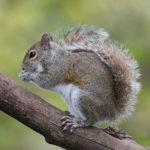
Most mornings this winter, I've delighted in the antics of up to thirteen eastern gray squirrels (Sciurus carolinensis) hopping, leaping, and scampering among my backyard apple and cedar trees, eagerly gathering peanuts and sunflower seeds from my feeders, burying their treasures under the snow, and chasing each other in play and wild courtship dances. Smaller, solitary American red squirrels (Tamiasciurus hudsonicus) come too, waiting their turn at the feeders and chucking and chattering their annoyance when the larger grays dominate the scene. Such energy and exuberance in the midst of damp, chilly days is a testament to the resilience and resourcefulness of the wild ones in winter, for only when the weather is at its very worst do they forego their regular feeder visits and stay sheltered safely within their dens and nests. It's a matter of survival, for these squirrels do not hibernate. Instead, they rely on fat reserves, caches of nuts and seeds previously harvested and hidden, and the bounty of birdfeeders to endure the harsh realities of Western New York winters.
Taxonomically, the squirrel family is large and diverse and includes not only the familiar gray and red squirrels but also fox squirrels, flying squirrels, chipmunks, woodchucks (groundhogs), marmots, ground squirrels, and prairie dogs. The family name, Sciuridae, means "shade tail," referring to the bushy tail of many members, which provides protection, balance, body language, and a warm blanket against the cold. It's especially useful to our area's gray, red, fox, and flying squirrels, which remain active year-round. In our area, only the woodchuck truly hibernates, slumbering until springtime in a profoundly altered metabolic state known as "deep torpor," while chipmunks sleepily snuggle in their burrows for much of the season, arising only occasionally to eliminate wastes and feed on stored seeds and bulbs.
Like many members of the Sciuridae, gray squirrels are "scatter-hoarders," burying the bounty of autumn in numerous small caches for retrieval weeks or months later. An eastern gray squirrel may make several thousand caches or burials each season. Especially valuable foods include hickory nuts, beechnuts, acorns, butternuts, and hazelnuts, although seeds of maple, ash, elm, and basswood are also harvested, as are buds, bulbs, flowers, bark, fungi, and the fruits of cherry, dogwood, and hawthorn. Rather than scatter-hoarding, red squirrels create only one or a few large stockpiles, called "middens," within their territory. Middens may be located under a fallen tree, in a burrow, or elsewhere. Reds especially relish the seeds of pine, spruce, larch, fir, and hemlock, and clamber up into these conifers to cut down and harvest the green seed-bearing cones for their pantry. While a squirrel's keen sense of smell and spatial memory allow retrieval of their precious provisions, even in deep snow, overlooked and uneaten fruits, nuts, cones, mushrooms, and other cached "leftovers" remain behind, to replenish the soils, disperse seeds and spores, and sprout new trees come spring. Truly, squirrels are key contributors to the regeneration of forests!
The numerous gray squirrels visiting my yard this winter have certainly enjoyed the steady supply of food, and careful observation has revealed several family groups, each comprised of a mama with her 2-3 youngsters from last year's late summer litter. Additionally, several males have been courting, calling, and chasing the females. Mid-winter courtship rituals for both gray and red squirrels involve up to ten eager males pursuing a female in estrus during January and February. No pair bonds are formed and mating is very brief. In grays, extensive vocalizations occur, with "kuks," "quaas," and moans before and after mating, and anytime adults are alarmed within their territories. Complex calling, foot stomping, tail flicking, body posturing, and chemical cues all provide key information for communicating and socializing in the squirrel world. In March or April, after a gestation period of 40-44 days, 2-4 tiny baby grays are born blind, pink, and hairless, in a tree cavity den or leafy dome-shaped nest of shredded bark and twigs. Each infant weighs no more than half an ounce. Youngsters are fully furred about 45 days after birth and soon explore the world beyond their nursery, but mama doesn't wean them until they are 10 to 16 weeks of age. She may enter a second period of breeding if mid-summer food is abundant. Spring baby grays disperse and eventually become independent in nearby territories, but late summer babies remain with mama all winter, as my little backyard families demonstrated. The sequence is similar for red squirrels, but the developmental timeframes are shorter and each youngster must acquire a territory and midden of its own if it is to survive its first winter. Both red and gray squirrels may fall prey to hungry hawks, weasels, fox, coyote, cats, dogs, and humans, and first year mortality is very high. Life is hard on little squirrels, but if nature is kind, our young squirrels may live 2-8 years or more, to frolic and forage among the trees, and scatter seeds within the watershed forests of the Chautauqua region.
Becky Nystrom is a Professor of Biology at Jamestown Community College, a long-time CWC supporter and volunteer and a founding trustee of the CWC. The Chautauqua Watershed Conservancy is a local not-for-profit organization that is dedicated to preserving and enhancing the water quality, scenic beauty and ecological health of the lakes, streams, wetlands and watersheds of the Chautauqua region. For more information, call 664-2166 or visit www.chautauquawatershed.org or www.facebook.com/chautauquawatershed.