Read 180 Helping Close Literacy Gap
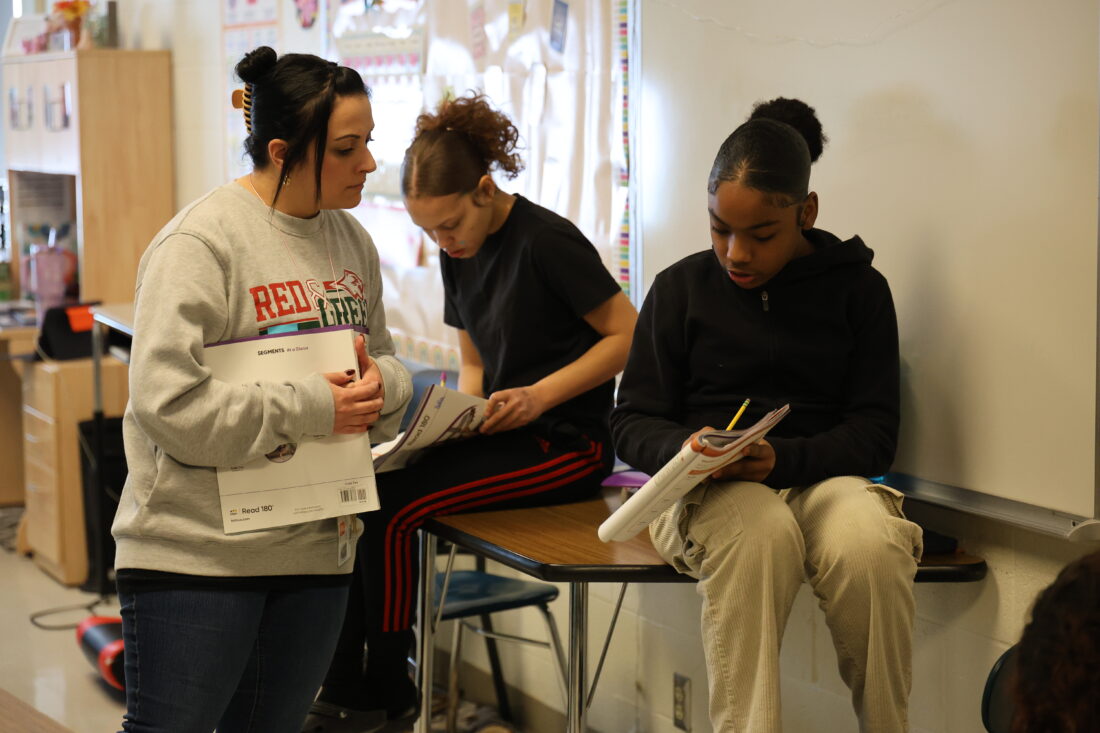
Washington Middle School reading specialist Jennifer Soprano works with students during reading intervention. Middle school students use a program called Read 180 to help them gain confidence as readers.
For students at Washington Middle School, the path to literacy is becoming increasingly personalized.
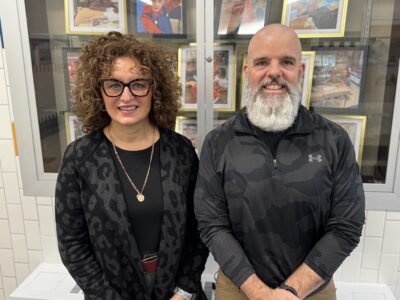
As Jamestown Public Schools enters its third year of a district-wide transition to a comprehensive literacy curriculum through Houghton Mifflin Harcourt, Washington reading teachers John Calimeri, Stacey Daniels, and Jennifer Soprano have been dedicated to help students overcome reading obstacles.
At the heart of this effort is Read 180, a specialized remediation program designed to meet struggling readers exactly where they are and provide an accelerated path toward grade-level proficiency.
The process begins with a clear understanding of where each student stands. According to reading specialist John Calimeri, the program relies on the NWEA Benchmark assessment to ensure every student is placed exactly where they need to be.
“Students are grouped based on their NWEA score, which is linked to the Read 180 Program,” Calimeri explains. “The three of us meet after every Benchmark assessment to regroup based on new results. Based on the results, students are placed in either Code (phonics) or Workshop (comprehension).”
Once placed, students enter a structured “rotation” model that balances independent technology with teacher-led instruction. Calimeri notes that students typically spend 20 minutes on the Read 180 student application, which is tailored to their individual reading level, before moving into small groups.
“In these groups, the teacher and students work on phonics or comprehension skills,” said Calimeri. “The Read 180 program has individualized assessments built in as well.”
One of the most significant shifts with Read 180 is how it makes progress tangible for the students themselves.
Unlike programs used in the past, Read 180 allows students to “see” their own success.
“We have noticed many students improving on the NWEA (fall to winter), and we hope we continue to see these improvements in the spring,” says Calimeri. “Also, we notice students growing in class. Many of them are moving forward on the application and moving from Code Book 1 to Code Book 2.”
This visibility has a direct impact on the classroom atmosphere. Calimeri has observed a marked increase in student morale:
“Students are definitely more confident (especially with understanding the Read 180 routines),” he said. “Also, this program is designed so students actually ‘see’ their growth. Programs we used in the past did not make it as easy for students to notice their individual progress.”
Soprano agreed, noting that the ownership students are able to take by utilizing one-on-one conferences helps students stay focused and driven. Together, using the data, they craft a roadmap for success.
“I show them the program activity report, which shows them how they are making progress on the application,” Soprano explained. “We set goals for the next time we conference as well. The goal could be as simple as spending more time on a task on the app or it could be to improve in a certain zone on their app. It all depends on their scores and performance. They are more motivated when they have a goal in mind!”
The reading team at Washington is equally committed to ensuring that families understand the “why” behind this intervention. During events like the annual Open House, the team hosts a dedicated reading program able to answer questions and demystify the criteria for the program.
“We want families to know that Read 180 is designed to help students in all areas of literacy,” Calimeri says. “It is personalized because students work on reading skills at their specific reading level and abilities.”
Focus On Schools
After School Fun: After School Program Provides Washington Students With Community, Growth
Read 180 Helping Close Literacy Gap
Ashley Cruz Combines Connection, Innovation As Washington Teacher
First-Year Teacher Aims To Create Welcoming Space
Book Buddies Program Helps Bridge Gaps Between UPK, Fourth Graders