
“We Want Thinkers”: Persell coaching cycles put student thinking first
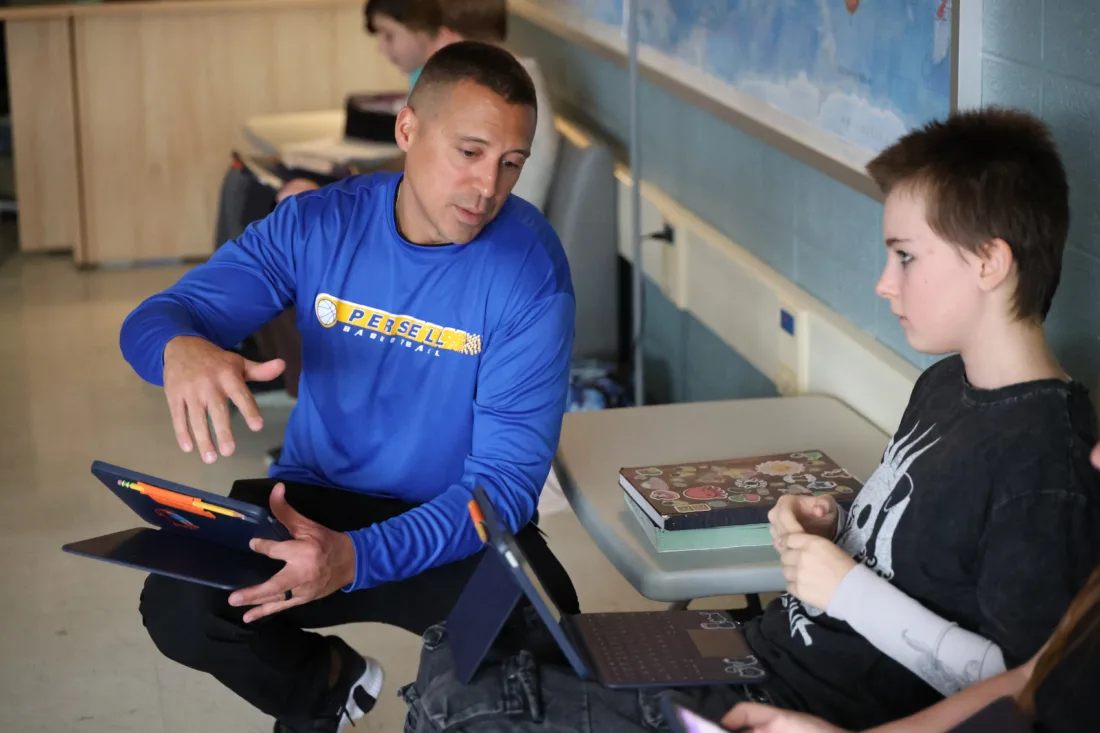
Persell Middle School social studies teacher Jayme Genco discusses an in-class project with a student.
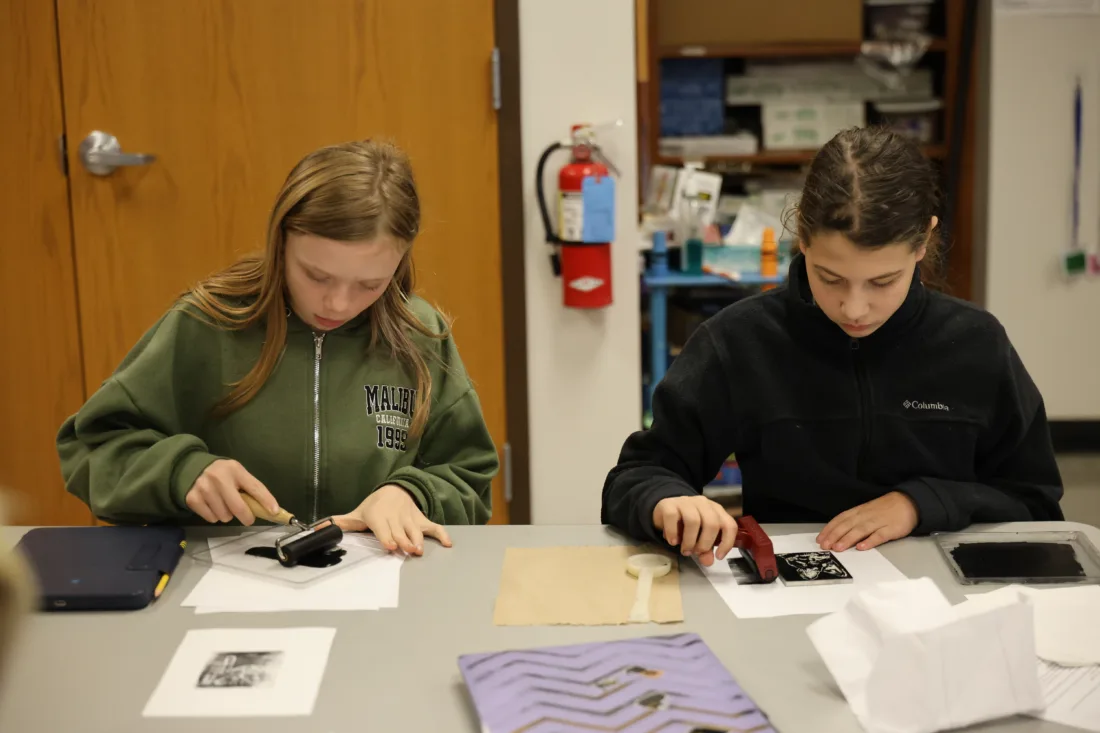
Persell Middle School students in Michela Tehan’s art class work on a printing project.
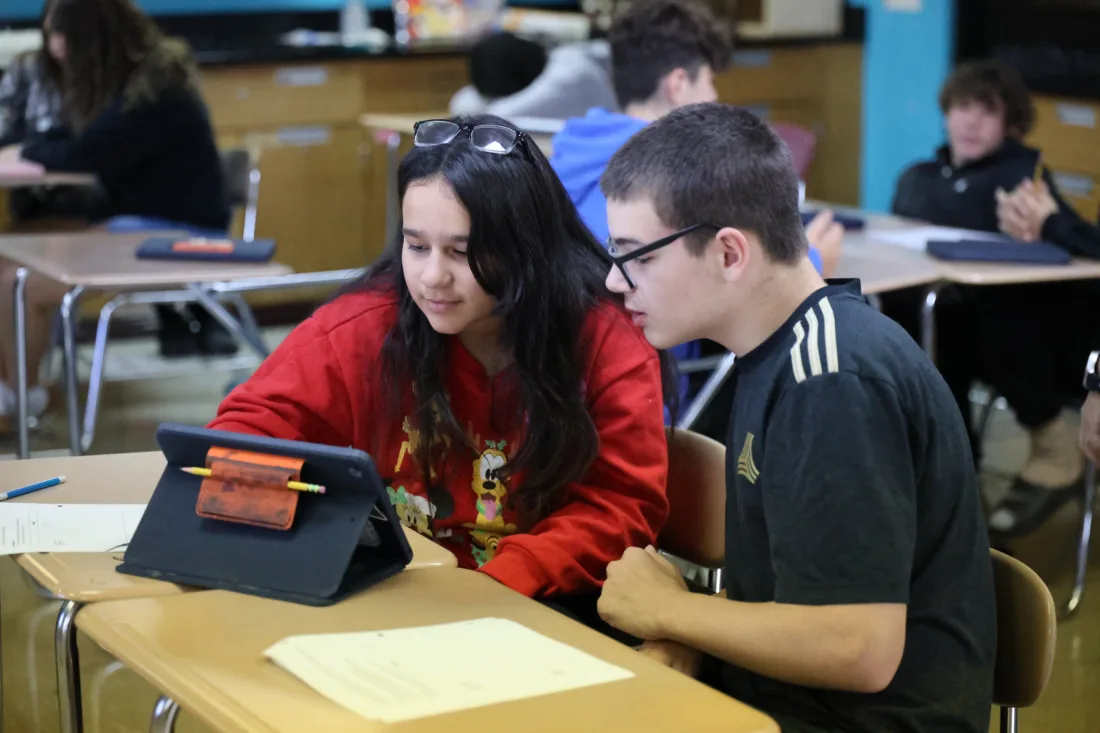
Persell Middle School students in Lina Scoma’s science class collaborate on an assignment.
Persell Middle School social studies teacher Jayme Genco discusses an in-class project with a student.
Persell Middle School students in Michela Tehan’s art class work on a printing project.
Persell Middle School students in Lina Scoma’s science class collaborate on an assignment.
Trending
It’s 11:20 a.m., and students in Summer Wolcott’s sixth-grade class at Persell Middle School are returning from lunch.
Still buzzing with the energy of catching up with friends in the cafeteria, students are greeted by Wolcott, who reminds each of them that “everything they need is at their table.”
Within minutes, that lunchtime energy has shifted into learning. Students are working alongside their classmates to explore exponents through a hands-on activity involving folding paper, using the exercise to better understand how numbers grow when multiplied repeatedly.
It’s the kind of classroom environment Persell instructional coaches Mary Maggio and Tiffany MacCallum are working to help foster across the building with Principal Traci Thompson -- one where expectations are clear, instructional time is maximized and students are actively engaged in their own learning.
Maggio and MacCallum are guiding a series of instructional coaching cycles designed to strengthen classroom instruction and support Jamestown Public Schools’ districtwide academic priorities. The two are among 12 instructional coaches based in schools across the district who work collaboratively with teachers to analyze student learning, share instructional strategies and provide support aimed at improving student outcomes.
At Persell, the coaching cycles focus on specific instructional practices, with administrators and coaches visiting classrooms, reviewing trends and working with teachers to build on their successes.
“Our goal is to ensure students are doing the thinking, reasoning, and problem solving rather than having the work done for them through over scaffolding, leading questions, or teachers telling students what to think,” Thompson said.
The school’s first coaching cycle centered on establishing consistent classroom routines and getting students engaged in learning within the first five minutes of class.
The focus complemented Persell’s Positive Behavioral Interventions and Supports (PBIS) framework, which emphasizes teaching expectations and procedures during the opening weeks of school.
“Middle school students thrive in environments that are structured, predictable, and supportive,” Thompson said. “So when students understand what’s expected of them and they know how to begin class, I feel they are more confident and better prepared to engage in learning.”
Maggio said establishing those expectations requires teachers to do more than simply tell students what to do. They also need to model the routines they expect students to follow.
“You have to set your expectations, but a lot of times you have to actually model those expectations so students know exactly what it looks like,” she said. “I think the teachers really did a nice job of really kind of setting those expectations high, setting them early, and just consistently reminding students.”
Thompson said the team deliberately avoided setting a firm deadline, recognizing that teachers needed to establish a strong foundation before moving forward.
But by the end of September, the team had seen enough progress to begin planning its next steps. Persell successfully completed its first coaching cycle within the opening six weeks of school, shifting its attention from getting students started to the quality of the thinking students are doing.
The second coaching cycle builds on that foundation by focusing on the district’s priority of maintaining high cognitive demand without over-scaffolding -- giving students opportunities to think, reason and solve problems without teachers doing the work for them.
For MacCallum, who works primarily with English language arts teachers in grades five through eight, that means helping teachers consider how much work students can take on themselves rather than relying on lengthy explanations.
“Our thinking was to try to shift for the kids to do as much of that work, me to do only the most important part of that,” MacCallum said.
MacCallum said the shift is also about helping students develop perseverance when they encounter difficult material -- an important skill that extends beyond the classroom.
“So a lot of times we as teachers want to help and we want to rescue you and we don’t want you to struggle,” she said. “But where’s the perfect amount of help that I can give you that still allows you to think through and productively struggle with something very complex?”
Maggio said teachers sometimes have to resist the natural instinct to step in immediately when students encounter difficulties.
“When we see a student struggling, oftentimes we will kind of step in maybe too quickly,” she said. “What have you done so far? And kind of just actually pose more questions to them versus that over scaffolding and giving them the answers and taking away some of their thinking.”
The coaching cycles are supported through regular classroom visits, weekly leadership meetings and teacher collaboration during professional learning communities. Administrators and instructional coaches use those opportunities to identify trends, share resources and determine where additional support may be helpful.
For Thompson, the process builds on Persell’s longstanding culture of collaboration while giving teachers a shared focus for improving instruction.
“I think with the addition of our instructional coaches now attending those meetings, we’re able to make collaboration even more meaningful and intentional,” she said.
Maggio, a longtime member of Persell's staff prior to becoming an instructional coach, said that collaborative spirit has been passed down through generations of teachers, including the veteran educators who mentored her early in her career.
“Really this building has always been very family-like, we look after each other, we take care of each other,” she said. “Teachers don’t want to brag -- but we're pretty good at sharing, 'Hey I've got this cool thing. When you’re collaborating, it actually takes things off your plate, because oftentimes two minds were better than one.”
MacCallum said she’s witnessed that same commitment firsthand, particularly in the time Persell teachers dedicate to planning lessons, reviewing student performance and sharing instructional strategies.
“They really put in the time to meet and discuss where we’re going, what’s the long-term assessment, and how we’re going to plan that -- together,” she said.
That willingness to work together has helped Persell build on its early success and move toward more challenging instructional goals. For Thompson, however, the ultimate measure of success is what students take away from their time in the classroom.
“I think we want every student to leave a classroom knowing that they learned something meaningful, grew as a learner, and then we held high expectations because we believe in their potential,” she said. “We want thinkers coming from this. And kids will rise to the occasion if given the opportunity.”