
‘The Art of Not Telling’: Bush students take ownership of their learning
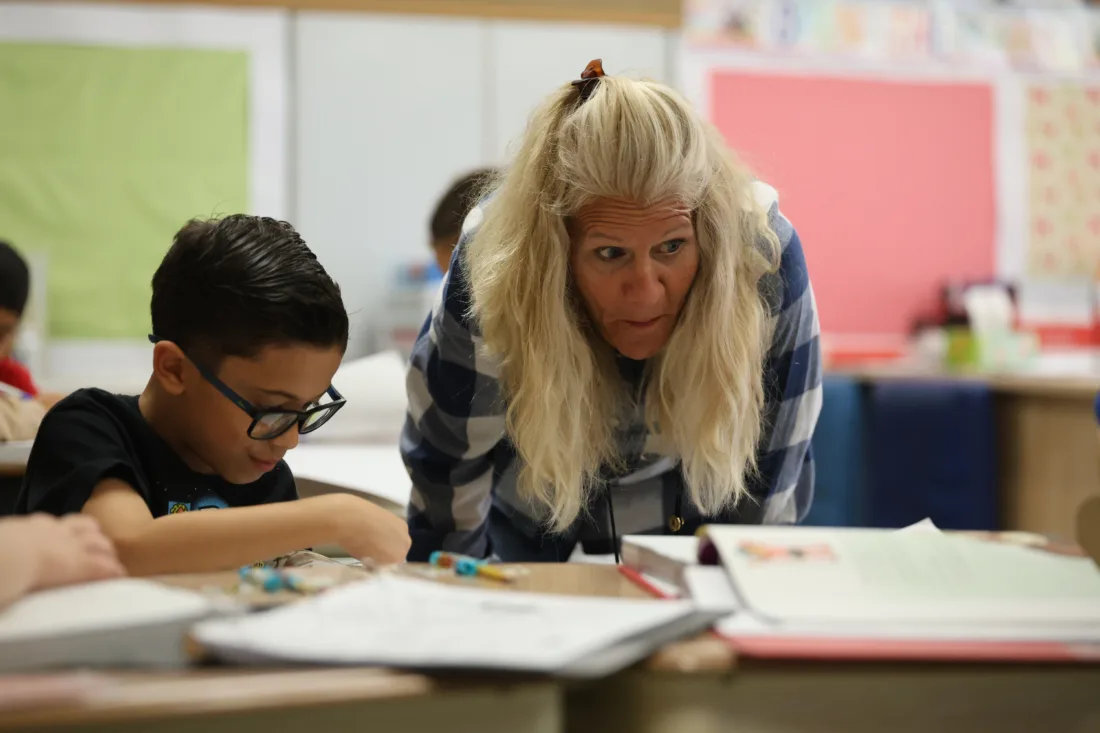
Tari Geisler listens in as a third-grade student in her class teaches her about the importance of “theme.” Teachers across Jamestown Public Schools are focusing on maintaining cognitive demands. In practical terms, that means ensuring students are doing the thinking required to learn.
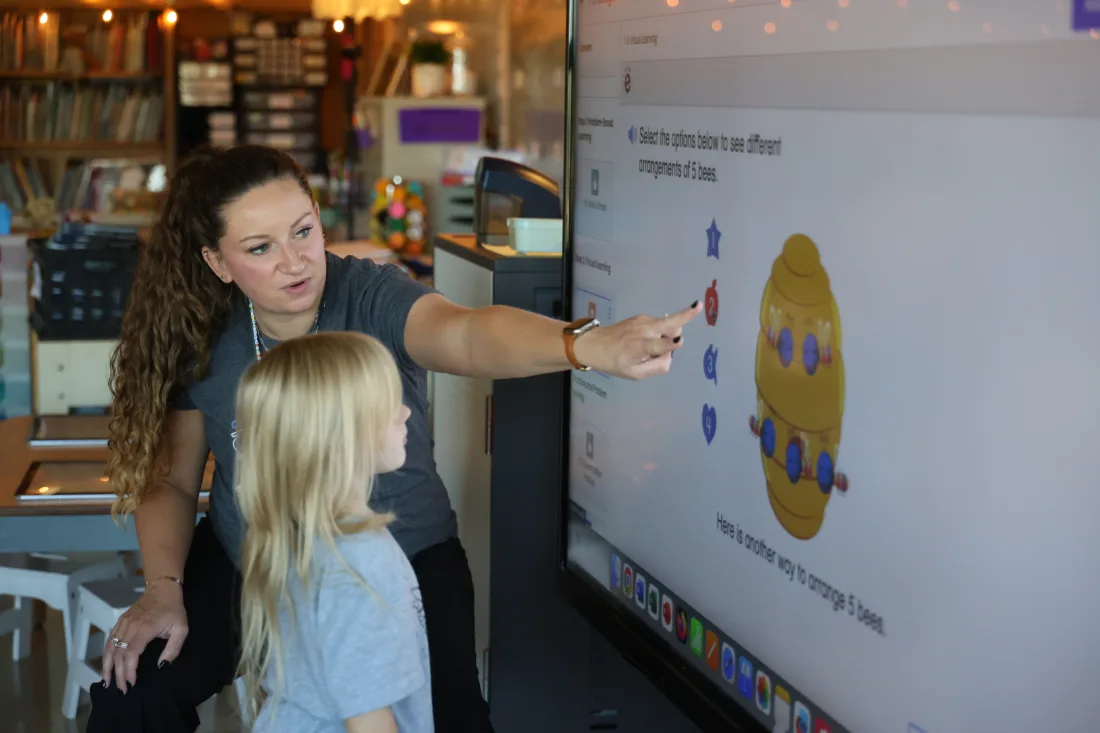
Annie Senn helps a student in her kindergarten class on a digital whiteboard.
Tari Geisler listens in as a third-grade student in her class teaches her about the importance of “theme.” Teachers across Jamestown Public Schools are focusing on maintaining cognitive demands. In practical terms, that means ensuring students are doing the thinking required to learn.
Annie Senn helps a student in her kindergarten class on a digital whiteboard.
Trending
It is just after 9 a.m. on a Friday in Tari Geisler's third-grade classroom at Bush Elementary School.
The morning's literacy lesson centers on "theme" -- the underlying message or lesson within a story. Students are challenged to read a passage explaining the concept and develop an understanding of what "theme" means.
A teacher might naturally begin by reading the information aloud and explaining it to the class. Instead, Geisler places the learning in her students' hands.
"You're going to teach each other what a theme means," she tells the students seated in groups of three and four.
Suddenly, the room is abuzz. Students take turns reading aloud, listening to one another and working together to make sense of the concept. Geisler remains available to support them, but the responsibility for reading, discussing and understanding the passage belongs to the students.
The moment reflects a schoolwide instructional focus at Bush: maintaining cognitive demand. In practical terms, that means ensuring students -- rather than the adults around them -- are doing the thinking required to learn.
"For me, maintaining cognitive demand really comes down to making sure we aren't doing for students what they are capable of doing themselves," said Bush Instructional Coach Tiffany MacCallum. "As teachers, our instinct is to help because we care so much about our students."
When a student struggles, a teacher may instinctively offer a hint, simplify the task or guide the student toward an answer. That support is sometimes necessary, MacCallum said, but stepping in too quickly can unintentionally remove the thinking students need to do for themselves.
Bush teachers are examining how they can provide the appropriate support while still giving students time to think, solve problems, make mistakes and persevere. In practice, that may mean waiting several more seconds before intervening, asking a student what they have already tried or allowing classmates to talk through their ideas together.
"With a focus for our instructional strategies to maintain cognitive demand, the goal is to ensure that each child is challenged just enough at their level to ensure learning is happening," said Bush Principal Kate Benson. "Students will be engaged in productive struggle and asked to explain their thinking."
Productive struggle occurs when students encounter a challenge that requires effort and persistence but remains within their ability to solve with the appropriate support. Rather than viewing confusion or an incorrect answer as the end of the learning process, students are encouraged to explain their reasoning, reconsider their approach and try again.
A simple follow-up question such as "How do you know?" can prompt a student to move beyond giving an answer and begin explaining the thinking behind it.
MacCallum and Bush teachers are calling this approach "The Art of Not Telling." The work focuses on the instructional decisions teachers make when students become stuck: whether to provide the answer, offer support that leaves the thinking with the student or step back temporarily and allow the student to work through the challenge.
"One thing that is really important to me as an instructional coach is that this work feels manageable and useful to teachers," MacCallum said. "My role isn't to come in and tell them how to teach. It's to work alongside them, help us look closely at our practice and find small changes that can have a meaningful impact on students."
Bush is also using small-group instruction and flexible student groupings to personalize that balance of challenge and support. The groups can change based on how students perform on a particular task, allowing them to work with different staff members on skills matched to their current needs.
"This personalized learning experience will allow each student to be challenged just enough with the right amount of support so that they can achieve a skill and move on to the next skill," Benson said.
The focus builds upon instructional and collaborative work already underway at Bush. In 2025, approximately 40% of Bush students were performing at or above grade level in both mathematics and reading. In 2026, that figure increased to approximately 54% in mathematics and 52% in reading.
Benson said the school hopes to continue closing learning gaps and help more students reach grade-level expectations in both subjects.
MacCallum believes Bush is well positioned to continue that progress because its teachers are accustomed to collaborating, sharing ideas and reflecting on their practice. Their strong relationships with students also create an environment in which children can be asked to take on challenging work and trust that their teachers will support them along the way.
The common thread is the belief that every student deserves meaningful opportunities to think.
"Ultimately, I hope our students become more confident and independent thinkers," MacCallum said. "I want them to learn that getting stuck is a normal part of learning and that they have strategies they can use before immediately looking to an adult for the answer."
For a younger student, that might mean finding another way to build something or explain an idea. For an older student, it could mean defending an answer with evidence, attempting a different strategy in mathematics or revising an idea after hearing a classmate's perspective.
Back in Geisler's classroom, that independence begins with a passage about theme and a straightforward direction: Teach one another.
"If students leave Bush believing, 'I can think through something difficult. I can try something, make a mistake, adjust and keep going,'" MacCallum said, "that is something they can carry with them far beyond elementary school."