
Star Watch: The December Skies
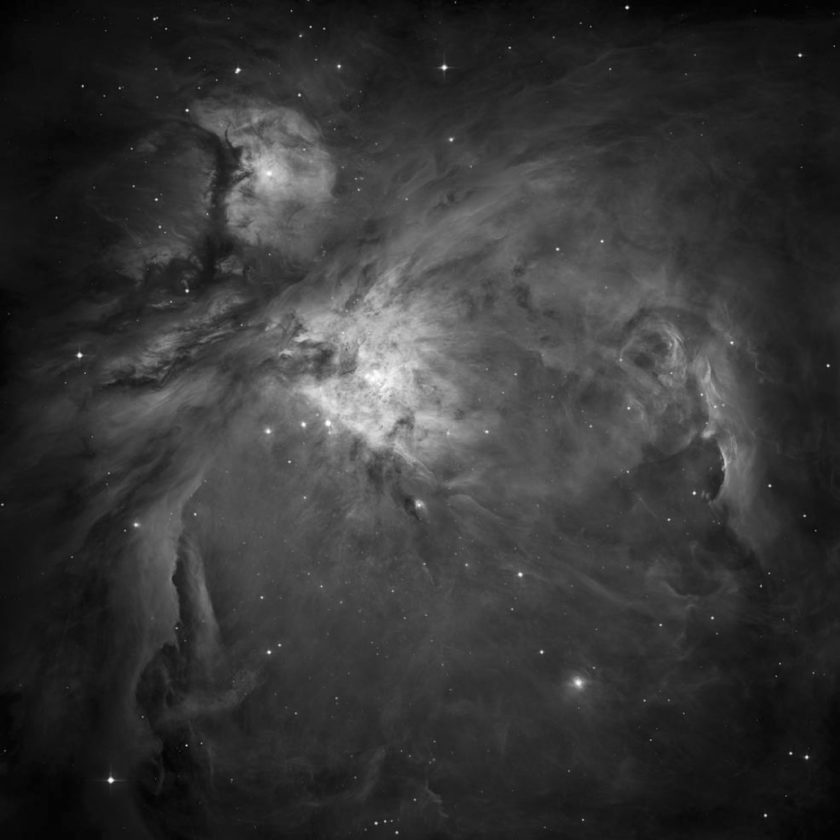
These gigantic and turbulent dust and gas clouds, glowing in the constellation of Orion, are located about 1,400 light-years from our solar system. Incredibly, they can be glimpsed from a dark site without any optical aid on clear December evenings. Add binoculars or a small telescope and the view becomes spectacular. Courtesy NASA, ESA, HST Orion Treasury Project Team
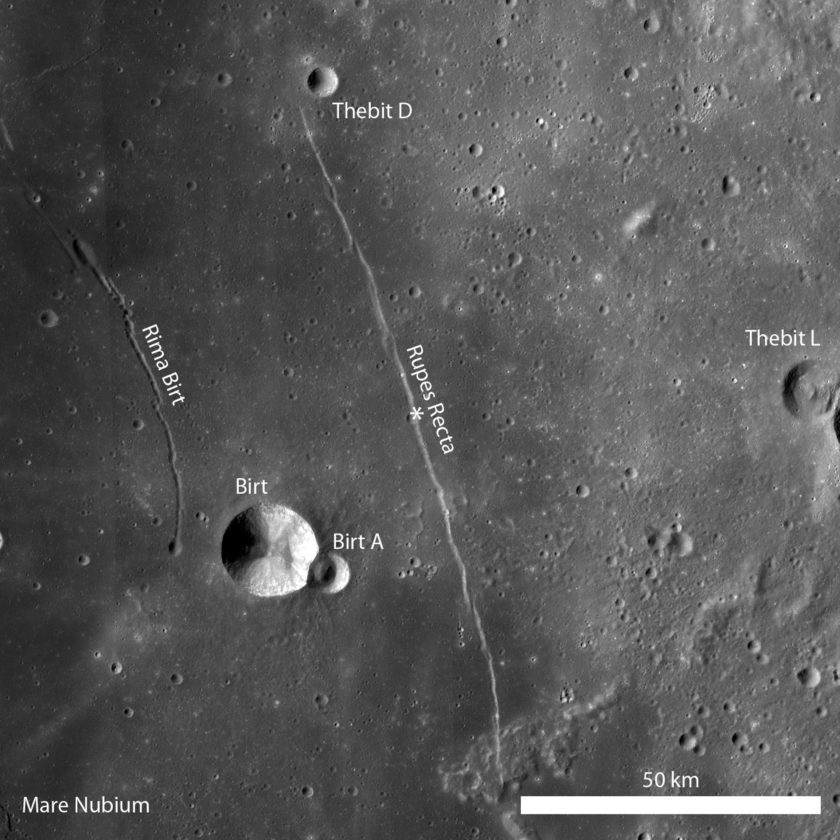
Amateur astronomers are very familiar with the “Straight Wall” feature on the moon. Depending on the angle of sunlight striking the lunar surface, this 68 mile long fault line can be very easy or quite difficult to detect in small telescopes. Courtesy NASA/GSFC/ Arizona State Univ.
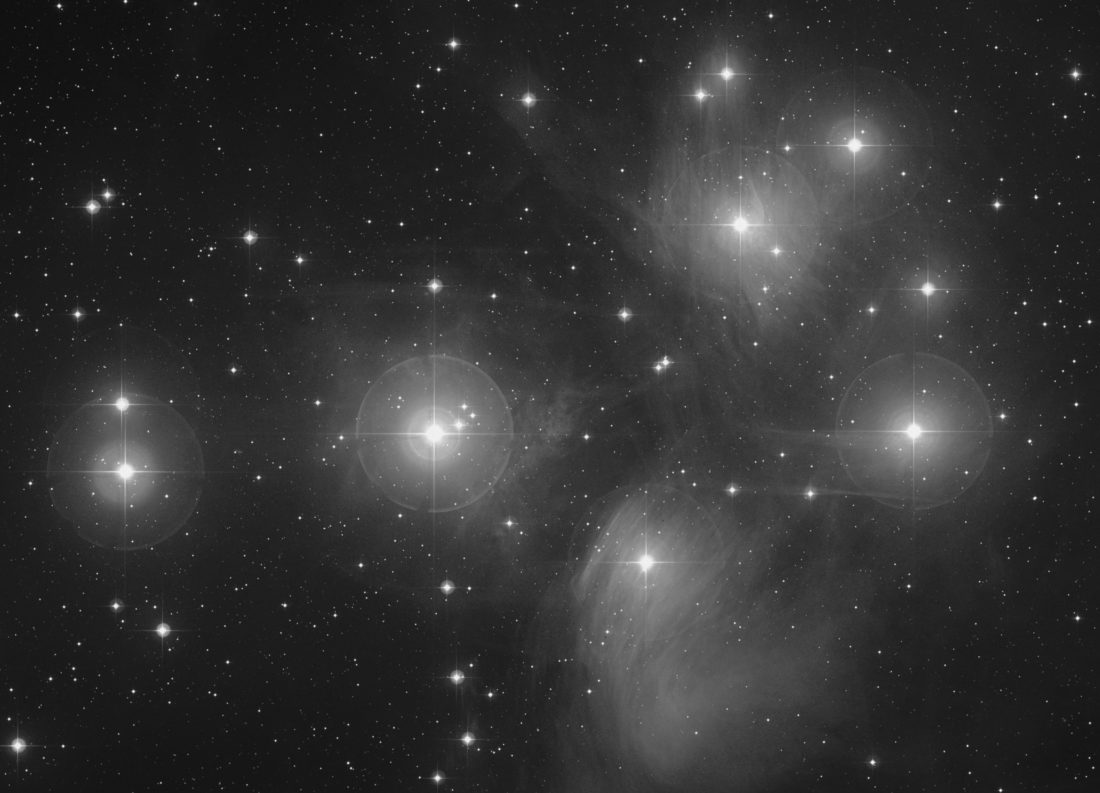
Below is the famous Pleiades Star Cluster consists of about 3,000 stars. It is located about 400 light-years from Earth in the constellation Taurus and is easily located without any optical aid during the winter months. Courtesy NASA, ESA, AURA, Caltech, Palomar Obs
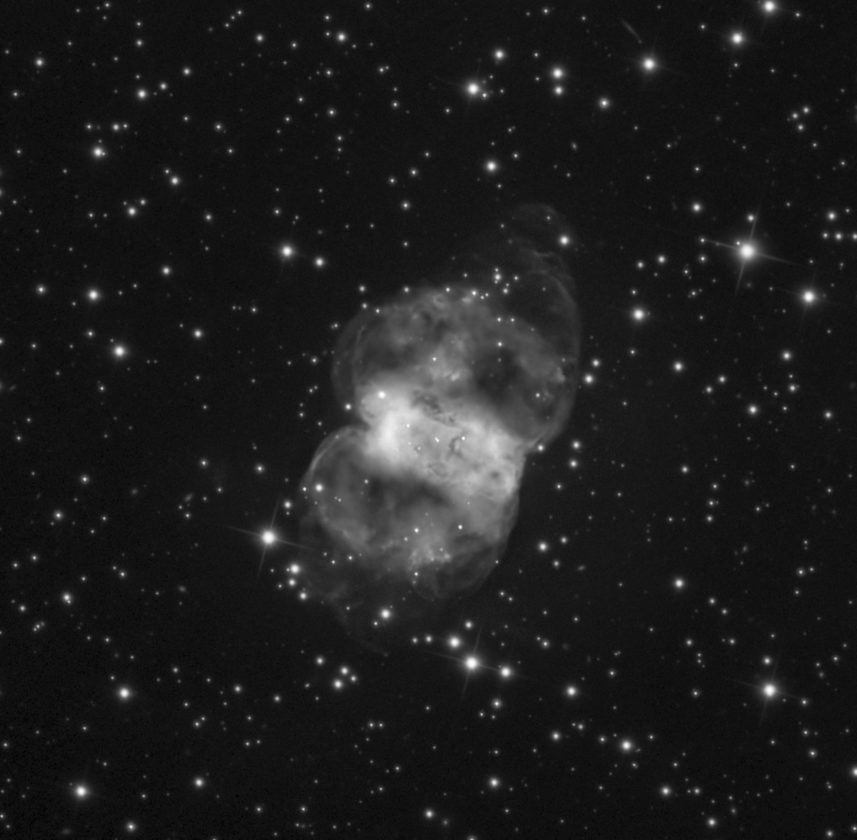
At left, easily located in large binoculars and small telescopes, the Little Dumbbell Nebula (M76) appears in the constellation Perseus on clear December evenings. However, large telescopes are needed to reveal the two lobes and the faint halo of nebulosity that surrounds the object. Courtesy Adam Block, Mount Lemmon SkyCenter, Univ. Arizona
These gigantic and turbulent dust and gas clouds, glowing in the constellation of Orion, are located about 1,400 light-years from our solar system. Incredibly, they can be glimpsed from a dark site without any optical aid on clear December evenings. Add binoculars or a small telescope and the view becomes spectacular. Courtesy NASA, ESA, HST Orion Treasury Project Team
Amateur astronomers are very familiar with the “Straight Wall” feature on the moon. Depending on the angle of sunlight striking the lunar surface, this 68 mile long fault line can be very easy or quite difficult to detect in small telescopes. Courtesy NASA/GSFC/ Arizona State Univ.
Below is the famous Pleiades Star Cluster consists of about 3,000 stars. It is located about 400 light-years from Earth in the constellation Taurus and is easily located without any optical aid during the winter months. Courtesy NASA, ESA, AURA, Caltech, Palomar Obs
At left, easily located in large binoculars and small telescopes, the Little Dumbbell Nebula (M76) appears in the constellation Perseus on clear December evenings. However, large telescopes are needed to reveal the two lobes and the faint halo of nebulosity that surrounds the object. Courtesy Adam Block, Mount Lemmon SkyCenter, Univ. Arizona
Trending
"Joy in looking and comprehending is nature's most beautiful gift."
-- Albert Einstein
Little Mercury appears very low in the east-southeast dawn sky during the last three weeks of December. It rises above the horizon about 45 minutes before sunrise and glows to the lower left of much brighter Venus. On Dec. 21 and 22, Mercury the smallest planet passes very close to Jupiter, the largest planet. Mercury then sinks lower toward the horizon each morning.
Dazzling Venus appears as the "Morning Star" when it rises in the east-southeast around 4 a.m. For the best view through a telescope, wait until the beginning of morning twilight in order to improve the contrast between the planet and the background sky.
Reddish Mars appears in the southern sky during evening twilight. It outshines all of the background stars in the constellation Aquarius and sets just before midnight. The Martian disk continues to grow dimmer and smaller as the Red Planet continues to pull away from Earth.
Giant Jupiter appears in dawn twilight during the last two weeks in December. Look for it low in the southeast, below and to the left of Venus. It continues to rise higher each morning.
Saturn can be spotted very low in the south-southwest in evening twilight during the first two weeks of December. Although you may be able to glimpse it without optical aid, binoculars or a small telescope would be helpful. It will then disappear into the solar glare
The distant planet Uranus can be seen in binoculars or a telescope in the constellation Pisces. It will resemble a blue-green disk
Remote Neptune can be spotted in a small telescope this month in the constellation Aquarius. The ice giant appears as a tiny blue-gray disk.
The winter solstice occurs at 5:23 p.m. on Friday, Dec. 21. This day will experience the shortest period of daylight and the longest night of the year in the Northern Hemisphere.
Comet 46P/Wirtanen may put on a nice show in binoculars during December. On Dec. 16, it will hurtle past Earth at a distance of only 7.2 million miles. Look for it in the constellation Taurus, between the Pleiades star cluster and the bright star Aldebaran.
This monthly guide to the stars is from the Marshall Martz Memorial Astronomical Association and The Post-Journal. For further information, contact the M.M.M.A.A. at http://www.martzobservatory.org.