
So Close To Paradise
Chautauqua—An Idea, An Ideal, A Place
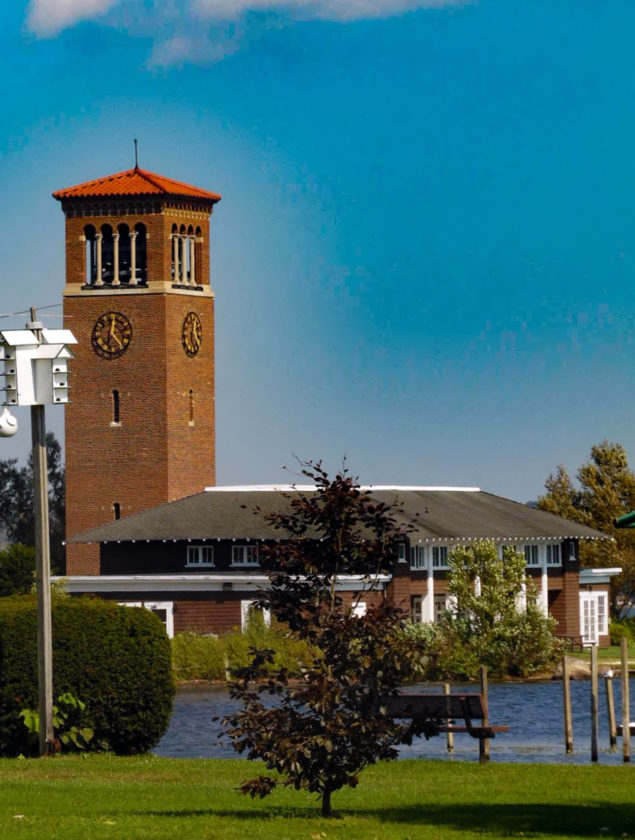
The Bell Tower where once steamboats moored. Photo by Sandy Robison.
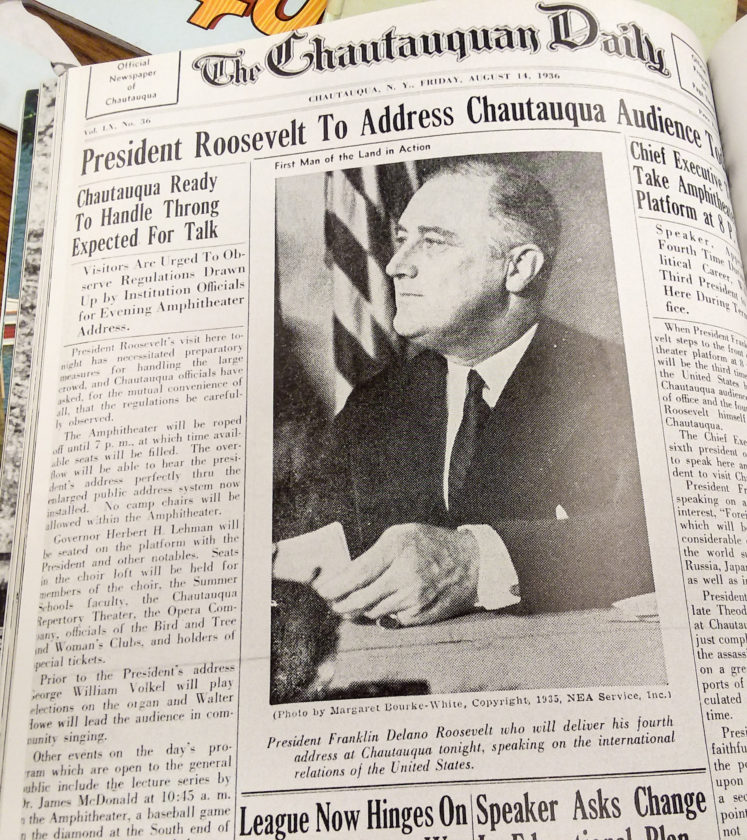
Vintage photo of FDR. Photo courtesy of Chautauqua, An American Utopia by Jeffrey Simpson
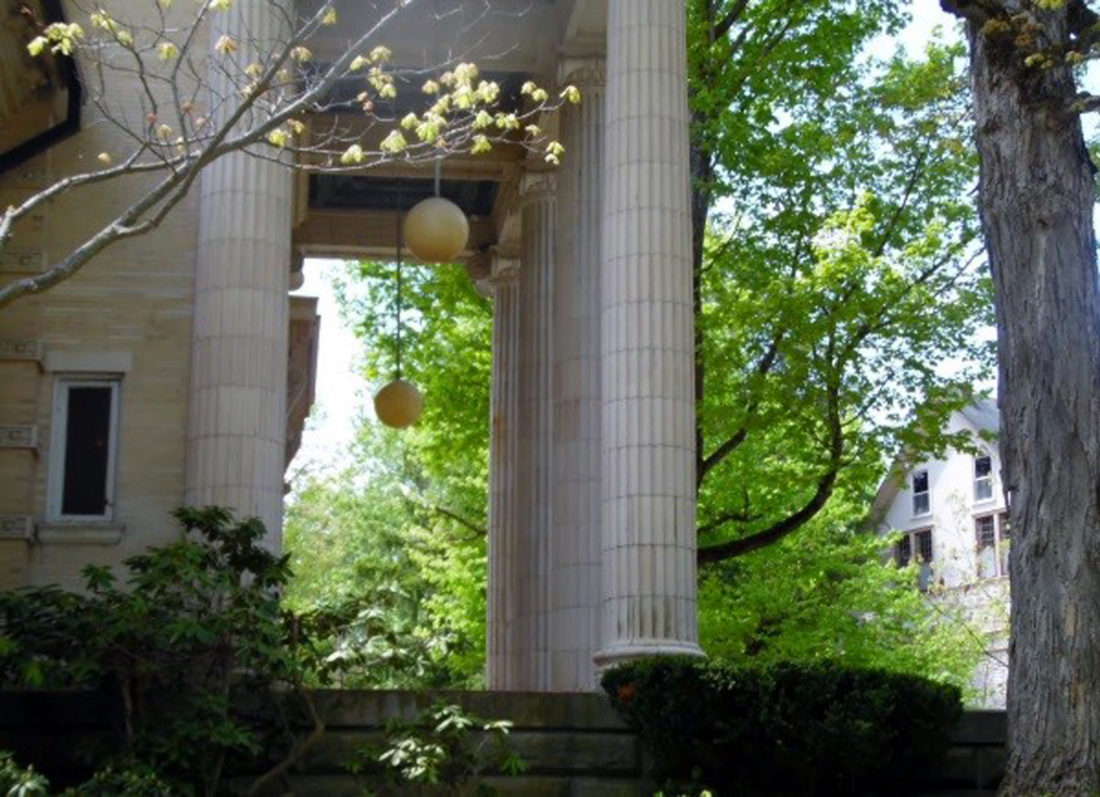
One of many great halls of learning on Chautauqua Institution grounds. Photo by Sandy Robison
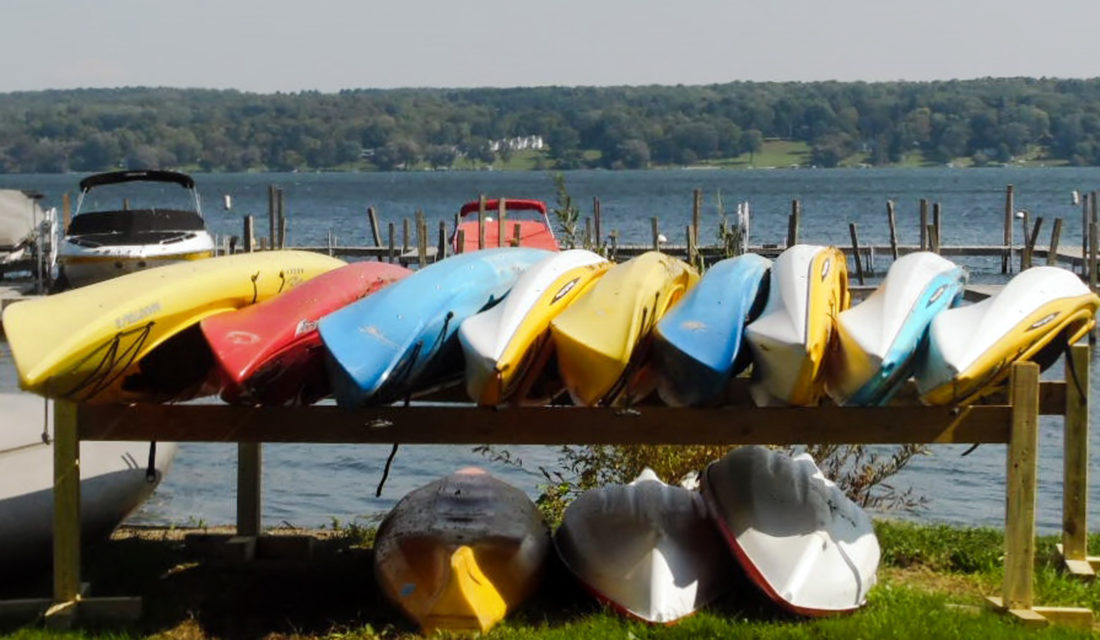
Pictured are canoes stored in a rack on the shores of Chautauqua Lake. Photo by Sandy Robison
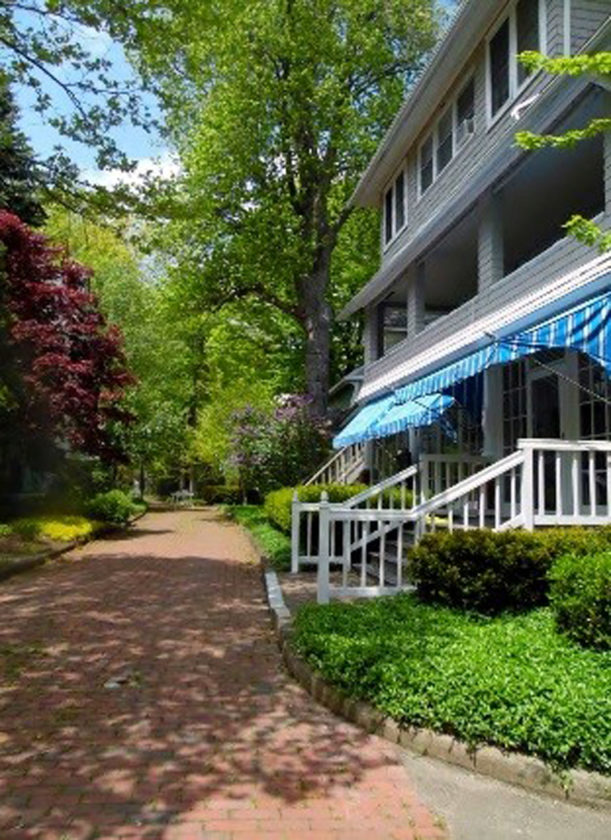
One of the charming Victorian homes on the calm streets of Chautauqua Institution. Photo by Sandy Robison
The Bell Tower where once steamboats moored. Photo by Sandy Robison.
Vintage photo of FDR. Photo courtesy of Chautauqua, An American Utopia by Jeffrey Simpson
One of many great halls of learning on Chautauqua Institution grounds. Photo by Sandy Robison
Pictured are canoes stored in a rack on the shores of Chautauqua Lake. Photo by Sandy Robison
One of the charming Victorian homes on the calm streets of Chautauqua Institution. Photo by Sandy Robison
Trending
Chautauqua.
It's a beautiful word, just to say it.
Chautauqua.
I like to remember the word Chautauqua is a mixture of cultures -- native American, French, immigrants and settlers, a patois of centuries and peoples. When I think of it, I think of a county green and lush, some months of the year, white and silent some times of the year. I imagine the giant glaciers raking their fingers down through the land, leaving behind their hand prints in hills and lakes, furrows and valleys. Chautauqua. It's a lake. Bag tied in the middle. Place of easy death. It's my childhood, so much of it spent on the shores of the lower basin, looking out over the changing face of this lake, long and narrow water, shallow, and so lovely that its face, its very surface, changes color and movement with the weathers. It is a dance of water and wind, climate and color.
I like the lake when it's wild and frothy and full of waves, a storm marching from the Canadian northwest turns the whole sky and water steel, a metallic, wild shade. And I like it best on a calm day of little wind when the sky is bird's egg blue patterned with watercolor cumulus clouds, a Monet sky. I like it when the lake is a flat sheen of water stretching out before me like a mirror back into time. And on it I read all the remembrances of my life. Pivotal moments. Good and bad. Times I sat alone on a dock with feet dangling in the water, staring out over the lake before me and far over the hills beyond.
Chautauqua.
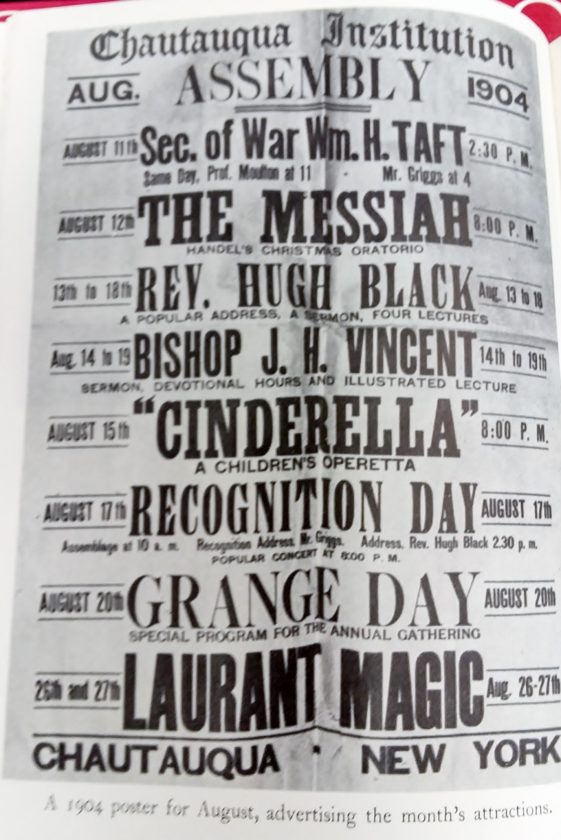
It's a utopian ideal, named after our lake and our county. It's an entire movement, a democratic movement -- democratic with a lower case d -- a bringing of culture to rural and small town America. Joseph Gould, author of The Chautauqua Movement, writes, "The Chautauqua Movement was not a simple, unified, coherent plan... It was, fundamentally, a response to an unspoken demand, a sensitive alertness ... for something better ... for social betterment and reform" (Preface, vii-viii). The first assembly opened at its current location then called Fair Point on Aug. 4, 1874 for a two-week session. Ultimately, the movement introduced things such as university extension courses, summer sessions, civic music, the Boy Scouts and the Girl Scouts, among other good things to the American public.
Each summer, up to 150,000 visitors arrive to the current Chautauqua Institution, for a season of opera, symphony, chamber music, theatre, ballet, jazz, rock, lectures and sermons. Today the institution is an enclosed neighborhood of 1,200 or so Victorian cottages, houses, condos, public meeting halls, and the grand old hotel The Atheneum, gracing the 225 acres on the northwest corner of the upper basin of Chautauqua Lake. It is a place uniquely its own. Historian David McCullough wrote, "There's no place like it. No resort. No spa. It is at once a summer encampment and a small town, a college campus, an arts colony, a music festival, a religious retreat, and the village square. There's no place--no place--with anything like its history."
All of Chautauqua Institution embraces what Dr. Heyl Vincent, a Methodist minister whose vision led the way for this remarkable place, called in 1885 "a hunger of the mind abroad in the land." The Chautauqua Movement began here, an idea, an ideal really, and became a place where its fine Bell Tower tolls freedom, culture, awakening, a respect for all peoples, creeds, color, religions. Street after street built on a hillside, splendid and quaint Victorian houses of all kinds and shapes and colors. I like to drive through Chautauqua Institution out of season and see many houses and buildings closed up tight as if their windows are eyes shut and sleeping until the next season. I like to drive up and down the steepest streets, to park by the lake side and walk along and smell the lake and the history of the place.
Great people have stood here, visited here, performed here, spoken here, slept here. Poets, authors, presidents, musicians, artists, photographers, all of them seeking the best of themselves and bringing that artistry and their vision of America here to a little town, a special town on the shore of a little lake. I have heard some of the world's mightiest poets read here and some of the best writers read here. The stirring words and thoughts of fine ministers still ring in my ears. I have stood here on Sundays with my father and aunts, my cousins, my sister, my sons, and felt part of this community. Its artistry enhances the county for which it is named.
This is Chautauqua. This beautiful place. This ideal. This lake, this land. It's a county rich in its own diversity with a university and a college, 20,0000 acres of vineyards along the shore of great Lake Erie, apple and cherry orchards, strawberry and blackberry and raspberry fields, yellow corn with stalks at harvest peak taller than most people, the pumpkins and gourds of all sizes and shapes in fields and lined up neatly at roadside stands. The winding roads of Chautauqua with their red barns and unpainted barns, the Holsteins grazing in green fields, the work horses bowing heads to clover, the Amish black wagons drawn by bay Standardbreds, the miles and miles of empty land still. I love the chrysanthemums of fall, the smell of them in the air mixed with wildflowers and leaves beginning to turn color and drift down. I like to pass Peterson's market and little family farms where fresh eggs are sold and mums of all colors, fragrant in the sweet autumn wind, smelling of summer and winter, poised here in October, the month that divides half of the year from the rest, the great warmth from the cold.
I scoop up as many chrysanthemums as I can hold--bright yellow, rusty amber, burnt orange, melodious purple. They say to me, we are paused here halfway into the past and halfway into the future.
Such a place to live, Chautauqua.
An idea.
An ideal.
A place.