
Historical Value
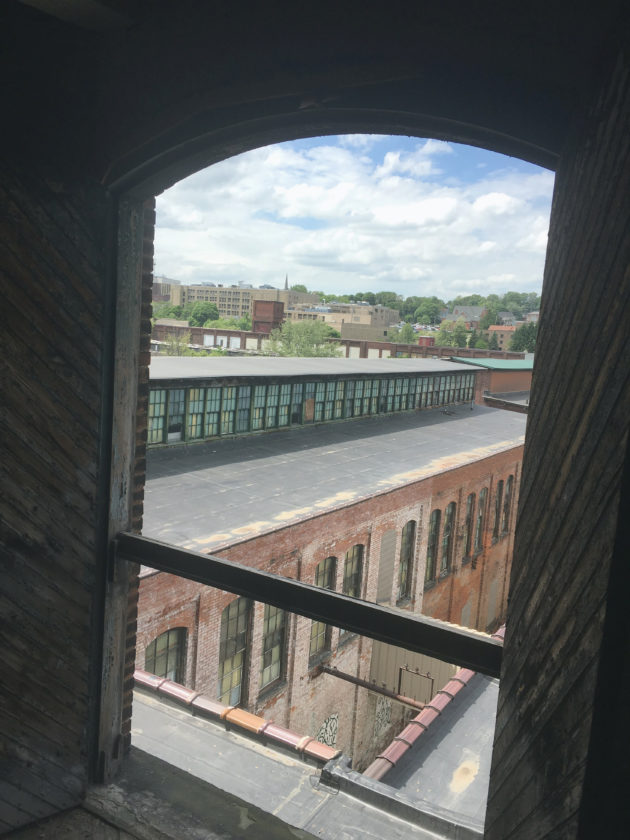
A view of the city of Jamestown from the fourth floor of The Gateway Center, looking North. Submitted photos
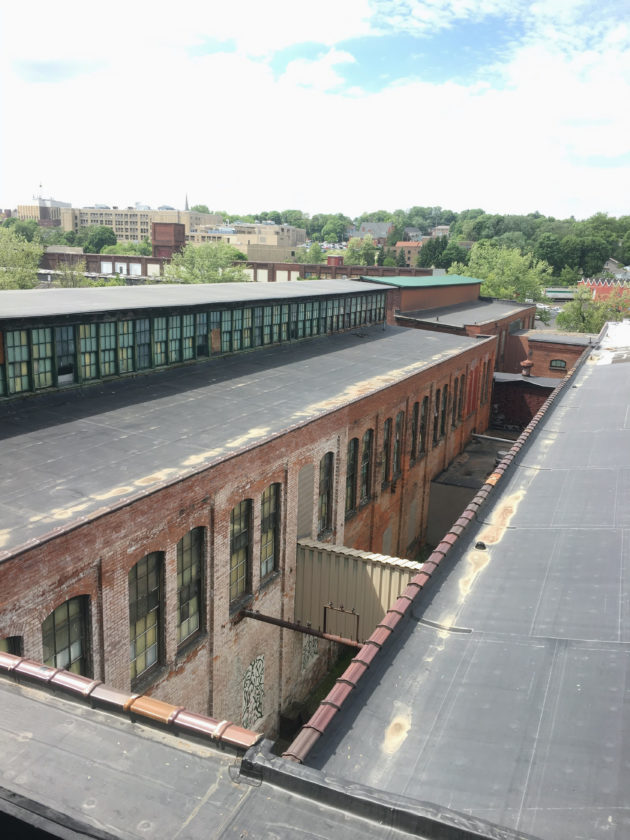
The currently unused portion of The Gateway Center will be the site of new, specialized affordable housing.
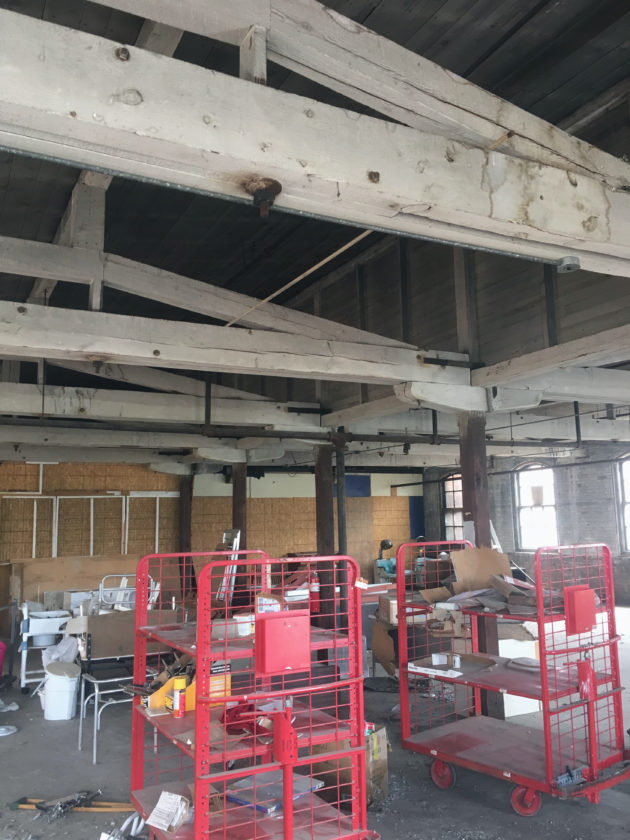
A look at the spacious fourth floor of The Gateway Center, ready for renovations.
A view of the city of Jamestown from the fourth floor of The Gateway Center, looking North. Submitted photos
The currently unused portion of The Gateway Center will be the site of new, specialized affordable housing.
A look at the spacious fourth floor of The Gateway Center, ready for renovations.
Trending
As the city of Jamestown continues its renaissance, a collaborative effort is looking to give a "hand up" to the city's most vulnerable people by turning a former factory, which was once Chautauqua Hardware and currently houses The Gateway Center, into the epicenter of social services in the city with a multi-million dollar specialized lofts project.
At its core, the purpose of the project is to provide people with a home.
Dubbed "The Gateway Lofts," the project has the support of state and county officials as well as community stakeholders. It will provide high-quality housing, revitalize a neighborhood by cleaning a brownfield site and spur development, provide a centralized location for social services and it will ultimately save county taxpayers a fortune.
Critically, representatives for the project champion the good which it will provide for the homeless, parents with children, struggling families and others.
Spearheaded by Community Helping Hands, the project has been in the works for three years and is now at a turning point -- as the Gateway Lofts Committee continues to secure the necessary funding and apply for additional tax credits.
"You have to have a home base from which to operate," said Tami Berg, Executive Director of Community Helping Hands. "If you're worrying about such basic needs for life like where you are going to sleep at night, or how you're going to pay rent then you can't progress at your job, and so you're always scrambling."
According to Gateway Lofts Committee members, research shows that stable, affordable housing is critical for individuals in need.
The 2017 Common Needs Assessment, commissioned by the City of Jamestown and United Way of Southern Chautauqua County was funded through the Empire State Poverty Reduction Initiative and shows that Jamestown lacks quality, affordable housing -- particularly for families.
"People who are not homeless in this city don't understand that there is homelessness," said Tom Geisler, former member of the CHH Board of Directors and past chairman of the Gateway Lofts Committee.
Recent statistics show that the problem of affordable, quality housing is increasing, especially for families struggling to make ends meet. And that doesn't even take into account the individuals or families that are couchsurfing or at risk of being homeless.
Here in Chautauqua County, homelessness is on the rise. In 2017, there were 783 homeless households in the county while in only the first six months of 2018 there are 804 similar such households.
Funded entirely by state and federal money, the multi-million dollar project will completely reconfigure the building's current occupants while meeting a critical housing need in the community.
With 75,000 square feet of unused space at The Gateway Center, the plan for the new lofts project is to convert the fourth floor into housing as part of a non-violent offender program for men and women with a mental health diagnosis and/or a substance abuse problem; the third floor as permanent, supportive housing for homeless families; and the second floor as affordable housing for families who are income-eligible. The first floor will continue to host a network of nonprofits and serve as a hub for the sorts of services that tenants of the project will need.
In addition to having a safe, stable, affordable residence at The Gateway Lofts, tenants will have on site access to services such as Community Helping Hands, Mental Health Association, E2CC BOCES, St. Susan's Center as well as close proximity to health care, schools, youth programs, child care and government agencies. Both the YWCA and Southern Tier Environments for Living have joined on as partners to manage the third and fourth floors, respectively.
The project is innovative and seeks to be environmentally friendly. Solar panels will be installed on the roof, and by working with Montante Solar, the installation of the panels will be a workforce development and paid training project. The project will incorporate best practices for energy efficient standards. The Chadakoin, which borders the property will have riverfront improvements that are sensitive to the presence of the spiny softshell turtle -- a species of "special concern" according to the New York State Department of Environmental Conservation. There will also be a playground onsite and multiple improvements to the building itself, as well as the parking lot.
THE BUILDING THAT
KEEPS ON GIVING
Tom Geisler's father came to America from Germany and found work in Jamestown at Chautauqua Hardware, the factory which occupied the building at 31 Water Street in the city before The Gateway Center.
Though no longer a factory, there is a similarity in the way that The Gateway Center provides opportunities to individuals just as businesses once did with jobs, according to Shawn Whitmer, Community Helping Hands operations director.
"I had a conversation with Tom's father one night and we talked about his days at Chautauqua Hardware," said Rev. Amy Rohler, former Community Helping Hands executive director. "He was telling me about being a new immigrant from Germany, not speaking a word of English and being given a chance with that job -- from which he was able to make a life for his family through first working there and then using that experience to build a career for himself."
"It's a building of second chances," added Geisler.
For Community Helping Hands, the development of The Gateway Lofts will be a way to offer a "hand up" to those in need of assistance.
"It was three years ago that the board at Community Helping Hands began asking ourselves what's important to this community," Whitmer continued. "And what people need is a place to call home. It meets a physical, emotional and spiritual need. That's what Community Helping Hands has always been about."
With work such as environmental impact studies, building appraisals, market studies and architectural drawings already underway, next steps include acquiring the remaining portions of the site from the Lynn Development Inc. and applying for low income tax credits as well as brownfield credits and other funds from New York State. Programming and operating funds for certain social service programs at the project will be provided by the Empire State Supportive Housing Initiative (ESSHI).
In 2016, Southern Tier Environments for Living (STEL) joined as a partner. STEL is a nonprofit agency which provides rehabilitative services to people with psychiatric disabilities. As partners, the group began conversations with key community leaders and officials -- and began visiting other similar housing initiatives like Buffalo City Mission, PUSH Buffalo and Evergreen Lofts.
"This is the best approach," Geisler said of the housing which The Gateway Lofts will offer. "It's a critical component of poverty reduction. We are going to be offering affordable housing to families and individuals and providing them with the services that they need while they are here. We want to give them the tools they need to empower themselves and the resources so that they can transform and grow personally and contribute to the community."
NON-VIOLENT OFFENDER TREATMENT NOT JAIL OR PRISON RELEASE
The second through fourth floors of housing at The Gateway Lofts will be staffed with security 24/7 and highly controlled, monitoring which floors that tenants can access. The fourth floor will be devoted to the treatment of non-violent offenders.
By design, part of the purpose of The Gateway Lofts is to help people transition from the fourth and third floors to the second, before potentially finding a place back in the surrounding community.
The fourth floor will be available to persons who have been apprehended by law enforcement, but qualify for treatment in the non-violent offender treatment program -- specifically, individuals must be non-violent and/or people who have a mental health diagnosis or substance abuse issue. This program saves Chautauqua County residents, who meet the criteria, from suffering the consequences of incarceration for a non-violent offense.
"There is something called 'Prison Release' and this is completely different from that," said Steven Ald, Real Estate Development Director with STEL. "These are people who were never supposed to go to jail, but got caught up in the court system and the judges don't think they should go to jail -- and the county officials running the jails don't want them there because it's costly and not appropriate. This provides a cheaper alternative that provides individuals treatment rather than removing individuals from society and housing them in county facilities."
With this program, a judge would determine if it is better for an individual to be remanded to such a program rather than the county jail in order to get court ordered treatment. If the defendant were not to follow through on their prescribed treatment plan or uses again, they are then remanded to jail for the balance of their sentence. The judge works collaboratively with the case manager at the jail and STEL in order to ensure a person is appropriate for the treatment program.
STEL has a positive track record in this area, and already runs a successful non-violent offender treatment program in Jamestown. STEL agreed to manage the fourth floor of the project, after a referral to the Gateway Lofts project by state Senator Catharine Young -- who suggested the two entities partner together.
"This is a vital, collaborative effort that will transform a former industrial building into vitally-needed housing for individuals and families in transition," Young said. "Safe, affordable housing is essential for those seeking to build better, stronger lives for themselves and their children. I was glad to be able to secure state funding for such a worthwhile project and look forward to the positive impact it will have for years to come."
In a May 2015 article, The Dunkirk Observer outlined the interest of county officials such as County Sheriff Joe Gerace and then County Executive Vince Horrigan to pursue just such a housing operation. At the time, a capital grant supported by Senator Young, had been awarded to the County to get the project started -- which is when the recommendation to partner with Community Helping Hands was made.
"I was very impressed with the vision of the plan," Gerace said. "This could be a remarkable advantage for people that are moving, through diversion, into such housing. So I am very encouraged. It's something that I've been looking at for a very long time."
As part of the non-violent offender treatment program, the fourth floor of The Gateway Lofts will also house tenants dealing with substance abuse or mental health issues. And with services available on the ground floor, tenants will be able to access treatment providers or others for the help necessary to progress through the rehabilitation process.
At present, the project has the support of Gov. Andrew Cuomo, Sen. Young, State Assemblyman Andrew Goodell, former County Executive Vince Horrigan, current County Executive George Borrello, Mark Geise of the Chautauqua County Industrial Development Agency, the Mental Health Association, the Chautauqua County Homeless Commission, Office of Probation and UCAN City Mission.
"I recently had the chance to tour the historic building and hear the vision for the Gateway Lofts project," said Chautauqua County Executive George Borrello. "This project will bring needed housing while enhancing and preserving the historical value of the Gateway building."
According to Berg, the Gateway Lofts is only part of a larger strategic plan for revitalizing the neighborhood through the mechanism of quality, affordable housing. After the Lofts are operational, Community Helping Hands has a plan to buy up homes in the neighborhood around King, Allen and Water streets. "Our intention is to reclaim the houses and redevelop them for low-income residents, as part of a workforce development program. Individuals would have the opportunity to do something along the lines of rent-to-own or utilize a home-buying assistance." Their dream is modeled after organizations like PUSH Buffalo or STEL's scattered site in Dunkirk, and if successful, might just accomplish what the mission of the Gateway Lofts states: giving a hand up, by first providing a home.
FOR MORE INFORMATION, CONTACT:
¯ Shawn Whitmer, Community Helping Hands operations director -- 487-1488
¯ Steven Ald, STEL Director of Real Estate Development -- 366-3200
—-
"This is a vital, collaborative effort that will transform a former industrial building into vitally-needed housing for individuals and families in transition … Safe, affordable housing is essential for those seeking to build better, stronger lives for themselves and their children. I was glad to be able to secure state funding for such a worthwhile project and look forward to the positive impact it will have for years to come."
Cathy Young
State Senator
"I recently had the chance to tour the historic building and hear the vision for the Gateway Lofts project … This project will bring needed housing while enhancing and preserving the historical value of the Gateway building."
George Borrello
County Executive
"I was very impressed with the vision of the plan … This could be a remarkable advantage for people that are moving, through diversion, into transitional housing. So I am very encouraged. It’s something that I’ve been looking at for a very long time."
Joseph Gerace
Chautauqua County Sheriff