
Trending
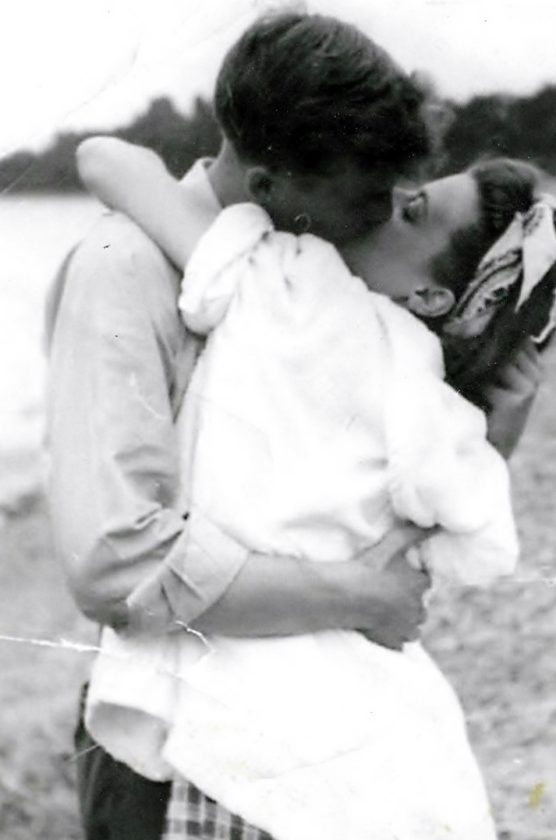
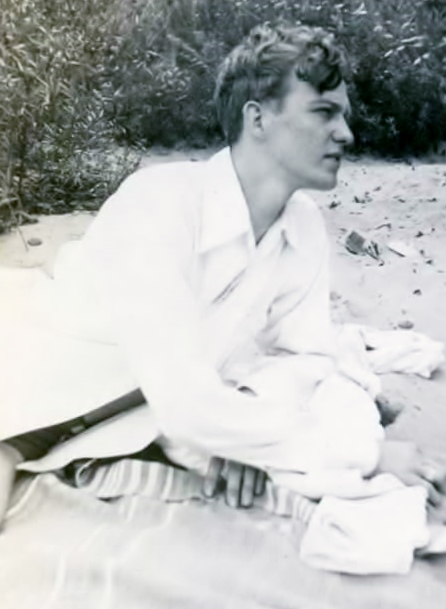
My parents Raymond and Barbara Johnson fell in love in the late 1930s, at Lake Erie State Park where they spent so many days of laughter and light. I still have the photographs of mother in her gingham checked shorts with her hair pulled back in a scarf. Dad looks movie-star-handsome. They are both vibrant and beautiful. Anyone can see how much they loved each other.
So when I think of Lake Erie, I think of that most of all, how it brought my parents together. Lake Erie has a special place in my heart.
In my youth, we spent summer after summer in a little beach cottage at Barcelona. They were happy days filled with swimming and my mother's delicious summer foods like cold tuna salad and potato salad, fresh sliced tomatoes and Nathan's hot dogs that dad grilled outside. It was a fairy tale walk from the cottage to the beach, along a narrow path through a forest of huge, swaying trees. We were warned to stay on the path and avoid the poison ivy just off the slate stoned path. We spent our days playing on the cool brown sand there, amidst the flat stones. We frolicked in the cold green waves. Many times I walked the straight rows of the adjacent vineyard too, and once I got lost there for hours. Hours later it seemed, I emerged at the end of a long row to see my frantic parents, who perhaps had been calling for me. But they never heard me calling, and I never heard them. I loved that cottage despite its lurking spiders and wood splinters, but there was something fey about the place too.
Later on in our lives when dad drove us to Barcelona -- I was nine and Vicky still a toddler, he had bought a new car. It was a sleek Ford Fairlane, sky blue with white fins and shiny chrome, a beautiful car. I don't know why but that car signified a shift that had taken place in him, in the way he played father in the house, in the way he carried himself. When we drove to the beach, we all sang a number of favorite songs -- We were sailing along, on moonlight bay, or Camptown Ladies Sing Dat Song do dah do dah, or Someone's in the Kitchen with Dinah, someone's in the kitchen I know ohohohoh. We were always singing and smiling as we crossed that bridge.
But one day, dad said, let's take it fast! He turned to grin at me. His foot was already on the gas pedal. We got to the top of the bridge and kind of flew off the other side. We landed with a bump. I still see my mother's face turned in surprise to look at her husband, her mouth a agape, her eyebrows high. Little Vicky let out a sound between terror and laughter. Dad laughed and laughed. I suppose I did too. We all did.
But something was off in that action, a recklessness that didn't gibe with who he was and who had been in our family. And sure enough it wasn't long after, he left us or began to leave us, a leaving that took a long time, years and years. Something had changed in him, something had shifted. I don't know what it was, but it wasn't good for us. These things happen in families; these things happen in love. My point is, I felt the shift early on. I knew it in my heart. Maybe all children do. Divorce was a rare thing back then in America though it's common enough now. It was no small thing. I don't think it ever is.
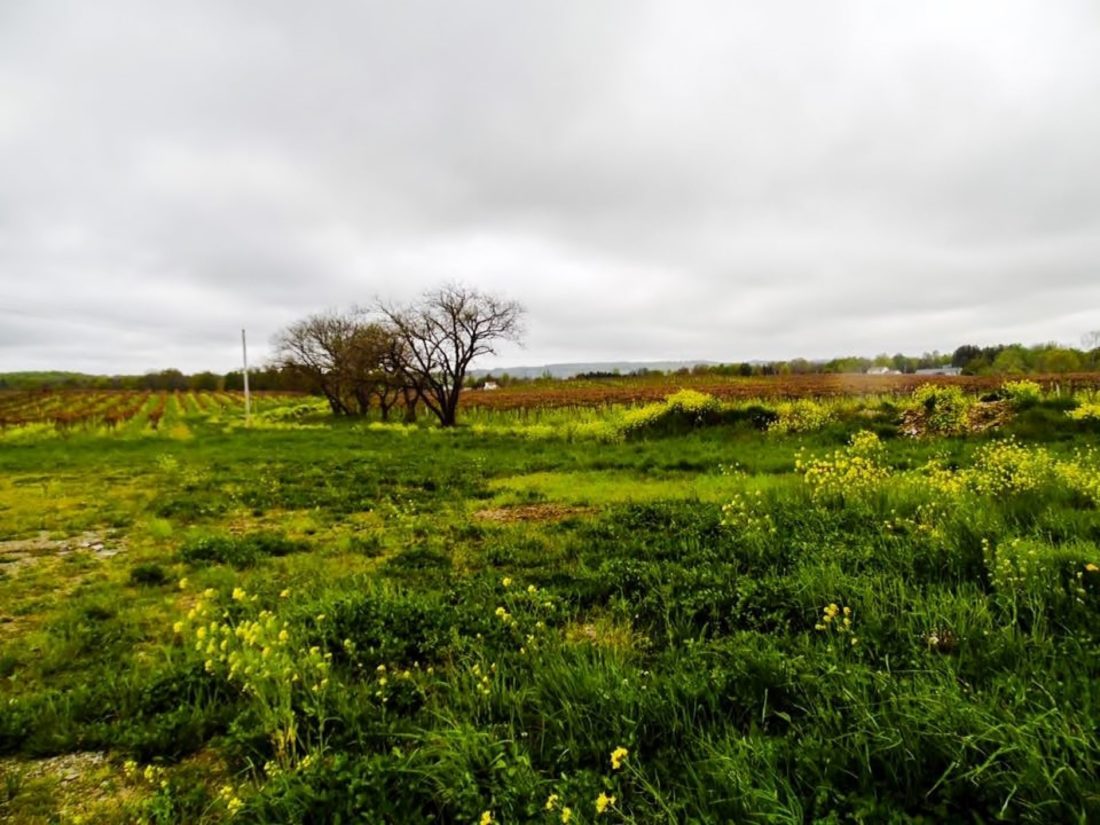
Recently I took a drive up to Westfield and along the lake shore. I couldn't find that cottage where I spent summers in my youth or the vineyard I recalled that sat on the lake's edge. As I drove, I thought, to live here in Chautauqua County, to stay all your life or to come back because you love it so much, you really have to love November, to find beauty in the starkest month when all the bright leaves turn ghastly yellow and the land stretches out flat and gray. The corn is stubble in the fields. The leftover fruit lies on the ground. The trees have become dark skeletons.
And you drive, say, some weekend in November when you feel the bite of frost in the air and it's definite that winter is coming though not yet here, and you're paused in the midst of the non-season. On that day you drive to Westfield on the Old Plank Road. Somewhere just before town, you get out of your car and stare out across the land. You study the end moraine above a vineyard stretching miles and miles in the distance, and you witness the flat plain all the way to the cliff at Lake Erie while in the other direction you see the ground shift of the end moraine just at the horizon. You recall that in the late Pleistocene age great ice sheets stretched down from the North, covering the land and stopping right to the edge of Lake Erie, just there, at that odd looking hill full of glacial debris where the ground rolls in a singular way.
All these words are tumbling out now, on this day in November, because I have stopped my car and gotten out at such a vineyard, one like I had known as a child. I lean against the car and study the forlorn landscape and the gnarled vines tied up tight. It seems an existential landscape to me, one that looks back over the geology of my life, one that calls up both the childhood rich and bright, full of joy and songs, swimming and parties and potato salad, and on the other hand that moment when a pall fell, cold filtered in, and that shiny veneer began to fall away. By the time I was 12, the joy between my parents was gone, the marriage lost, my idyllic childhood over.
So when I stand here in November, looking out at this landscape, I think, we all have these Novembers, we all have these end moraines, these reckonings, and we are reminded of them every so often. They feel like the cold smack of a wave. For a moment we lose our balance, can't catch our breath. And then we get back in our cars and drive back to our lives.