
Functional Farming
CLEREL?Hosts Second Annual Sustainable, Organic Field Day
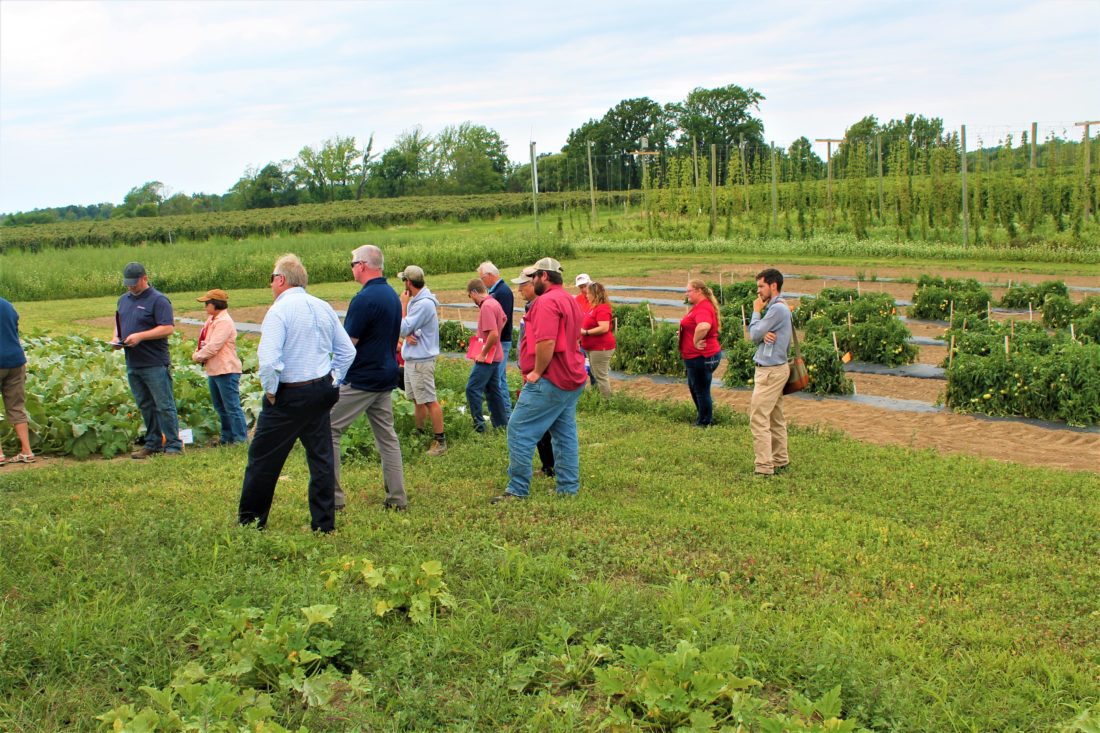
P-J photo by Jordan Patterson
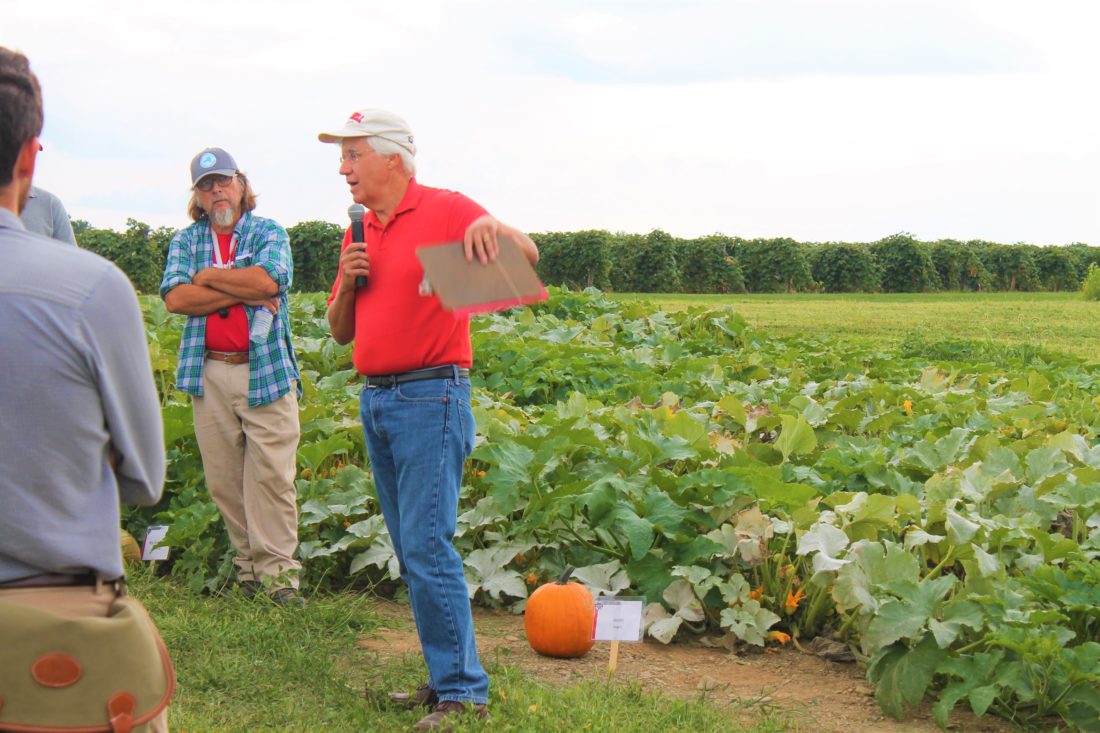
Stephen Reiners, right, speaks to local farmers about the effects of sulfur on local crops Wednesday during a Sustainable and Organic Vegetable Field Day in Portland. P-J photo by Jordan Patterson
P-J photo by Jordan Patterson
Stephen Reiners, right, speaks to local farmers about the effects of sulfur on local crops Wednesday during a Sustainable and Organic Vegetable Field Day in Portland. P-J photo by Jordan Patterson
Trending
PORTLAND -- The Cornell Lake Erie Research and Extension Laboratory opened up their facility and crops for viewing from local commercial vegetable farmers.
This is only the second year that the CLEREL facility has been in cooperation with the vegetable side of agriculture. In order to remain in cooperation with this research, the Cornell Cooperative Extension would have to sustain funding from the Chautauqua County government.
With this field day, the Cornell facility in Portland attempted to showcase their disease, weed and variety research trials.
Darcy Telenko, Extension Vegetable Specialist for the Cornell Cooperative Extension spoke about the importance of the field day. She was leading the tour for local farmers and businesses when she gave an overview.
"Our goal is to try to educate and answer problems on the farm," Telenko said. "So, our goal is to show research trials, things that are working and not working and the importance of different, you know, variety selection and then pest management programs."
Staff that are associated with the field day included John Wallace, Cornell associate professor; Extension Vegetable specialists Judson Reid and Robert Hadad; Cornell Faculty Christine Smart, Stephen Reiners and Thomas Bjorkman; and NEWA Coordinator Dan Olmstead.
The collaborative team took business members from the community to the back of the facility and showed them the work they had been working on. Included in their research was a variety of methods to combat various invasive diseases and pests that attack local crops. The goal of the new vegetable research from Cornell Cooperative Extension is that their facility can warn local farmers when a threat to local crops arises.
Different crops and different issues were addressed on the tour. For example, weed management, major vegetable diseases in New York and management practices/season extensions.
Reiners presentation discussed multiple effects on crops but also talked about the research on sulfur and its effect on vegetable crops. Reiners referenced the developments in Delaware and Florida where farmers are adding up to 25 pounds of sulfur and are seeing positive feedback. Reiners said the outcome could be "enormous" for Chautauqua County.
"Cornell Cooperative Extension of Chautauqua County pays into the Cornell Vegetable Program," said Emily Reynolds, CCE director. "But what it's done is brought vegetable research right here to Chautauqua County, so the benefit of today is to bring Chautauqua County residents right here and see what's working in our climate, what's working in our ecosystem, what works right here in Chautauqua County."
In addition to local businesses and farmers, several Amish communities were in attendance asking questions and giving feedback with the CCE staff. For Reynolds, this is important; the collaboration with the Amish Community helps bring awareness to specific regulations of crops in New York, for instances when outside communities purchase good from the Amish Community.
"I think having the opportunity to bring the vegetable expertise out to this western end of New York is really valuable," Bjorkman said. "We've only recently started doing it [and] taking advantage of having the facility here in [Portland] that has the capacity to put on trials and demonstrations. That's a really valuable thing."
Bjorkman's talk focusses on using cover crops for the health and maintenance of soil health.
In order to continue research at the Cornell facility in Portland, the Cornell staff has to secure funding from the county government, something Reynolds was well aware of and was optimistic that the field day would be around for a potential third year.