
Shrewd Shrews
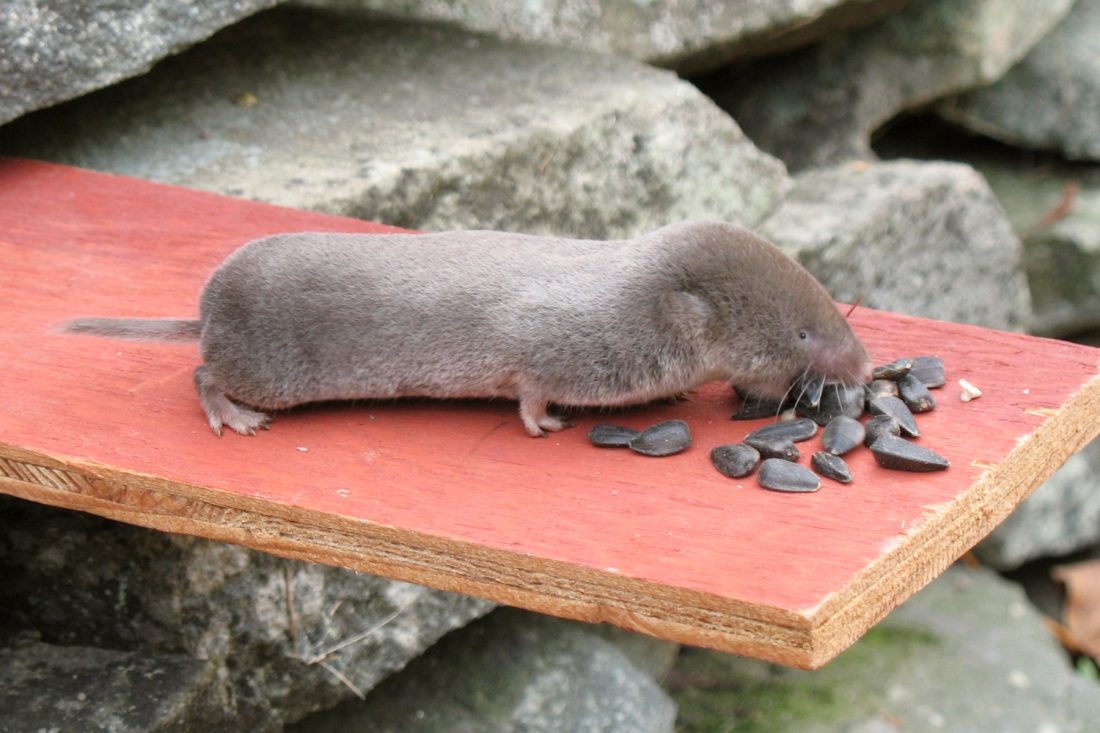
“There are more than 250 species of shrew worldwide. The northern short-tailed shrew (Blarina brevicauda) pictured here is one of four shrew species known to inhabit Chautauqua County.
Shrews are small, mouse-like mammals. They most definitely are not mice, or even rodents. They are largely insectivorous predators in the Sorcidae family, closely related to moles. They are distinguishable from mice by a notable lack of the chisel-like incisors that make mice, rats and squirrels so distinctive. Additionally, their noses are longer and stretched, and they lack a zygomatic arch, or cheek bone. For the most part, they are fairly common. Despite their ubiquitous presence, they are relatively understudied by scientists and are not well understood by the general populace. When one takes a closer look, they are among the most fascinating creatures we have here in Chautauqua County.
There are more than 250 species of shrew worldwide, 30 in the United States, and seven in New York state. There are four species known to inhabit Chautauqua County, with another two potential species that may rarely be found here. The masked (Sorex cinereus), smoky (Sorex fumeus), northern short-tailed (Blarina brevicauda), and least (Cryptotis parva) shrews are known to reside in the County, with the pygmy (Sorex hoyi) and water (Sorex palustris) shrews potentially being found as their geographic ranges are very close to our region. The pygmy shrew is the smallest mammal in North America and one of the smallest mammals in the world. Most shrews in our region are only 1.5 – 2 inches long.
Most shrews only live a couple years in the wild, yet in that short time, some species can have up to 90 offspring. With the fastest metabolic rates of ALL known animals (even faster than hummingbirds), shrews can have heart rates above 800 beats per minute and must eat 75-90 percent of their body weight daily to keep that up. As such, they are voracious predators and will eat pretty much anything that crosses their path. This is especially true for invertebrates such as agricultural insect pests and larvae, making shrews extremely beneficial to farmers and important to local and national economies. Shrews will also eat salamanders, frogs, snakes, mice, birds and even other shrews. They are known to store snails and beetles for winter fodder, and in laboratory conditions, they will store nuts, seeds and other plant material. As often happens in the natural world, these predators can become prey to raptors, snakes, as well as some fish for the shrews that inhabit waterways and swamps. Trout and sunfish will snap them up given the chance, and they are a particularly important food resource for owls. Weasels and red foxes will prey on them, too, but many mammals find the aggressive anti-predator antics and foul taste produced by musk glands on shrew’s bellies and sides too much to handle.
Shrews have poor vision. Evidence indicates they potentially can only see shades of light and dark and may utilize echolocation in a similar fashion to bats and cetaceans (dolphins and whales) to navigate. One of the most fascinating aspects of shrew biology is the fact that some are actually venomous. Did you know we have venomous mammals right here in Chautauqua County? The northern short-tailed shrew produces venom in its submaxillary salivary glands, which is channeled through grooves in their teeth. This aids the shrew in taking down prey that is much larger than they are. The contents of one of these glands is capable of killing up to 200 mice, yet the venom is relatively harmless to humans. If bitten, the wound will be painful and itch, but nothing more serious than that will result.
While they can be aggressive towards perceived danger and some are venomous, shrews pose no threats to humans. Quite the opposite actually. They are of incredible importance in terms of insect suppression. Many of our local shrew species live along wetlands, streams, and lakes, and conserving these habitats is critical for shrews and all species that lives in these areas. Preserving and enhancing water quality is part of the mission of the Chautauqua Watershed Conservancy, and this mission is often framed in terms of benefits to human needs such as clean drinking water and recreation. But the work we do also benefits a wide variety of plants and animals. We recently broke the 1,000 acre mark in terms of conserved land, and these properties all have enormous benefits to wildlife, as well as human health and economies. To learn more about local critters, or our land conservation activities, contact Jonathan Townsend, CWC Conservation Lands Manager.
The Chautauqua Watershed Conservancy is a local not-for-profit organization that is dedicated to preserving and enhancing the water quality, scenic beauty and ecological health of the lakes, streams, wetlands and watersheds of the Chautauqua region. For more information, call 664-2166 or visit www.chautauquawatershed.org or www.facebook.com/chautauquawatershed.
Nature
Bryophyta And No Rolling Stone
Staying Warm During A Cold Winter

What To Know About When We Get So Much Snow
The Secret World Beneath The Snow
There Is Life Beneath The Snow
Winter Exposes Troubled Trees, Bark
The seasons are changing from fall to winter, and one of the major changes to the environment is that the deciduous ...